Binghamton Wallpaper Generates Steady Power from the Humidity Already in the Room
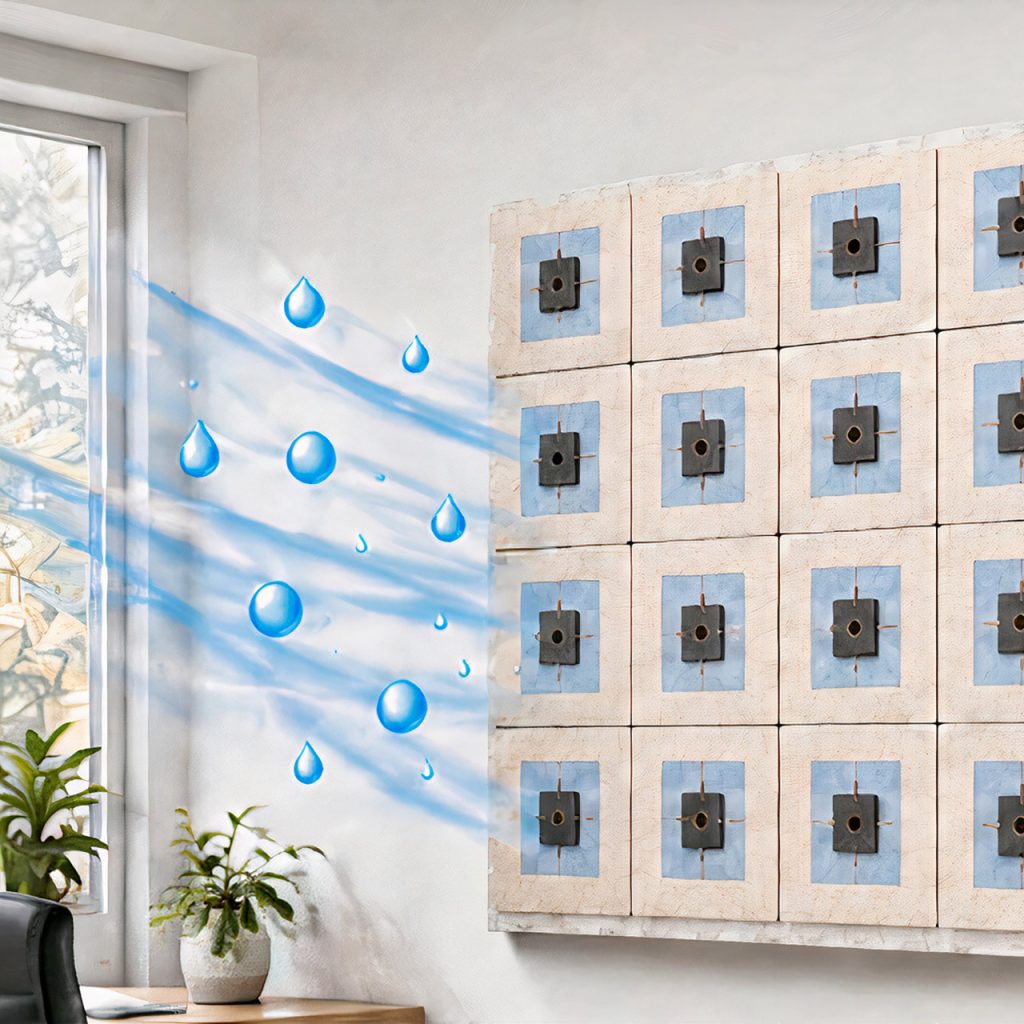
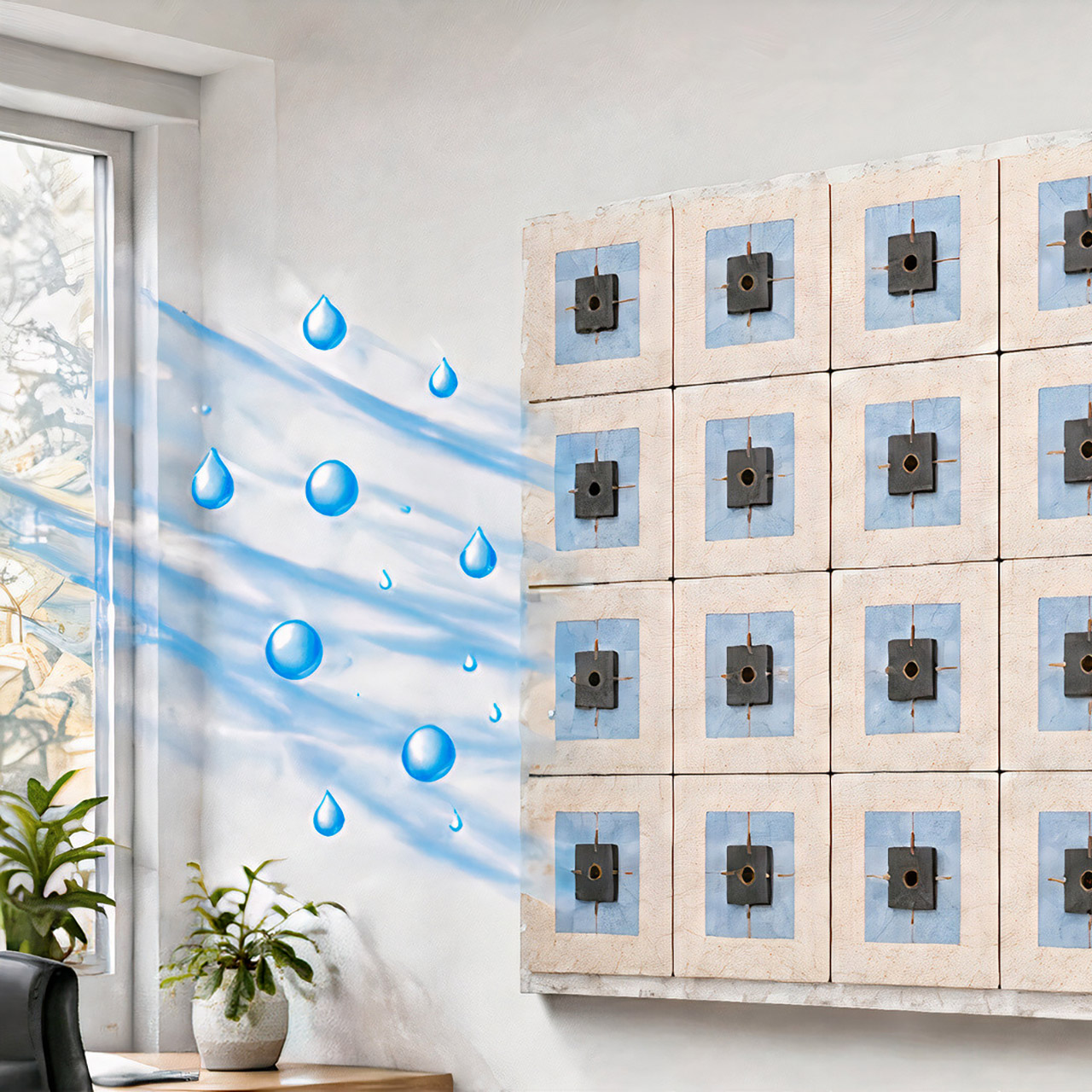
Most walls do one job and then sit there. A group at Binghamton University has printed a covering that also drinks moisture from the room and turns the slow movement of that water into a small, steady current.
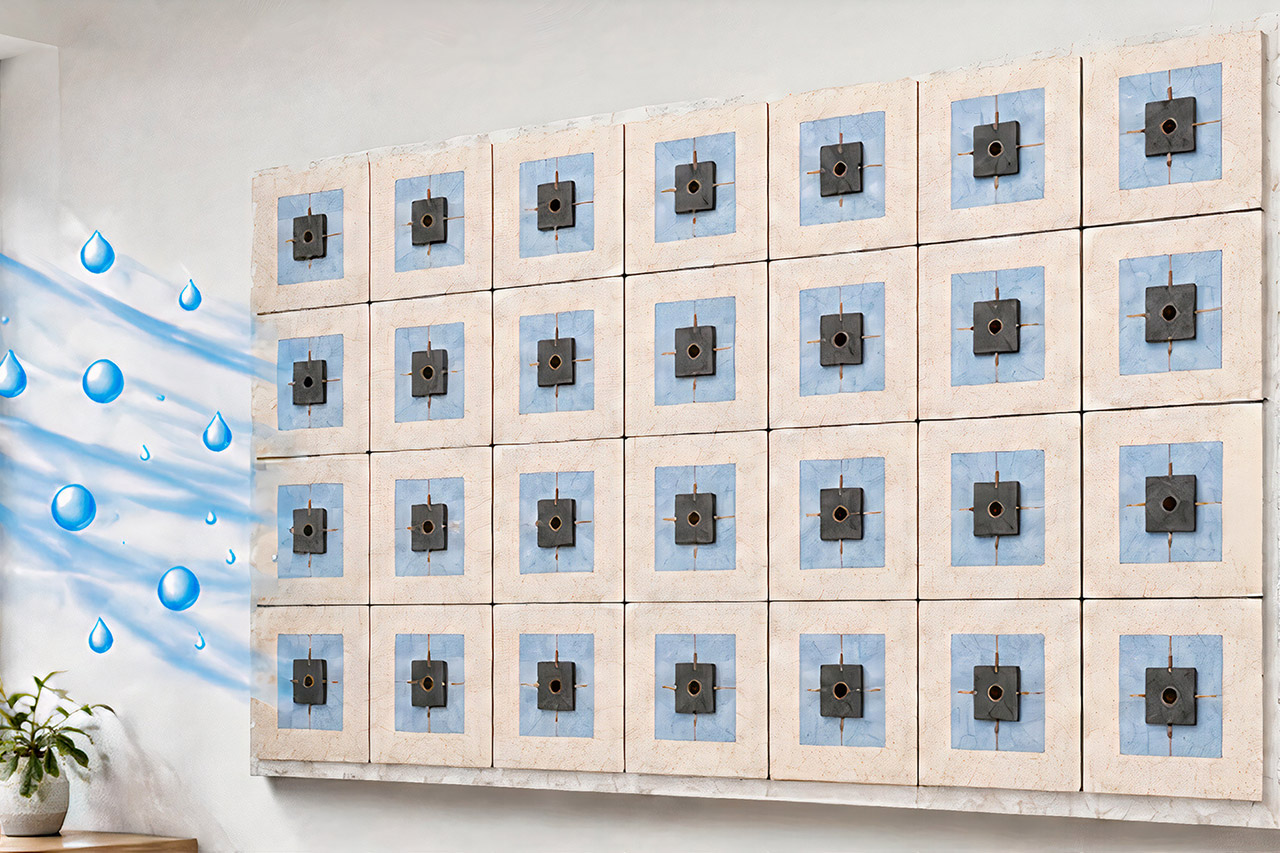
Professor Seokheun “Sean” Choi spearheaded the experiment, with PhD students Guangya “Roger” Yuan and Yang “Lexi” Gao serving as his research collaborators. Each of their pieces began as a standard lab sheet of paper, Whatman 3 MM stock approximately 340 micrometers thick, cut into 2×2 centimeter squares. The glycerol along the margins of each square begins to draw water vapor out of the air and convert it into liquid inside the sheet. You then have a raised band of polyvinylpyrrolidone in the middle that retains the water in tighter pores, and capillary action sucks the water in even more tightly. The wax in the center of the sheet prevents liquids from pooling and allowing air vapor to escape, but it also allows the vapor to drift out. When the water begins to move, chemical groups on the glycerol, the cellulose in the paper, and the polyvinylpyrrolidone all release protons, and the wet edge contains much more of these protons than the drier middle. The resulting charge is collected by graphite electrodes. The connections are run along the back of the sheet, where homeowners cannot see them, due to the silver paint that fills in the laser-drilled holes (approximately a millimeter in diameter).
Sale

BLUETTI Portable Power Station AC180, 1152Wh LiFePO4 Battery Backup w/ 2 1800W (2700W peak) AC Outlets…
- [Charged in 1 Hour] – The AC180 packs a 1152Wh LiFePO4 battery, which can be fully charged in just 1 hour at 1440W AC input – always ready to go when…
- [Power All Your Needs] – The AC180 boasts 1800W output and 8 outlets to handle almost anything you plug in. With a tap on the BLUETTI App, you can…
- [Solar Fast Charge] – With a 500W solar input, you can charge this solar generator in 2.8-3.3 hours using only solar energy. Add an AC source and you…
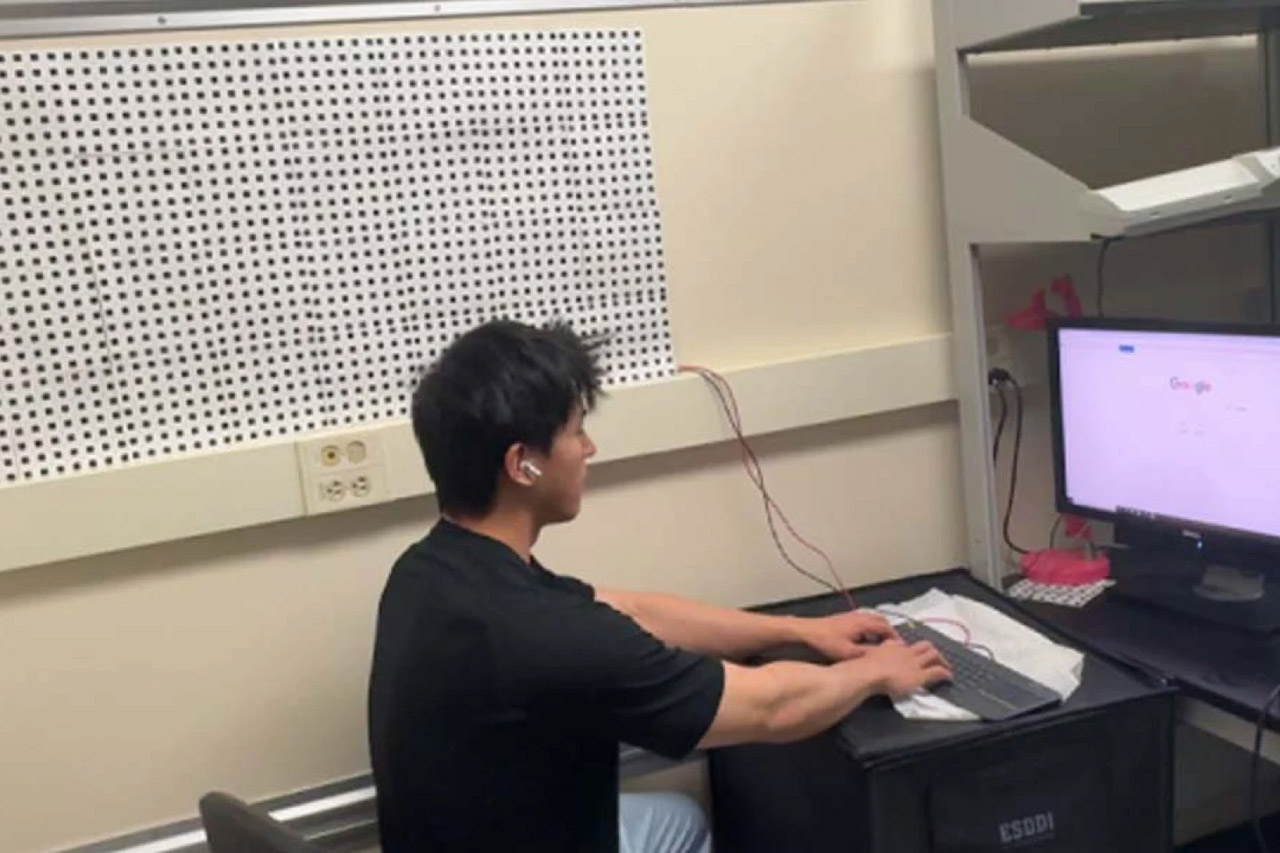
Because of all the breathing, cooking, and showering, the air inside a house typically maintains a humidity level of 30 to 60 percent. The older versions of these machines attempted to chase the heavier precipitation outside, but they still only managed to generate little quantities of power, and the output fluctuated due to the weather and sunshine. Choi’s team tried the same approach with the quieter indoor band to see if they could get more out of it. They reasoned that if they could provide the moisture with a consistent path from the perimeter to the center while preventing it from halting, they might be able to make progress. It succeeded, as one of their tiles hit 0.34 volts at 80 percent humidity, and ten tiles strung together produced about 2.9 volts, but it wasn’t until they combined a sheet of 1,596 tiles that they were able to get 3.5 volts at 38 percent humidity. This is sufficient to power a wireless keyboard once linked with a capacitor. Even a little patch of 35 tiles was sufficient to keep a humidity sensor running for approximately 15 minutes.
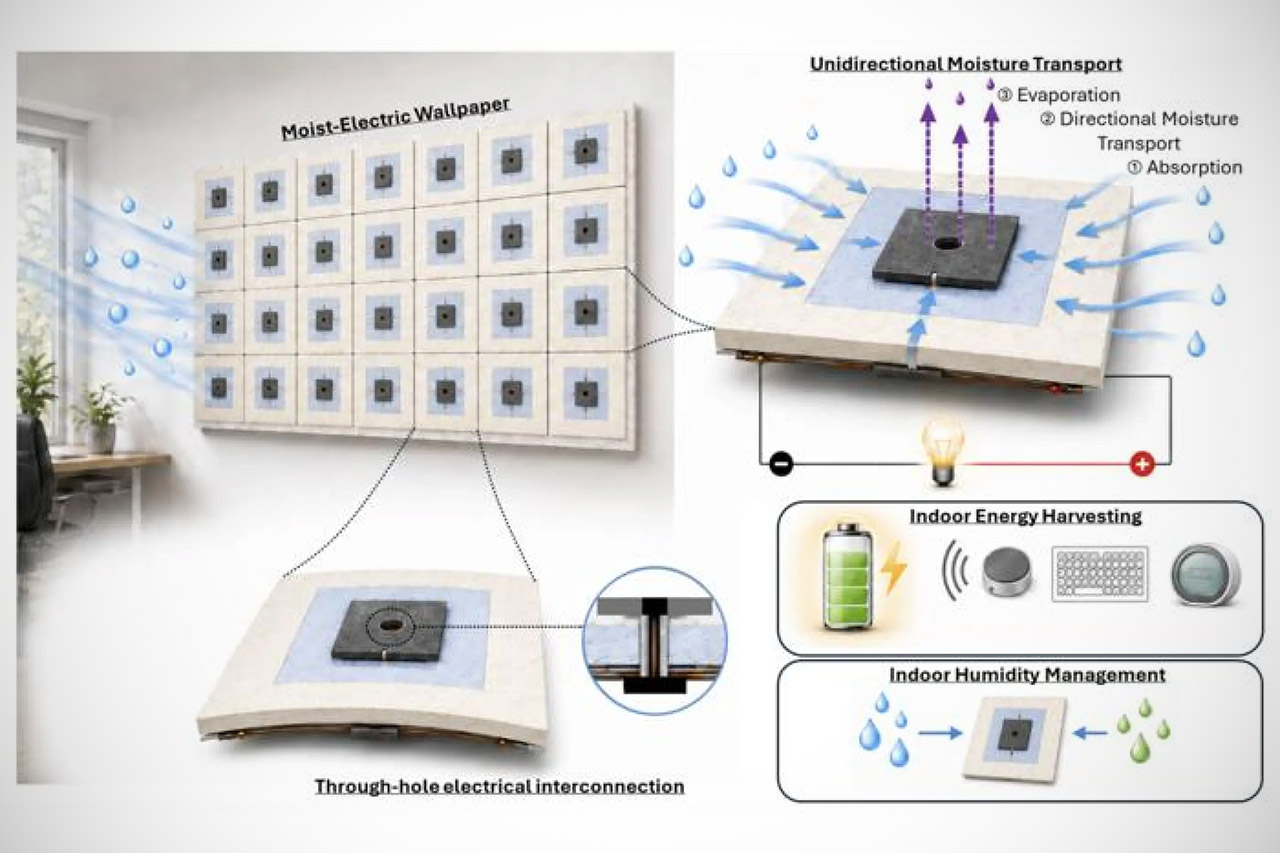
During the early trials, they also discovered that the paper can take water from the air while it is working, which is rather astounding. They conducted a huge test in one room, with a massive array lowering humidity from 38 percent to 32 percent in under 15 minutes. When scientists placed the tiles in a sealed container, they were able to reduce humidity from 75 percent to 50 percent in just four minutes. The fact is that homes already spend a lot of energy and money on heating and cooling systems only to remove moisture from the air, so a wall covering that performs some of that work while also returning some power might be a game changer, even if the current is still quite low.
Printing over the sheet, using techniques such as wax printing, airbrushing, or screen printing (as well as some laser work), is the simplest way to convert it into a working generator. Plus, it’s all done in one step, eliminating the need to take it to a cleanroom, which is really the objective of it all. Choi has stated that he would love to be able to print out the entire pattern so that they may mass-produce these generators and slap them across a full wall, generating power as they go. The good news is that whether he wires them in series or parallel on the back of the sheet, they output the same amount of power, allowing him to employ whatever pattern he wants to match the form of the space.
Output remains in the microwatt range per square centimeter, which is ideal for environmental sensors, small wireless modules, and other devices that typically rely on batteries or a plug. Years of sitting indoors have yet to be proven, and the way it handles humidity has only been tested in brief bursts thus far. A wall that quietly extracts the moisture already in the air and then outputs a few volts, since this is essentially a small power plant.
[Source]
Binghamton Wallpaper Generates Steady Power from the Humidity Already in the Room
#Binghamton #Wallpaper #Generates #Steady #Power #Humidity #Room