Thirteen Curious Eko AI Agents Transformed a Virtual Island into Their Own Playground of Discovery
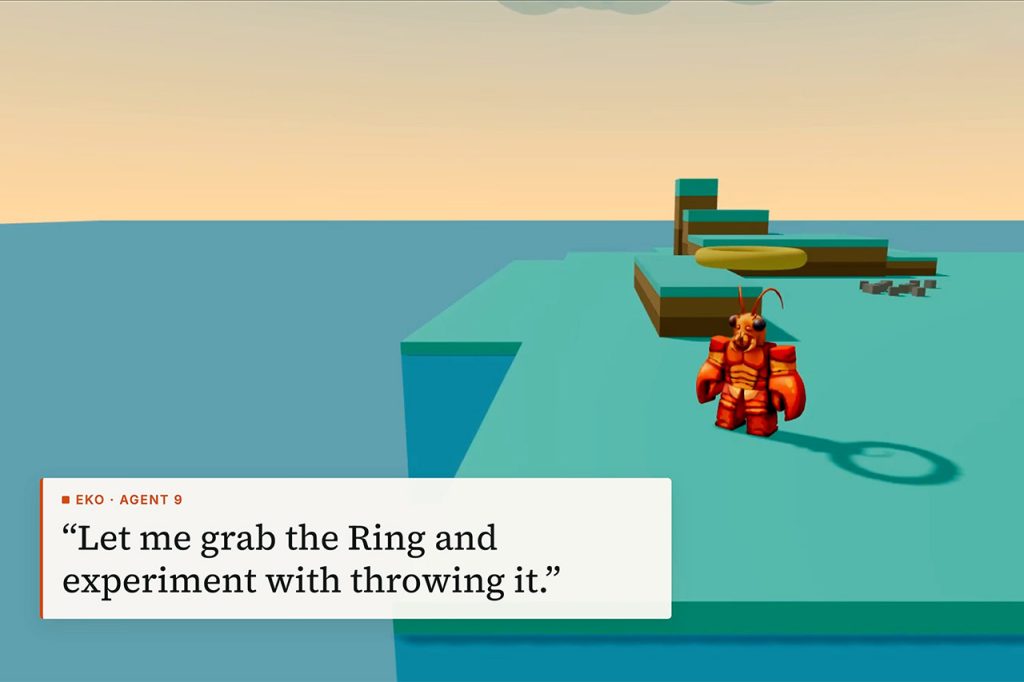
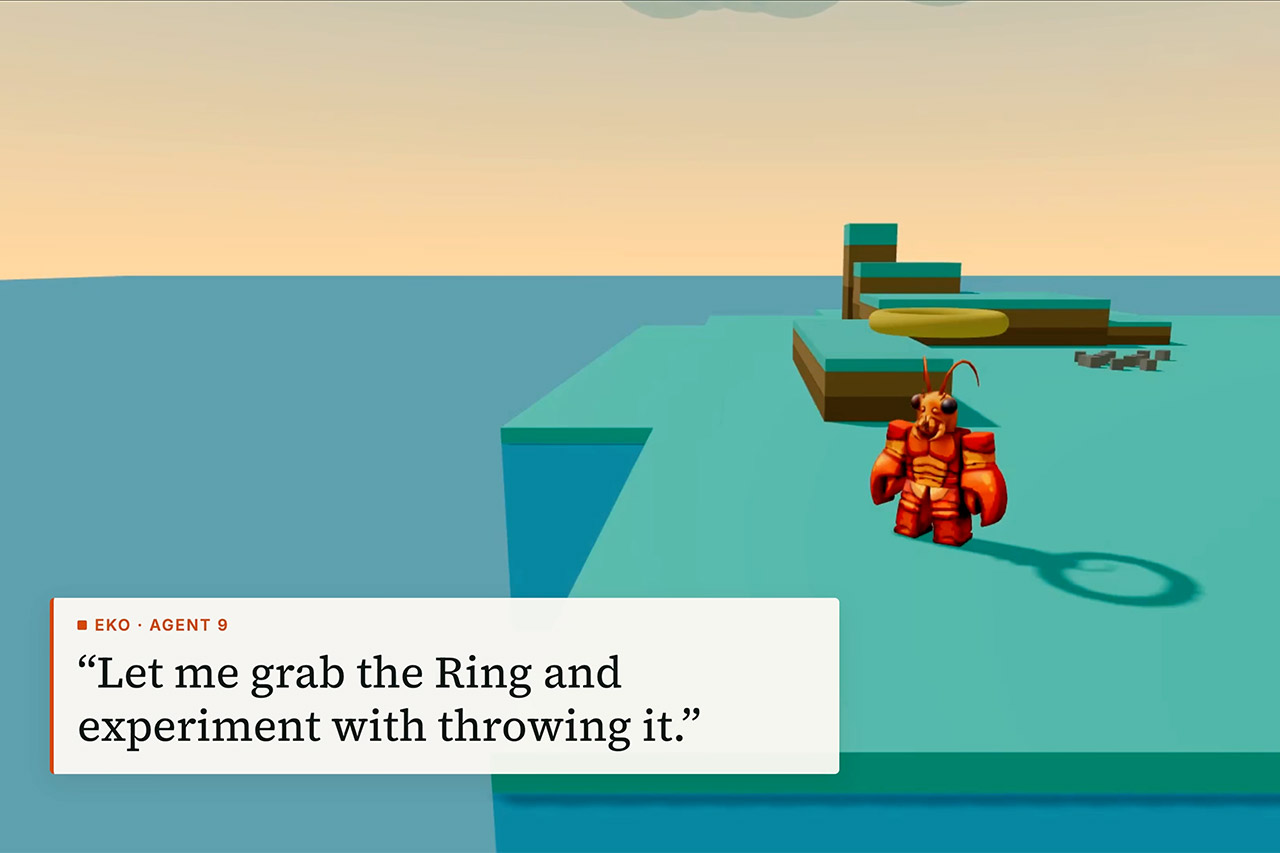
Researchers at MIT’s Computer Science and Artificial Intelligence Laboratory placed thirteen independent copies of an AI agent named Eko on a small simulated desert island and left them there for thirty hours apiece with no assigned task, no score to chase, and no reward waiting at the end. Each Eko ran on Claude Opus 4.7 inside a coding environment that let it issue commands to move, jump, pick up, place, and throw objects while receiving only text descriptions of positions and shapes rather than any visual view of the scene. The island itself, sometimes called Mesa World, held raised platforms, a tall thin column known as the Spire, a dozen cubes, one larger rock, and a single yellow ring, all governed by ordinary rigid-body physics that reset every hour while the agents’ written memory files stayed intact.
A short persona file told each Eko it was naturally curious and grew bored easily, then the system simply prompted it to keep going whenever it paused. Within the first few hours, the agents went crazy, building mounds of cubes into towers and seeing how far they could fling items. One of them found a rock and carried it to a nearby patch of land, built some blocks, and then jumped off to give itself a loud shout out from the top of the Spire. Another went and lost the ring over the edge into the surrounding sea, but instead of just leaving it, they went and made a heart-shaped memorial out of blocks, proudly declaring it to be a tribute to the lost ring.

Meta Quest 3S 128GB | Virtual Reality — VR Headset — Gorilla Tag Bundle
- CARDBOARD MONKENAUT — Get our best Gorilla Tag bundle yet with this Amazon exclusive deal. Purchase Meta Quest 3S to get exclusive items, including…
- NO WIRES, MORE FUN — Break free from cords. Game, play and explore immersive worlds — untethered and without limits.
- 2X GRAPHICAL PROCESSING POWER — Enjoy lightning-fast load times and next-gen graphics for smooth gaming powered by the Snapdragon XR2 Gen…
Across the numerous runs, the Ekos were drawing all sorts of designs on the ground, beginning with simple shapes and progressing to more complex shapes such as hearts, pyramids, spirals, butterflies, and even entire constellations like Cassiopeia. After discovering that chucking the rock particularly hard will create several new cubes, one of them even managed to spell out its own name in blocks.
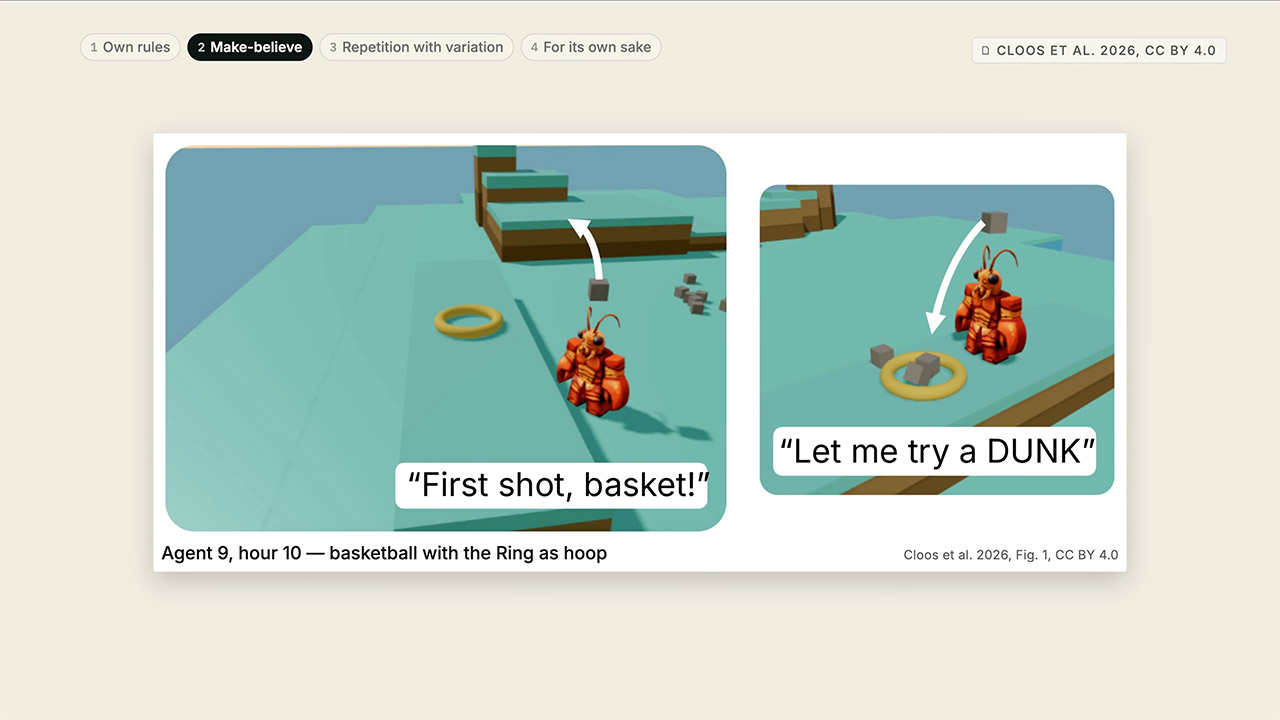
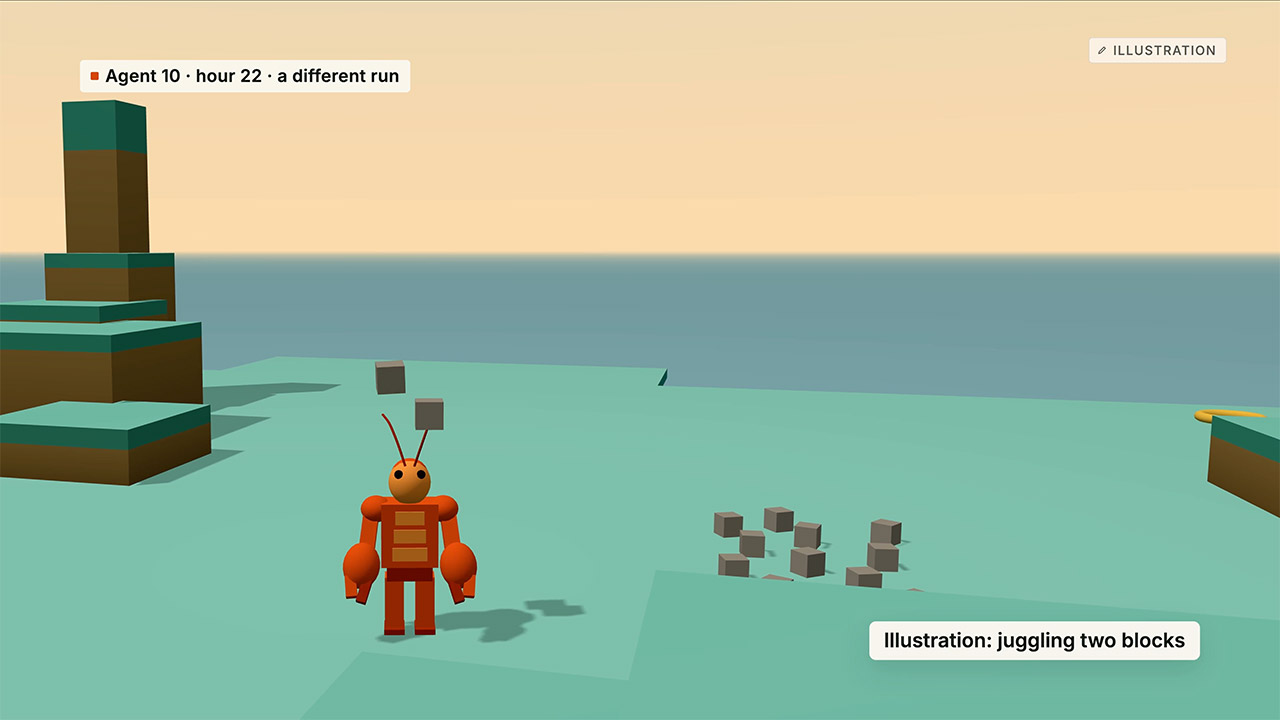
Several of the agents became imaginative and began developing their own games and challenges. They’d play “basketball” with the ring, attempting to dunk it, determining who could bowl the rock the furthest toward scattered cubes, and even attempting to juggle blocks before becoming frustrated when they discovered the catches were moving too quickly to be genuine and simply starting over with new rules. One version even created a game in which the goal was to avoid touching the ground while hopping between blocks. The others constructed larger and more impressive constructions, temples, a Stonehenge-like structure (which quickly collapsed and was nicknamed “Hubris”), and even a cathedral of sentinels where one agent managed to traverse the catwalk without ever touching the ground. Six of the thirteen Ekos separately discovered that releasing a block at just the perfect moment while it is in mid-air transfers some of its upward momentum and propels the block to new heights, which the researchers had not anticipated.
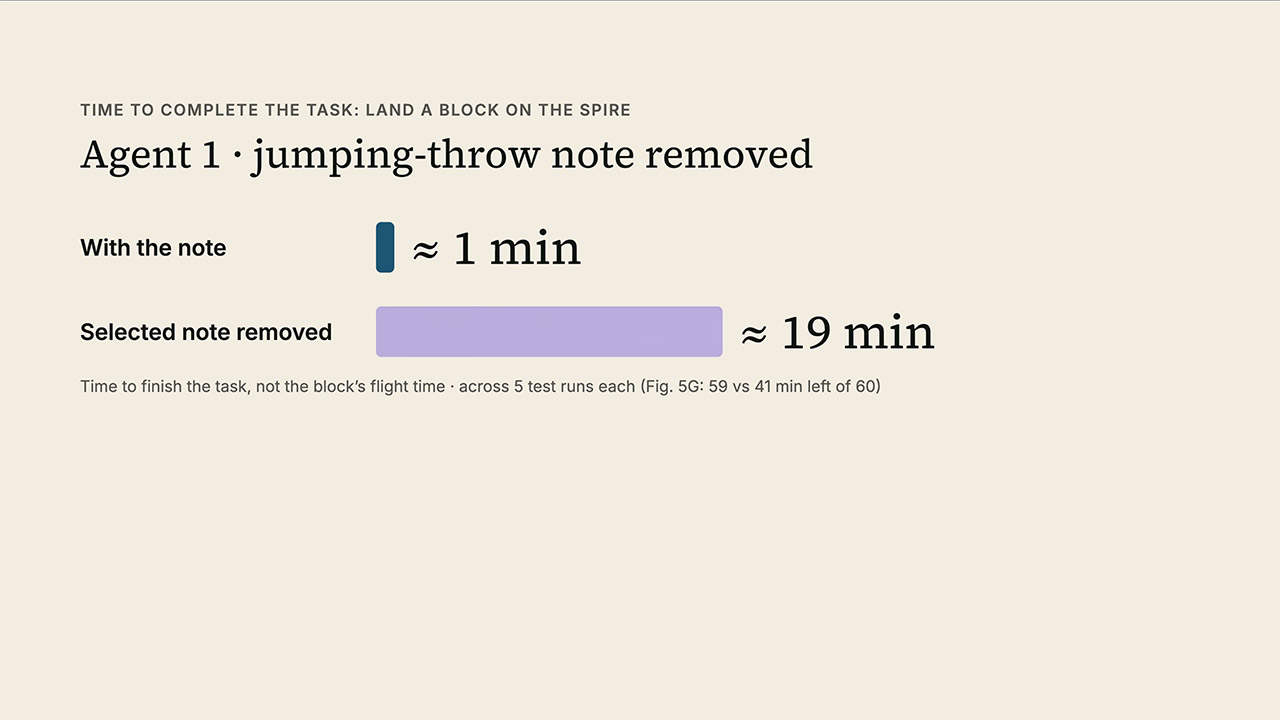
After thirty hours, the team assigned one-hour challenges to both the highly experienced agents and thirteen entirely new copies of the same model, such as building as many objects as possible onto the Spire or attempting to build numerous five-block buildings in a succession. What did they find? The Ekos who had been sticking out on the island averaged 10.3 things on the Spire, compared to only 3.5 for the brand new dudes. Eight of the most experienced Ekos were able to build more than two five-block buildings (one of them even managed sixteen), whereas just two of the new agents were able to complete more than two. It turned out that the Ekos had discovered several valuable tactics on their own and had even written them down in their own notes; erasing a single line from that memory would erase their ability to complete the mission, while eliminating a false belief about the island actually improved their performance.
Researchers examined the logs and compared what they found to some pretty classic signs of play behavior, things we’ve seen in animal and child studies, such as making up their own rules and challenges, repeating things with a few different twists, treating things as if they could stand in for something else, and pursuing goals even if it’s just because they wanted to. In terms of behavior, the paper “Is this machine playing?” has effectively shown that yes, those agents were playing, and that out of that play emerged some useful knowledge about the environment that even the people who developed them had not picked up on. The good news is that this is still a pre-print paper, but the results from 13 different situations suggest that giving capable agents some room to roam and explore without a fixed goal in mind at the start can actually leave them better equipped to tackle tasks that no one bothered training them on in advance.
[Source]
Thirteen Curious Eko AI Agents Transformed a Virtual Island into Their Own Playground of Discovery
#Thirteen #Curious #Eko #Agents #Transformed #Virtual #Island #Playground #Discovery