Hubble Reveals a Subtle Starry Swarm in Distant Dwarf Galaxy ESO 490-017
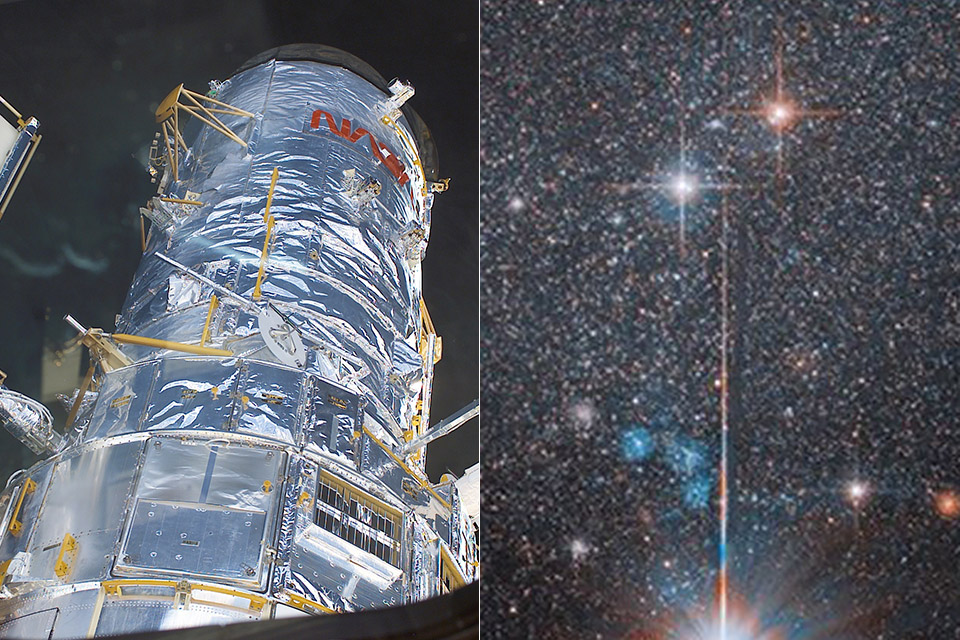
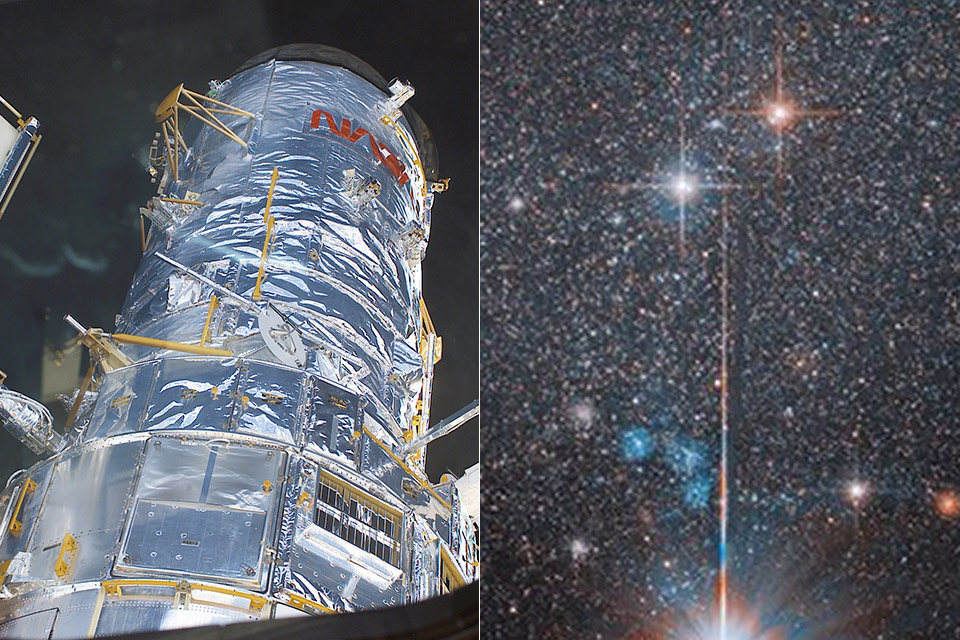
NASA released a new image from the Hubble Space Telescope that brings a modest galactic resident into view. ESO 490-017 lies about 23 million light-years away in the constellation Canis Major. The galaxy spans roughly 12,000 light-years from one side to the other and belongs to the dwarf irregular category, a group whose stars and gas sit in loose, disorganized arrangements rather than neat spirals or bright central cores.
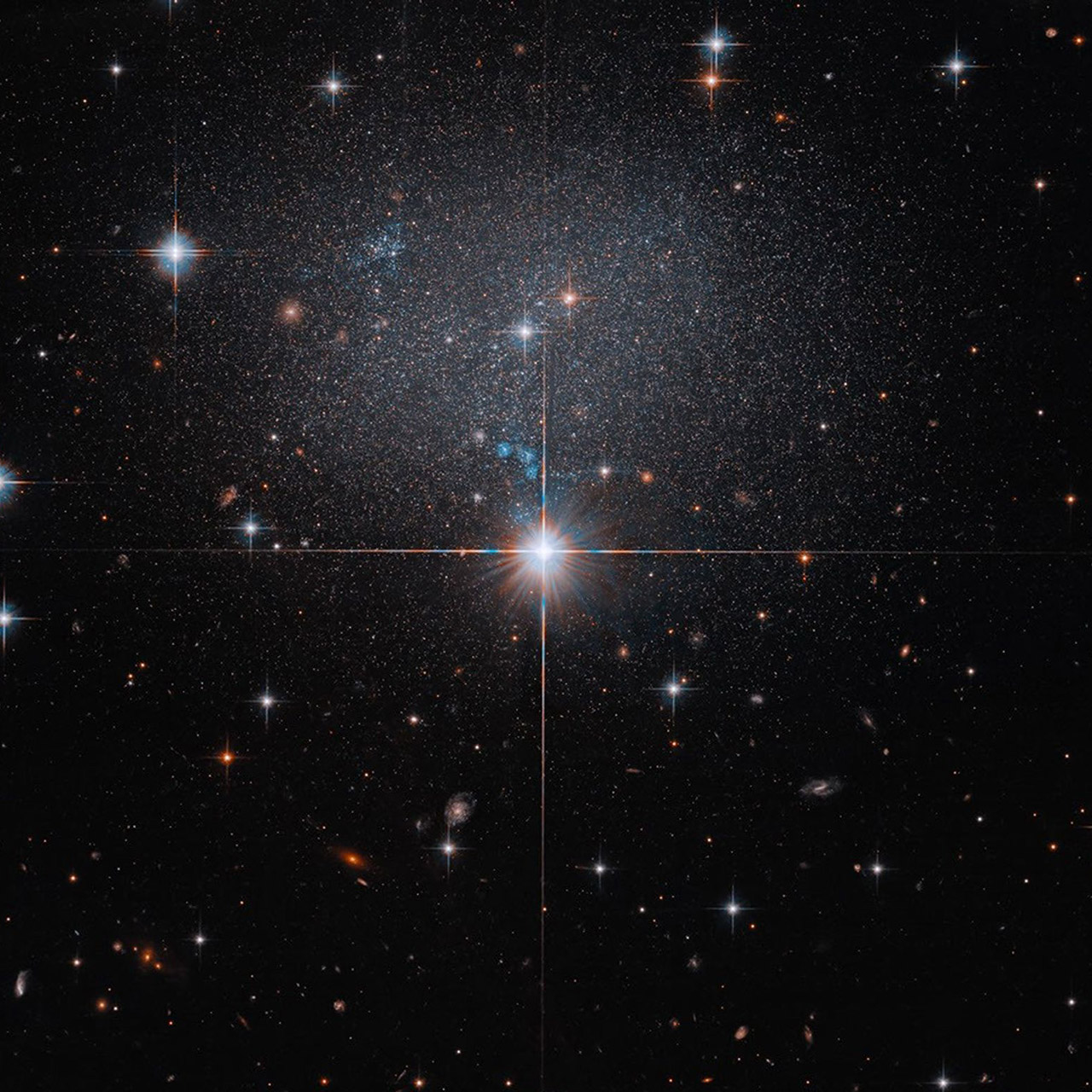
The galaxy stretches across a portion of the frame as a gentle smattering of twinkling lights, but because its brightness is so low, the stars spread out into a soft hazy patch that is just fading into the surrounding darkness, rather than having sharp edges or tight clumps like when you can see them up close. As a result, it resembles a dim swarm rather than a bright, solid object. Then, in the foreground, cut straight across the scene are a handful of bright stars close to us, as they are sharp and stand out quite clearly, each with a straight diffraction spike running right through its center. These spikes appear when light from a star reflects off the optics in the telescope, creating a beacon that attracts the eye in
Sale

LEGO Technic Planet Earth and Moon in Orbit Building Set, Outer Space Birthday Gift for 10 Year Olds…
- Interactive model – Inspire kids to build a representation of the Earth, Sun and Moon in orbit with this LEGO Technic Planet Earth and Moon in Orbit…
- Educational space toy – Kids can turn the crank to see how the Earth and the Moon orbit around the Sun
- Includes months and moon phases – This solar system toy includes printed details, like the month and moon phases to help kids see how the Earth’s…
Going a little further back, you’ll see a massive black expanse filled with several smaller things in tones of red, orange, and brown. Many of these tiny specks begin to resolve into spiral shapes that can be seen from a distance, and the colors they produce really add depth to the overall scene, as they are a combination of how far away they are and the specific wavelengths picked up in the observations. So they work together to transform the backdrop into a rich field of distant galaxies, adding to the overall appeal of the composition.
Astronomers took this image as part of a research to study how galaxies and galaxy clusters move on a huge scale. This is all due to the gravity of clumps of matter in space, which tugs the systems along trajectories known as cosmic flow. If you want to get precise maps of such movements, you must first understand how far away nearby galaxies are, which Hubble did here. So, how did it get the precision it required? Well, by focusing on some specific stars within the galaxy ESO 490-017, as low mass red giants at a certain stage of their lives all tend to be about the same brightness, making them useful as steady reference points, the researchers were able to calculate the galaxy’s distance with fairly solid accuracy by comparing that known brightness to how faint those stars appear in the image. As an added bonus, all of this data is saved in a much larger archive that tracks star populations in many other neighboring galaxies, so for future reference…
Hubble Reveals a Subtle Starry Swarm in Distant Dwarf Galaxy ESO 490-017
#Hubble #Reveals #Subtle #Starry #Swarm #Distant #Dwarf #Galaxy #ESO