Leonardo da Vinci’s Bicycle Becomes a Reality, Built From Old Notebook Sketches
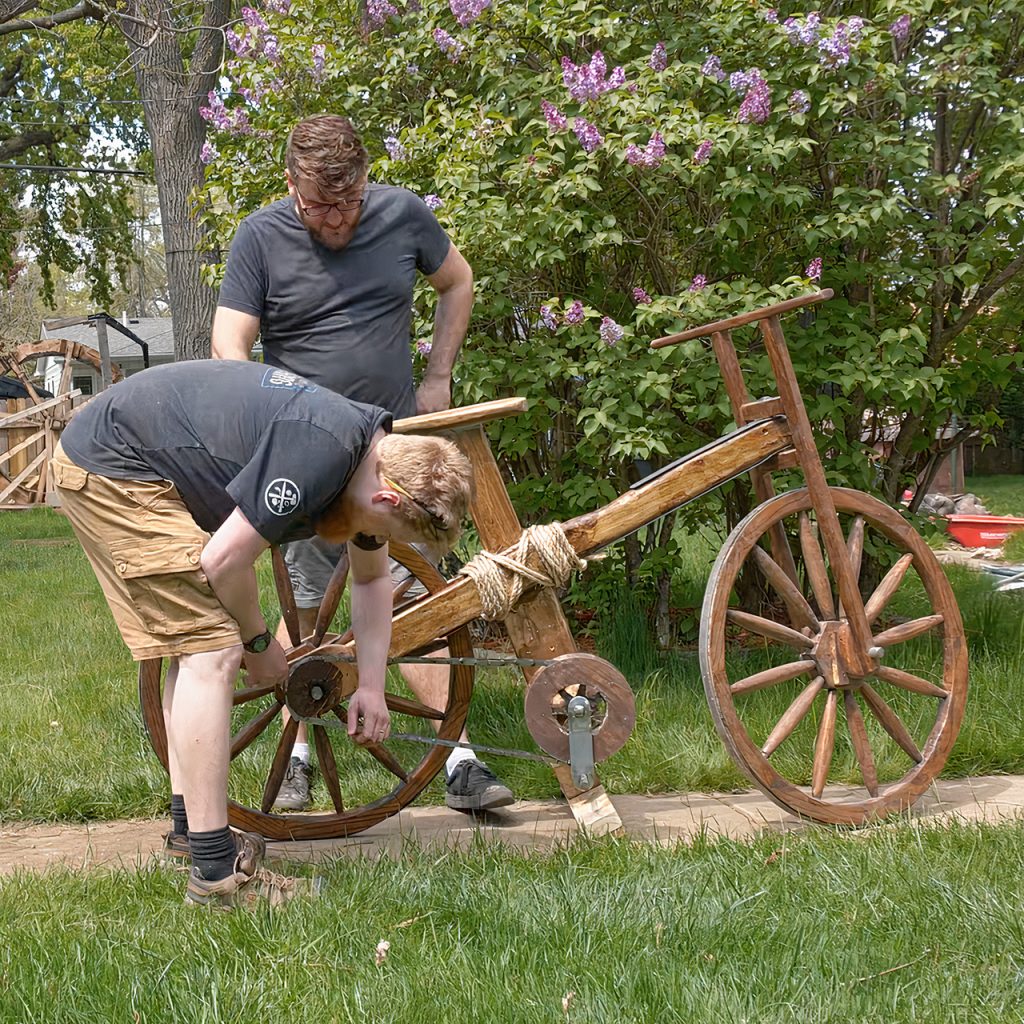
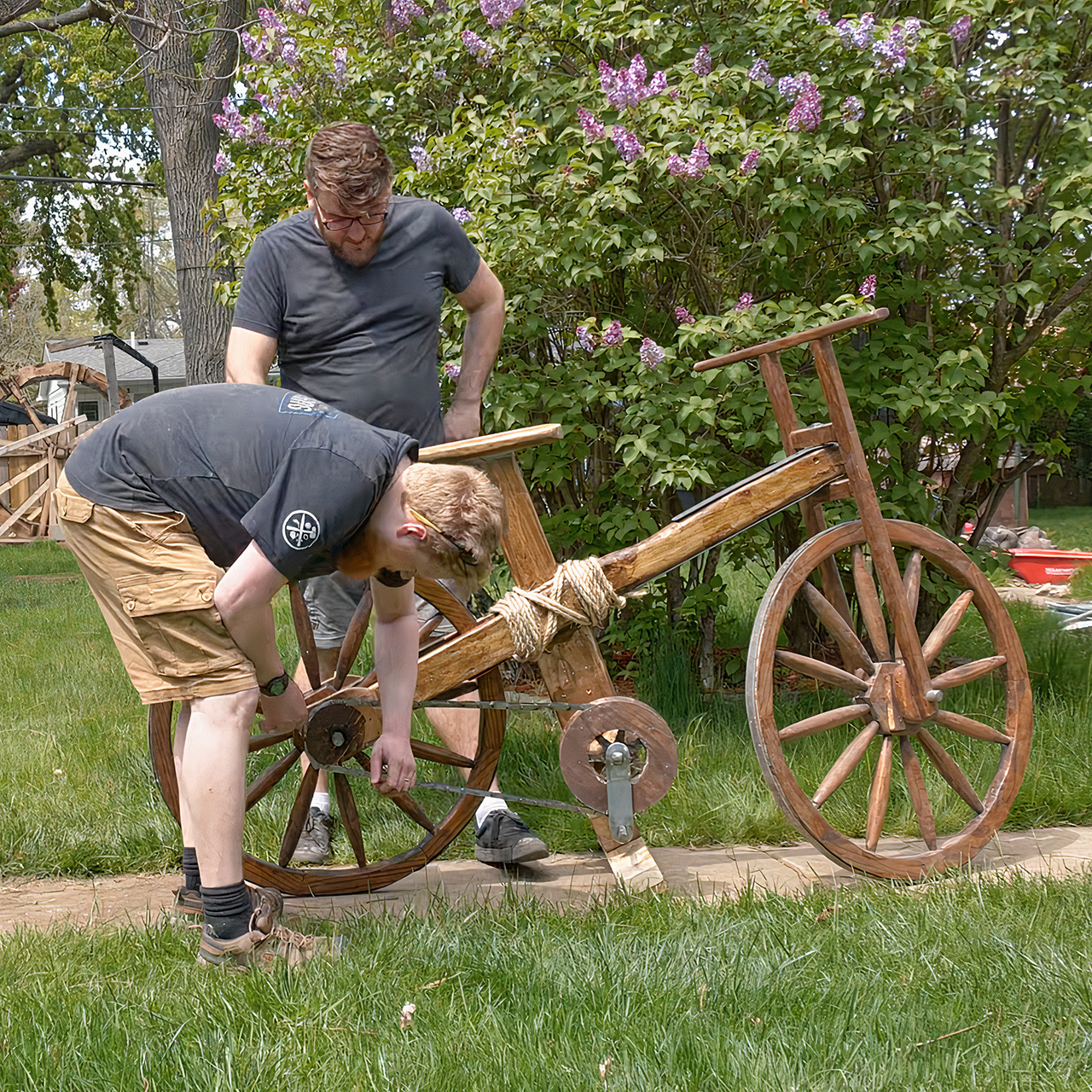
Andy George of the How To Make Everything channel spotted the famous bicycle drawing tucked into Leonardo da Vinci’s Codex Atlanticus and wondered what would happen if someone actually tried to ride one built from ideas scattered across those pages. The drawing itself turns out to be a later addition, not something da Vinci put there, yet the notebooks contain plenty of other mechanical details that could feed into a two-wheeled machine. George set out to combine them and see whether the result could move under its own power centuries before Karl Drais unveiled his push-powered hobby horse in 1817.
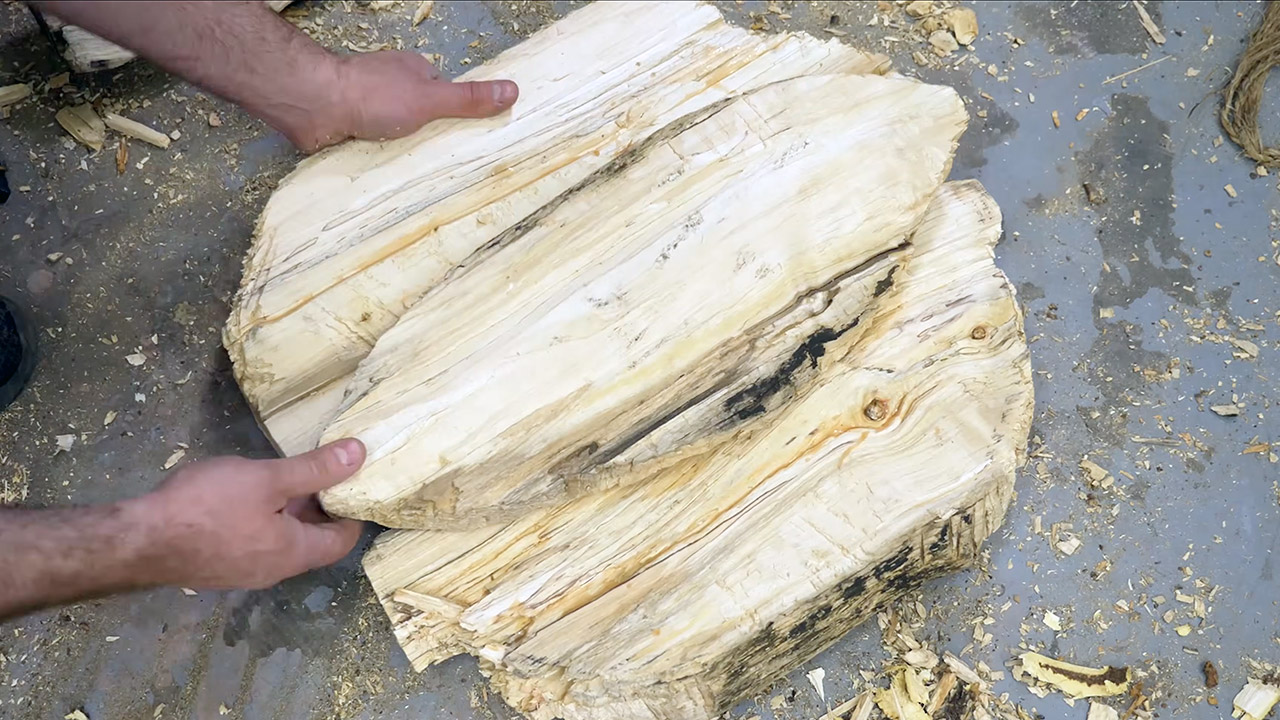
The finished machine features a wooden frame made of spalted maple boards, which is rare since the wood has been aged by some type of fungus, resulting in those interesting swirly patterns. Builders planed the planks flat, created a slot for the back wheel, and placed the front end so it could spin. They even managed to steam and glue a curved handlebar that fits perfectly across the top of the frame, with a crossbar supporting the seat and pedal assembly.
Sale

Segway Ninebot S2 Electric Self-Balancing Scooter – Master Your Commute w/t 11.2 mph Max. Speed, 21.7 Mi…
- Speed & Range: Experience exhilarating rides with the Ninebot S2’s impressive top speed of 11.2 mph and range of 21.7 miles.
- Beginner-Friendly: Perfect for riders aged 16-50, the Segway S2 features a user-friendly learning mode, providing a smooth and gradual introduction.
- Adjustable & Supportive: Enjoy a customized fit tailored to your needs, as the Segway S2 accommodates heights ranging from 4’3″ to 6’6″ and supports…
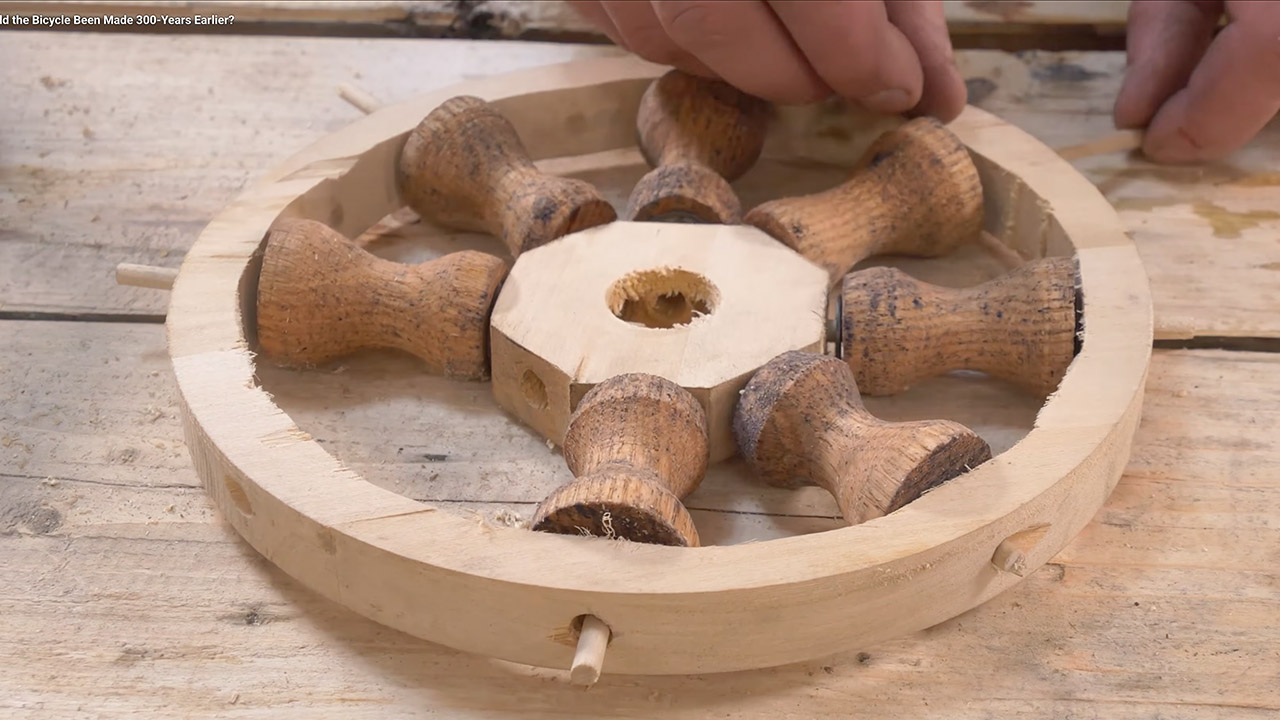
The wheels came next, and it was quite the task to make them to turn properly. The spokes protrude out from the hubs in a typical wheelwright style, and a ring of metal is clamped around the rim to create a smooth running surface. The challenge was getting the band to stay tight, as the previous method did not work, so the team decided to clamp and join it in place. It works, even if it is slightly heavier than later iterations that employed lighter rims and better means to tighten the band.
Now, ball bearings are responsible for all of this smooth rolling action. Da Vinci had a few ideas on how to reduce friction with rolling elements, and the builders ran with them, designing upright bearings to support the axle and then using current casting techniques to quickly produce the parts. Then they used the same geometry that would have been achievable with traditional metalworking; it’s a lot, I know, but basically they were able to create the bearings from scratch using the correct forms and sizes so that they would function properly. Once mounted, the wheels spun effortlessly with almost no drag, which was far superior to what ordinary wooden bushings would have allowed.
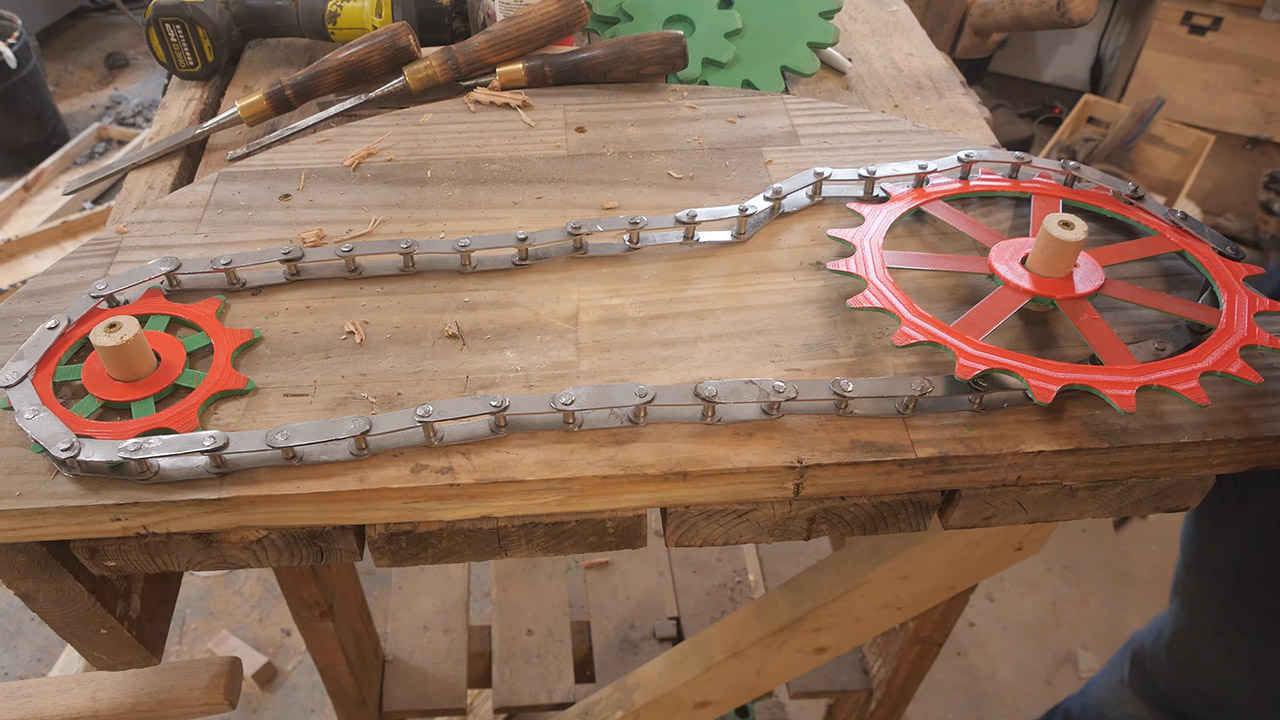
A chain drive, based on da Vinci’s notes on connected mechanics, transmits power to the back wheel. Each link started as a piece of sheet metal that was cut, drilled, and riveted together to form a loop of around fifty segments. Then they manufactured bronze sprockets in 3D-printed molds, which was a little tricky. In practice, the chain transmits force when everything lines up perfectly, but little variations in link spacing and sprocket form can still cause the entire system to jam. They experimented with guidelines and modifications to see if they could enhance it, but getting the consistency exactly right was difficult without the precision of modern manufacturing procedures. A decent old leather belt or a pair of meshing gears may have solved the problem right away.
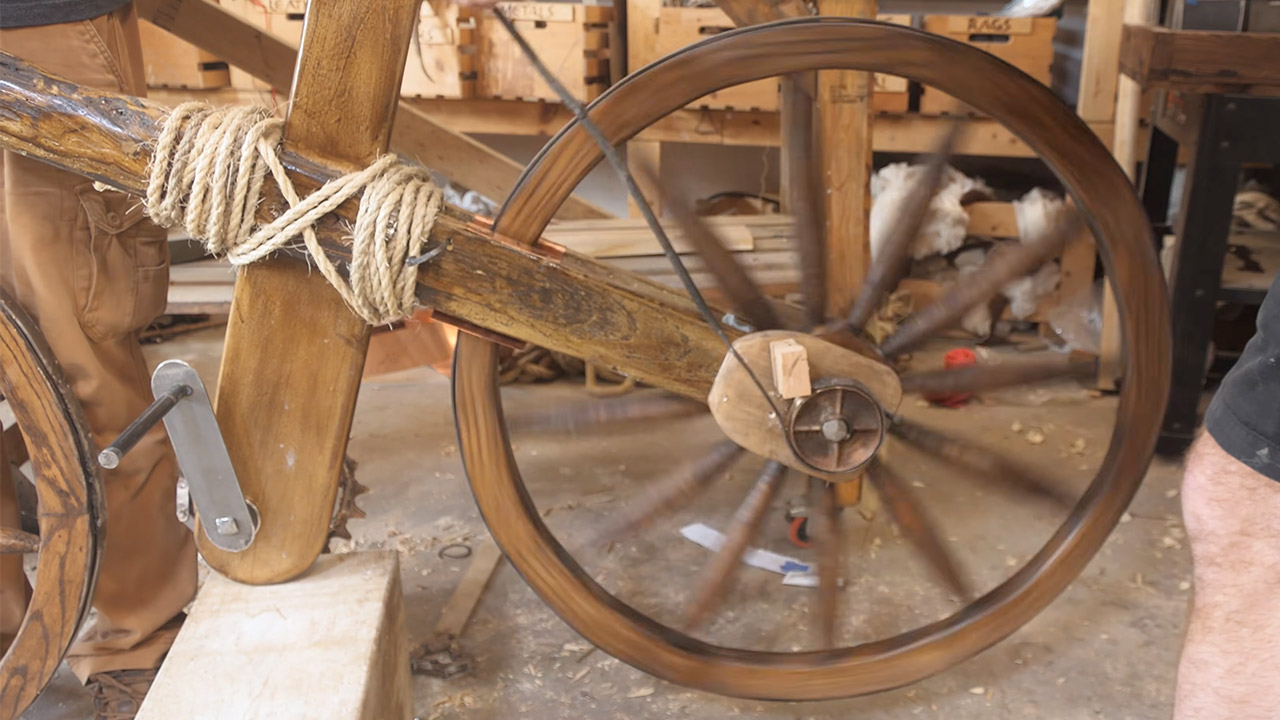
Pedals are attached to cranks affixed to the rear axle, which have complex holes filed to match the similarly shaped axle ends. After some tweaking with a hammer, the peening is perfect, and everything clicks into place. This basic system provides a more direct drive; as the chain begins to spin the sprocket, each pedal stroke propels the bike ahead with no middlemen in the way. When it comes to brakes, this is when the true genius shines, as things become rather da Vinci-esque. A basic steel spring band wraps around a drum built into the back wheel, and a lever keeps the spring open while you’re moving; simply release the lever, and the spring snaps shut, clamping down and stopping the wheel dead. It’s simple but effective, with only a lever, some steel, and a spring, no cumbersome cables or pads required. Best of all, it’s simple enough that you can slam the brakes without gripping the wheel in a panic.
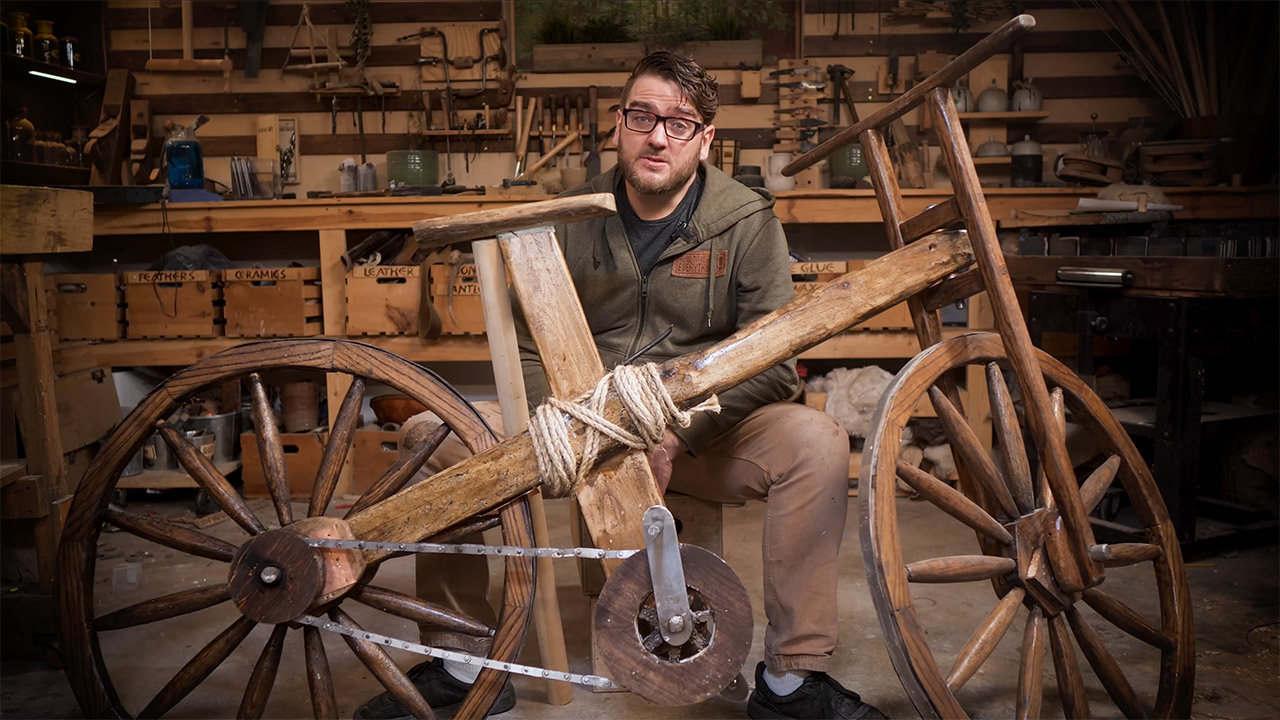
Putting this thing through its paces, however, allows you to see where it stands. The contraption steers, rolls smoothly on its bearings, and brakes like a charm (though you have to be careful when you catch the lever just right). The chain usually provides the necessary power, but not always, and when it jams, the entire system locks up tight. Then there’s the speed issue, as getting up to a respectable pace is easy; staying there is a different challenge. The homemade drive system is unable to keep up with the demands it is subjected to, therefore sustained speeds are just out of reach no matter how hard you try. Still, all things considered, this contraption looks and feels like an authentic early bike, complete with functional pedals and brakes.
[Source]
Leonardo da Vinci’s Bicycle Becomes a Reality, Built From Old Notebook Sketches
#Leonardo #Vincis #Bicycle #Reality #Built #Notebook #Sketches