Trump threatens to strike Iran ‘very hard tonight’ to gain ‘total control’
Donald Trump has threatened to launch major strikes on Iran and seize control of its oil industry, including the vital Kharg Island terminal, as efforts to negotiate an end to the war appeared stuck

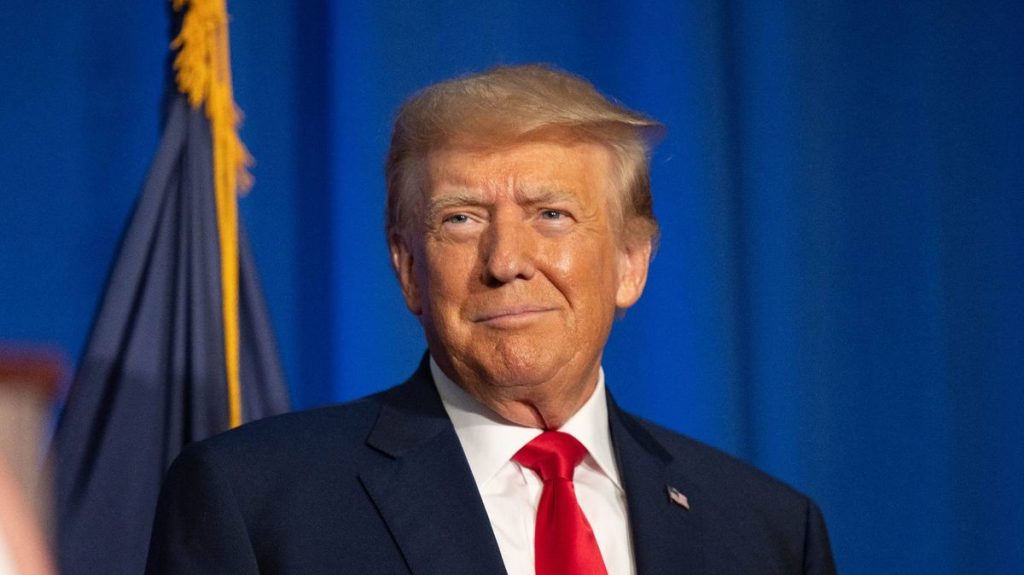
Trump’s threats marked his latest verbal intensification in the Iran war(Image: Getty Images)
US President Donald Trump vowed to launch significant strikes on Iran and seize its oil industry as escalating conflicts between the nations edged the Middle East closer to the brink of full-scale war. In a social media post, Mr Trump declared that the US would strike Iran “very hard tonight” and assume “total control” of Iran’s oil and gas sectors, including the crucial Kharg Island oil terminal, in the “not too distant future”.
His most recent threats emerged as attempts to negotiate a peaceful resolution to the conflict appeared to be at a standstill. Mr Trump has expressed his exasperation with the stalled negotiations, cautioning earlier in the week that Tehran would “pay the price” for taking an excessive amount of time to reach an agreement.
Iran’s stronghold over the Strait of Hormuz has caused disruption to global energy supplies, increased fuel prices and inflated the cost of food and other essentials well beyond the region.
The US and Iran exchanged blows for a second consecutive day on Thursday, following a fragile ceasefire agreed just over a month ago.
Although the strikes have heightened tensions in the region, they have been more restrained compared to the initial weeks of the conflict, and discussions between the US and Iran continue.
Mr Trump’s threats on Thursday, while severe, marked his latest verbal intensification in the Iran war.
Back in April, he cautioned Iran that “a whole civilisation will die tonight, never to be brought back again” if it failed to accept his terms, before extending a ceasefire.
Kharg Island, positioned on the opposite side of the Persian Gulf from American bases in Kuwait and Saudi Arabia, serves as the vital centre of Iran’s oil industry, handling 90% of the nation’s exports.
The location holds significance because Iran’s coastline proves largely too shallow for tanker vessels to berth.
It remained uncertain how seriously Mr Trump intended his threat to capture it.
“My preference has always been to take Kharg Island,” he stated during a Thursday interview on Fox News.
“I don’t know that America has the stomach for it to be honest.”
US forces would face vulnerability on Kharg Island due to its close proximity – 21 miles – to the Iranian mainland, from where missiles, drones and artillery could be launched.
Mr Trump suggested during the interview that he continues to oppose deploying American forces into Iran.
“We could walk in there tomorrow. We could take soldiers – I don’t want to have boots on the ground.
“But if I wanted to we could put a small group of soldiers and take over the place.”
He drew parallels between his threat to seize Iran’s oil industry and how America took control of Venezuela’s oil sector following the capture of then-president Nicolas Maduro in January.
Tit-for-tat attacks shook the Middle East for the third occasion this week.
The initial round featured strikes between Iran and Israel, followed by two exchanges of fire between America and Iran, which hit nations hosting US military personnel. The US military’s Central Command confirmed airstrikes concluding early Thursday had targeted “Iranian military surveillance capabilities, communication systems and air defence sites”.
Blasts reverberated across Iran’s capital, alongside the port city of Bandar Abbas and other southern regions bordering the Strait of Hormuz.
Iran’s paramilitary Revolutionary Guard subsequently reported that locations struck included a manufacturing facility, a military compound and a local Guard installation outside Tehran.
Tehran claimed it retaliated against Kuwait, Bahrain and Jordan.
Kuwait shut its airspace for several hours but reported no damage.
Jordan confirmed it intercepted 20 Iranian missiles launched towards an area housing a base with US personnel, though no casualties occurred.
Bahrain’s interior ministry reported an 11 year old girl was injured and vehicles and properties were damaged by debris from intercepted Iranian attacks.
Iran’s foreign ministry declared in a Thursday statement that the US strikes had “effectively rendered the ceasefire … meaningless”, without confirming its withdrawal from the agreement.
US treasury secretary Scott Bessent announced via social media that America would withdraw funds from frozen Iranian accounts to cover damage costs to American allies and any fees Iran levies on vessels seeking passage through the Strait of Hormuz.
Beyond the impasse over the strait, both nations also remain divided over Iran’s nuclear programme. Tehran maintains that its nuclear pursuits are peaceful.
However, the US and Israel harbour concerns that Tehran’s cache of highly enriched uranium could be utilised to construct a nuclear weapon. This was a primary justification they provided for initiating war on February 28.
Iran has been adamant that any agreement to cease the war must also terminate the conflict in Lebanon between its ally Hezbollah and Israel. Yet, Israeli Prime Minister Benjamin Netanyahu seems determined to continue his mission of dismantling the militant group.