Snapping Helical Legs Let This Palm-Sized Robot Hop, Flip, Climb, and Swim
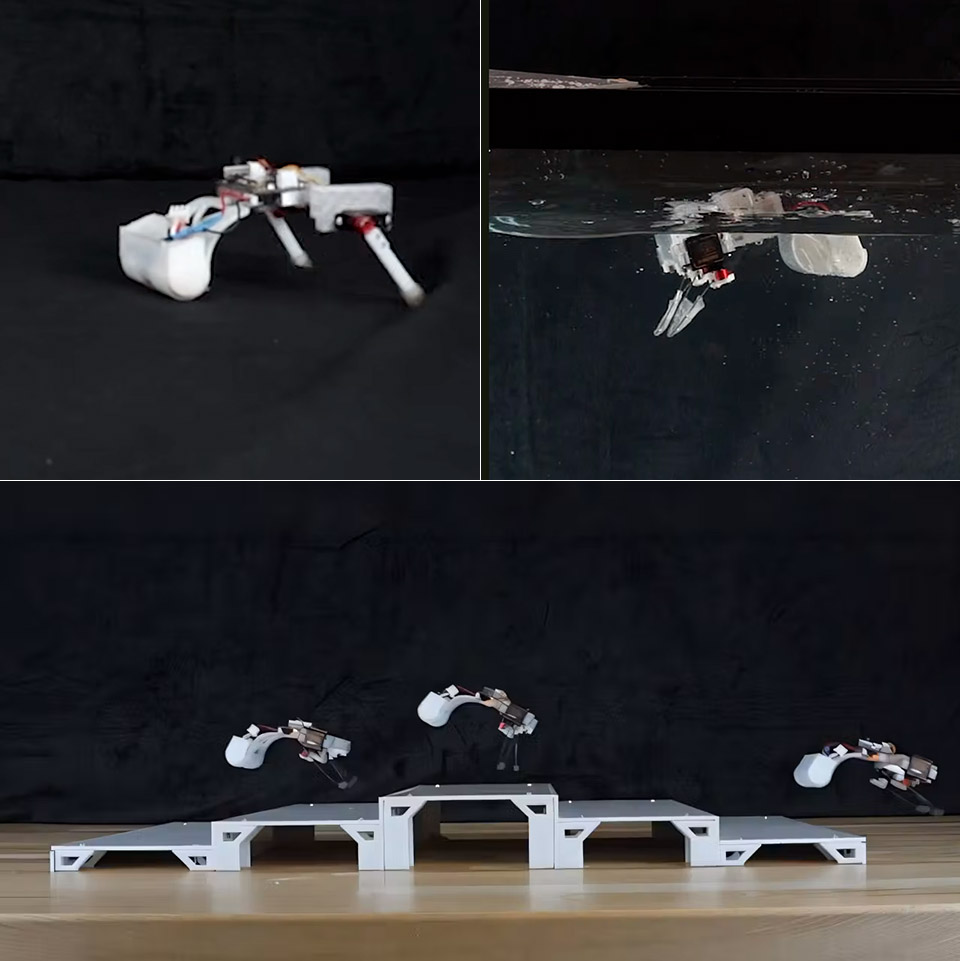
Small motors inside tiny robots hit a wall the moment a machine needs a sudden shove. A UCLA and University of Michigan team built around that wall by giving a 98.2-gram platform, 11 centimeters long, 8 wide, and 4 tall, a pair of rear legs that wind up slowly and then fire all at once.
Each leg begins as a superelastic Nitinol rod, with one end secured and the other attached to a micro-servo via a pushrod. The servo twists a rod with a slight bend and begins turning it into a helix to build up elastic energy, which is stored until the rod reaches a point where it snaps into a new shape. That release happens in the blink of an eye, much faster than the servo can swing the limb on its own. When the servo spins in reverse, it resets the rod for the following cycle. It took researchers months to figure out which combinations of bend and twist would result in a lovely, clean snap rather than a sluggish, slumpy fall, and then they tweaked the helix to ensure that the burst of energy remained useful and the reset was simple.

LEGO Disney & Pixar Wall-E & EVE Building Set for Adults, Ages 18+ – Home Office, Book Shelf, or Room…
- LEGO SET FOR ADULTS – The WALL-E and EVE (43279) building set offers adults 18 years old and up an immersive construction challenge featuring…
- 4 DISNEY PIXAR CHARACTERS – Builders can create iconic robots WALL-E, EVE, M-O and Hal from the hit movie—each with authentic functionality like…
- MINDFUL BUILDING EXPERIENCE – This detailed construction set lets builders practice advanced construction techniques for an immersive and relaxing…
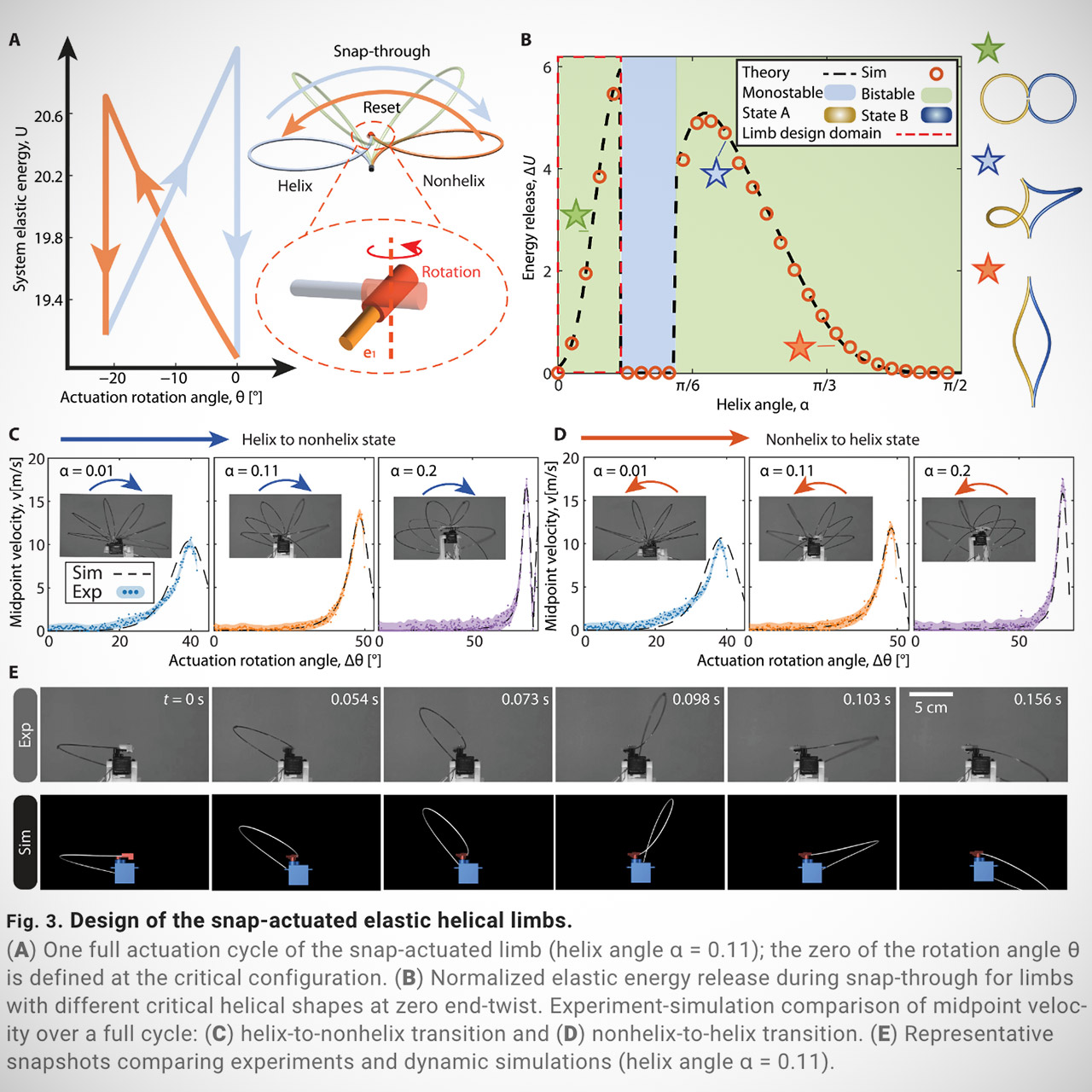
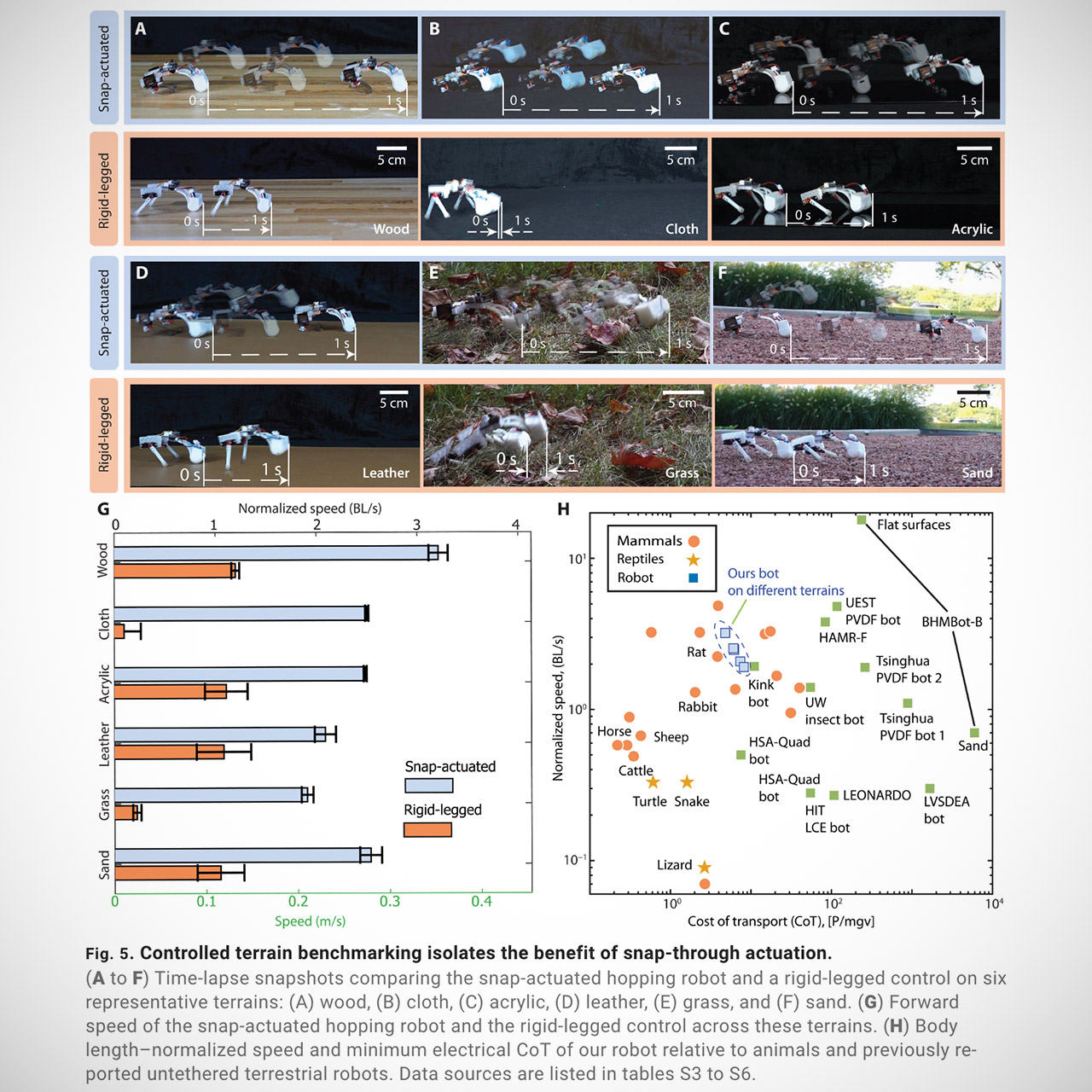
Two of these legs are mounted on the back of a body that is powered by a 7.4-volt LiPo battery pack and a custom control board. You can steer the thing by varying the speed of the servos. The same hardware can handle a variety of surfaces, including wood, cloth, acrylic, leather, grass, and even sand. On wood, the snap-powered robot achieved a speed of 3.21 body lengths per second. Across the six varied surfaces, it averaged 2.46 body lengths per second. However, a nearly identical model with inflexible legs was only able to reach 0.79. On cloth and grass, the rigid version came to a halt, but the snap-powered robot continued to move.
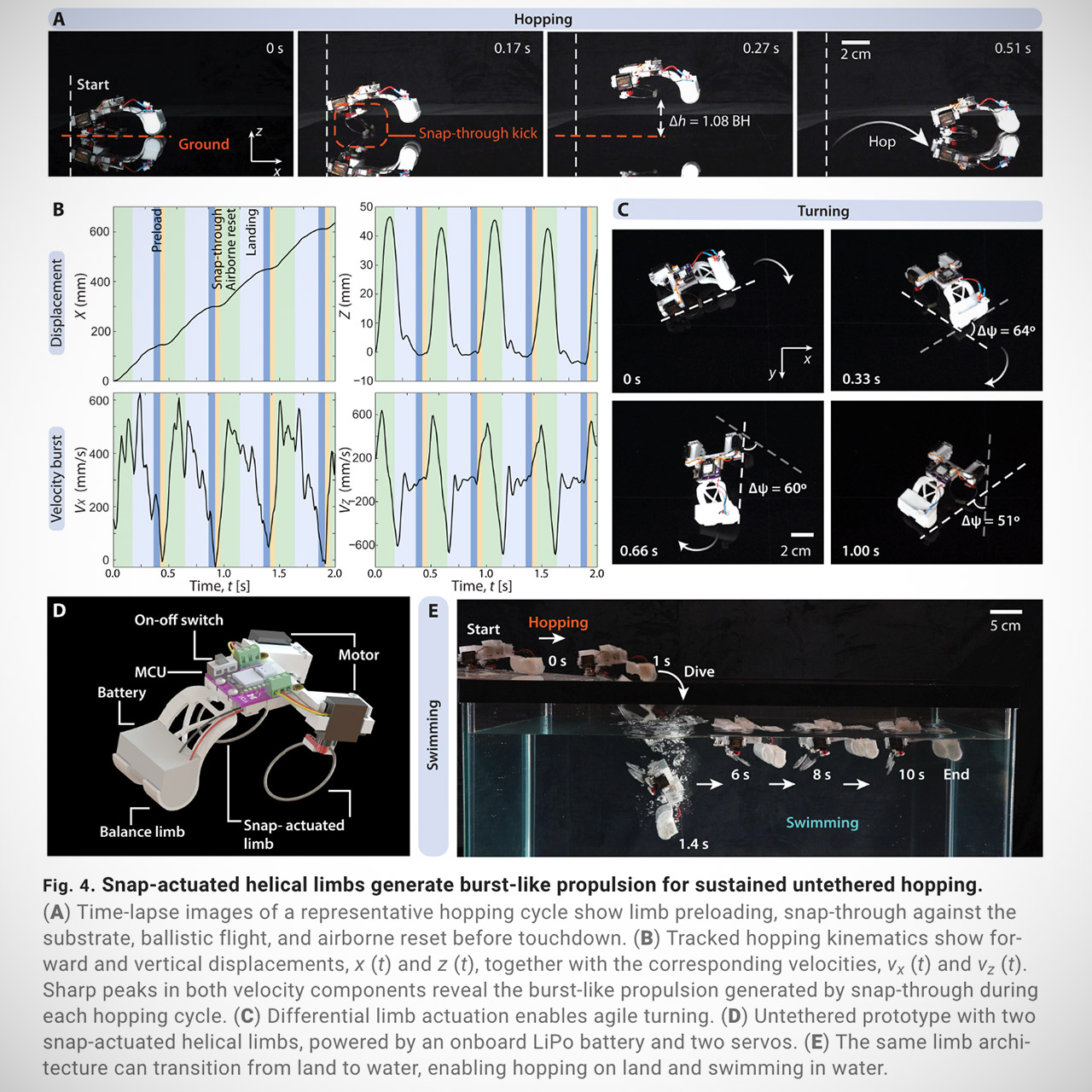
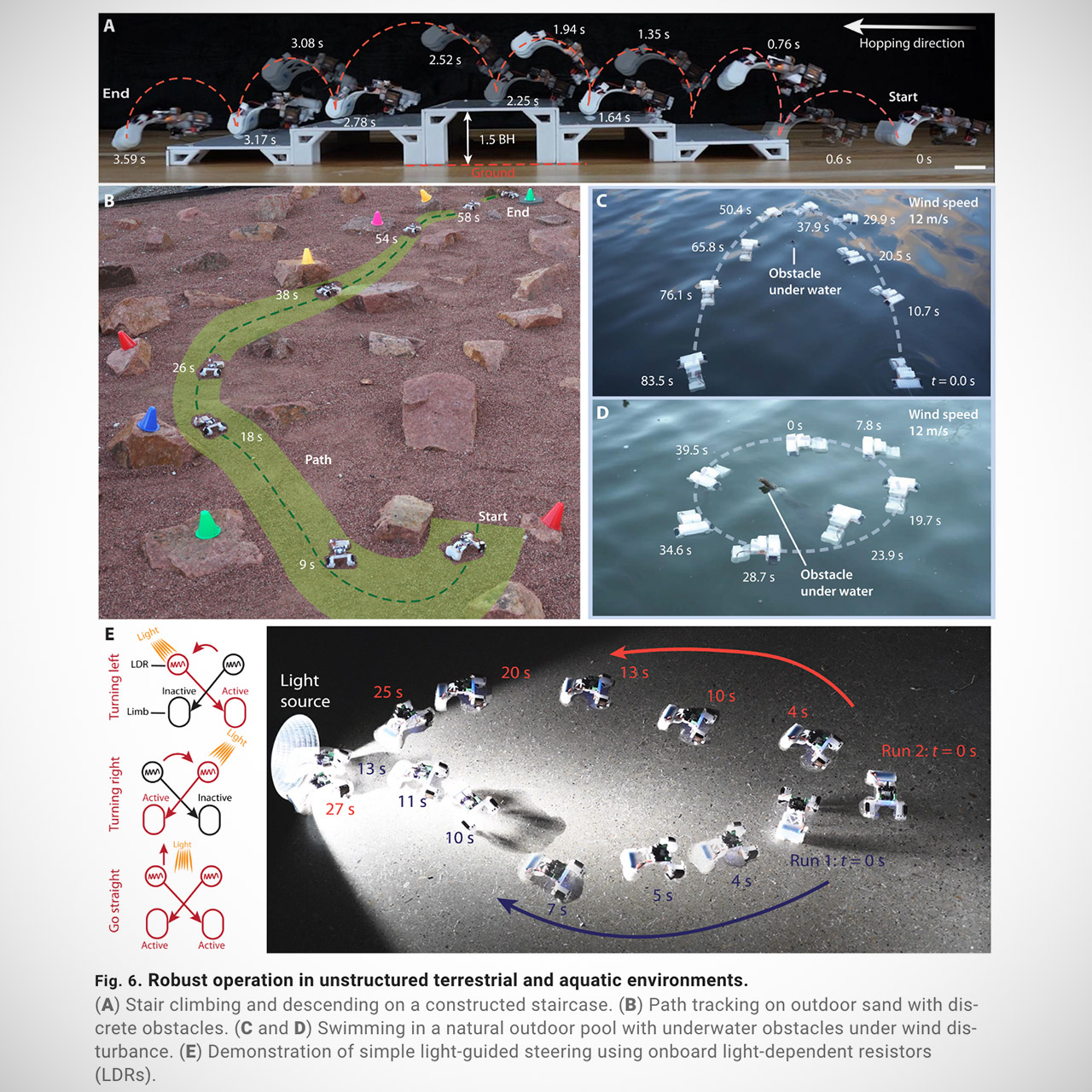
There was no trouble going up or down steps. In a sandbox filled with rocks, they even used a remote control to maneuver the robot around obstacles. Later, light sensors enabled it to navigate to a lamp by itself. With enough accumulated energy, the identical snap would send the body into repeated backflips. At this point, they sealed the circuitry and attached some thin flexible fins to the looping limbs. In water, those snaps formed paddle strokes, propelling it at a rate of nearly half a body length per second. Despite the wind pushing against the surface, the robot was still able to turn and navigate past obstructions.
Khalid Jawed from UCLA’s Structures-Computer Interaction Lab and Xiaonan Huang from Michigan Robotics spearheaded the entire project, along with co-first authors Dezhong Tong and Jiaqi Wang, as well as Zexiong Chen from Vassar College, Andy Borum from Vassar College, and Weicheng Huang from Newcastle University. It was all supported by National Science Foundation funds and published in Science Advances as Geometry-controlled instability pathway selection in elastic helices allows for fast, efficient robotic locomotion.
Because the snap is determined by the curvature of the rod rather than its size, Jawed believes the same concepts can be used to robots as small as a few millimeters in diameter. Huang emphasizes the larger point: let the structure do the work that would otherwise require more powerful motors or additional control code. For a machine small enough to vanish in tall grass, a single well-timed snap is all that separates getting stuck and jumping away from being able to paddle on in the water.
[Source]
Snapping Helical Legs Let This Palm-Sized Robot Hop, Flip, Climb, and Swim
#Snapping #Helical #Legs #PalmSized #Robot #Hop #Flip #Climb #Swim