Ring of steel thrown round World Cup to guard against terror attacks – in Brit pubs
EXCLUSIVE: British Beer and Pub Association issues security advice to landlords screening live matches 4,000 miles away to watch out for rampaging terrorists

(Image: AFP via Getty Images)
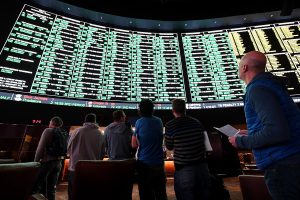
A ring of steel is set to be thrown round the World Cup to guard against terror attacks – in British pubs. The British Beer and Pub Association has issued guidelines for landlords screening live matches during the tournament.
And even though they will be 4,000 miles away from the action, they have been advised to take counter terrorism measures.
As well as bringing in doormen and CCTV, serving beer in plastic glasses and having overspill areas to guard against overcrowding, it says bar bosses should look out for rampaging terrorists.
The advice states: “It is important that premises consider the risk from those intent on causing wide-scale harm and panic and should therefore remain vigilant for anything that seems out of place or unusual.
“Licensed premises remain attractive to terrorists seeking to attack publicly accessible locations where large numbers of people gather.
“A risk assessment should be carried out that takes into account the premises’ preparedness and resilience, the security culture of all staff.
“UK Terrorist threat levels are published online. Knowing where to find the threat levels and understanding them is important when security planning.
“Understanding the threat can help inform your risk assessment and ensure appropriate and proportionate security arrangements are in place and help prioritise actions as threat levels provide an indication of attack likelihood.”
Pub bosses are advised to monitor MI5’s website for advice on the chances of an attack. And they should keep their eyes up in the build-up to next month’s tournament for folk reccying their premises.
“Terrorists like all criminals will reconnoitre their targets,” the British Beer and Pub Association states.
“Staff must be vigilant and confident they can report suspicious behaviour without delay. If you suspect there is immediate danger call 999.
“If there is no immediate threat but something doesn’t feel right trust your instincts and report it to Counter Terrorism Policing via the National Anti-Terrorist Hotline.”
Landlords and their staff are urged to take an Action Counters Terrorism training course.
The extent of the security measures could shock Brit pub bosses who are relying on the tournament to help them flog 50m extra pints.
They will be allowed to stay open into the early hours so fans can watch matches that start late due to the time difference between the UK and co-hosts Mexico, Canada and the US.
The association’s chief executive Emma McClarkin said: “The pub has and always will be the home of live sport and there is no better place to enjoy watching a game of football than at your local with friends and other fans.
“With the World Cup fast approaching we want to help pubs prepare the best they can to make the absolute most of the opportunity to draw in customers and provide a brilliant experience for them.
“We are really pleased to be able to provide this guidance alongside industry partners to ensure that the tournament can be enjoyed safely and successfully in venues across the UK.”
The biggest security operation in World Cup history will be carried out to protect fans who travel to matches. A robot army will be deployed to safeguard supporters from war, terror and drug cartels.
Humanoid Atlas and his four-legged companion Spot will be on the ground in numbers across the tournament to ‘enhance match operations, fan engagement, and safety and efficiency’ at what threatens to be one of the most dangerous football tournaments ever staged.
Organisers FIFA insist Iran will still take part even though it is at war with host nation America.
The Middle East state has fired off missiles towards at least six other playing nations – Iraq, Saudi Arabia, Qatar, Turkey Jordan and Brit military bases in the region.
Intelligence chiefs fear Iranian sleepers could be deployed to carry out terror attacks on the West.
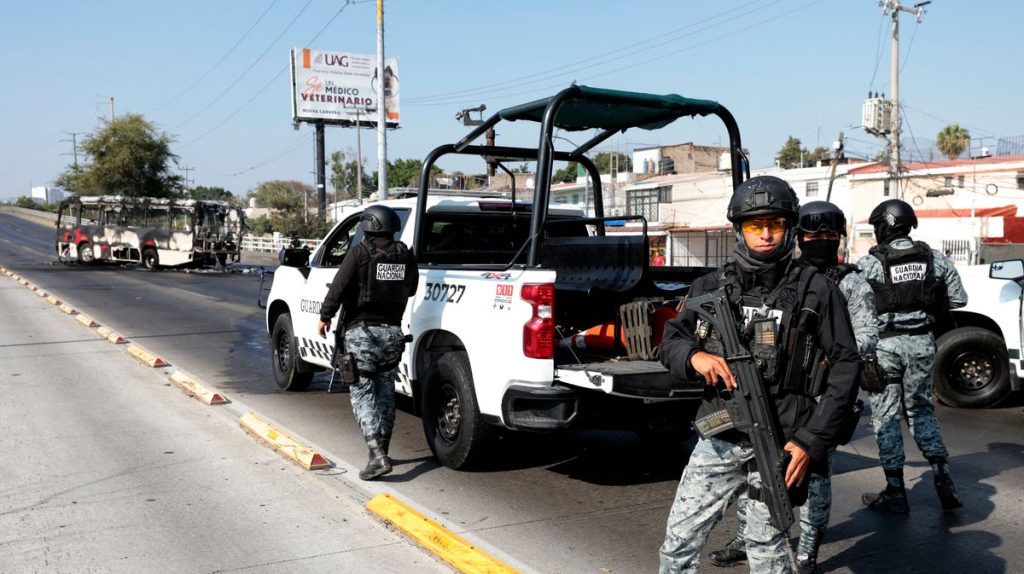
While in Mexico rival cartels are battling it out for territory after drug lord Nemesio ‘El Mencho’ Cervantes was killed by the military six weeks ago.
According to Brit-educated tech expert Aaron Ting the World Cup will be the ‘most surveilled sporting event in human history’.
AI-powered DroneHunter interceptors will be deployed at all 11 US venues.
The hexcopters use net-based capture systems to intercept and remove hostile drones from the sky with no human pilot required and have already been battle-tested in Ukraine and the Middle East.
The US Department of Homeland Security has invested £87m in counter-drone capabilities for the tournament.
They will also be deployed in Mexico where drug baron El Mencho pioneered the use of explosive-laden and weaponised drones against the military.
More than 5,000 AI-powered Nexus surveillance cameras with real-time facial recognition will also be deployed.
The network can identify wanted suspects’ faces and track vehicles at the same time.
Officers capture images from mobile devices that are cross-referenced against judicial databases in real-time.
At least 111 highway monitoring arches will be able to track vehicles by colour, model, and physical characteristics – not just number plates.
Monterrey’s K9-X division – robot dogs equipped with night vision, HD cameras, motion sensors and loudspeaker systems – will patrol its stadium in Mexico.
They are designed to enter risky environments ahead of humans and stream live footage back to command centres.
A touchless ID facial recognition programme is also being rolled out across 65 US airports ahead of the World Cup. It verifies IDs in five seconds with no documentation required. At stadiums facial authentication for entry is already operational across NFL and baseball venues that will double as World Cup sites.
While Vancouver, Canada, is installing hundreds of temporary surveillance cameras around transit hubs. A nine-week surveillance zone will extend 2km from the stadium.
Ting, a doctor of business administration at Edinburgh’s Heriot-Watt University and member of the Global Fintech Institute think tank, said such technology ‘would normally face years – sometimes decades – of regulatory friction before deployment at this scale’.
“Autonomous interceptor drones. Real-time AI facial recognition across three countries. Robotic police units. Biometric border processing.
“Six million fans are about to walk into the most surveilled sporting event in human history,” he said.