Drone strike hits UAE’s Barakah nuclear plant sparking fire and reigniting tensions
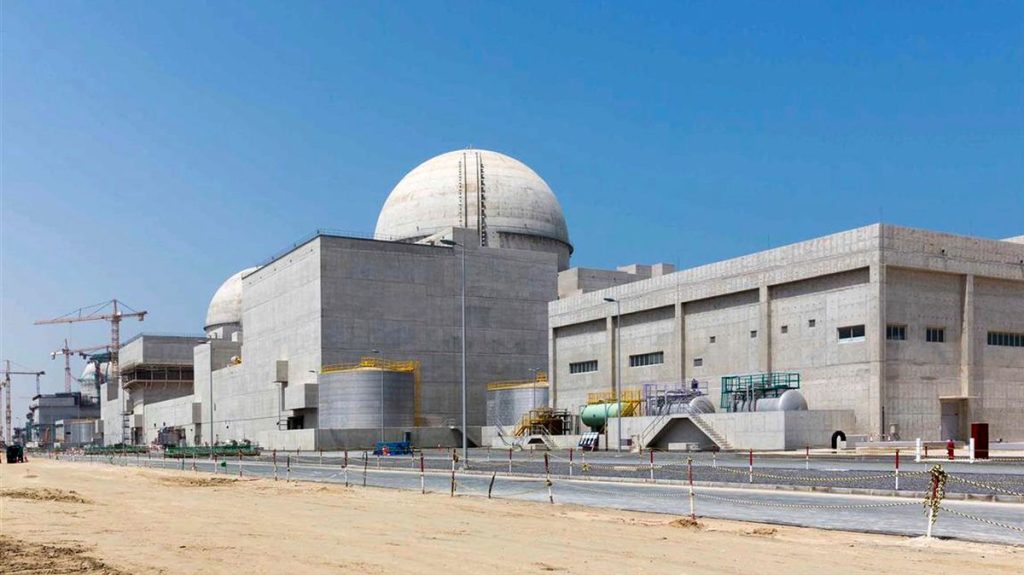
The £16 billion Barakah nuclear facility stands as the first and only nuclear power station in the Arab world and has the capacity to supply a quarter of all energy requirements across the UAE

The £16 billion Barakah nuclear facility was struck
A drone strike has hit the United Arab Emirates’ only nuclear power plant, igniting a blaze along its perimeter. No casualties or radioactive leaks were reported, but the incident underscored the danger of conflict reigniting as the Iran ceasefire remains fragile.
Nobody has yet stepped forward to claim responsibility, with the UAE stopping short of pointing the finger at any particular party. The nation has, however, pointed to Iran as being behind a series of drone and missile strikes in recent days amid escalating tensions over the Strait of Hormuz, a crucial energy corridor that Iran continues to control.
America is imposing a blockade on Iranian ports, while diplomatic attempts to forge a more lasting peace have consistently collapsed. Meanwhile, the UAE has been hosting air defence systems and troops from Israel, which joined the US in the February 28 assault that triggered the conflict.
US President Donald Trump has hinted that fighting could restart, while Iranian state broadcasters have repeatedly shown presenters brandishing Kalashnikov-style weapons in a bid to ready the population for warfare.
Clashes have also intensified between Israel and the Iran-backed Hezbollah militant organisation in Lebanon despite a supposed ceasefire there, putting additional strain on the broader truce.
The £16 billion Barakah nuclear facility was constructed by the UAE with South Korean assistance and became operational in 2020.
It stands as the first and only nuclear power station in the Arab world and has the capacity to supply a quarter of all energy requirements across the UAE, a union of seven emirates. The UAE’s nuclear regulator insisted the blaze had no impact on plant safety.
“All units are operating as normal,” the organisation posted on X.
The Vienna-based International Atomic Energy Agency (IAEA), the United Nations’ nuclear watchdog, confirmed the strike sparked a blaze in an electrical generator and that one reactor was running on emergency diesel generators.
IAEA director-general Rafael Mariano Grossi voiced “grave concern” about the incident and declared that military action threatening nuclear safety is unacceptable, the agency said in a statement.
Sunday’s strike represented the first occasion the four-reactor Barakah plant has come under attack during the conflict.
It sits close to the Saudi Arabian border, roughly 225 kilometres (140 miles) west of the UAE’s capital city Abu Dhabi.
Yemen’s Iranian-backed Houthi rebels, whom the UAE have fought alongside a Saudi-led coalition, claimed to have struck the plant while it was still being built in 2017, something Abu Dhabi rejected at the time.
The UAE signed a stringent agreement with the US regarding the power plant, known as a “123 agreement”, in which it pledged to abandon domestic uranium enrichment and reprocessing of spent fuel to address any proliferation concerns.
Its uranium is sourced from overseas.
That stands in stark contrast to the nuclear programme in Iran, which lies at the centre of its prolonged dispute with the United States and Israel. Iran maintains its programme serves peaceful purposes, but it has enriched uranium to near weapons-grade levels and is widely suspected of operating a military component to its programme since at least 2003.
It has also frequently limited the activities of UN inspectors.
Israel is widely believed to be the sole nuclear-armed nation in the region, though it has neither confirmed nor denied possessing atomic weapons.
Iran struck near Israel’s Dimona nuclear facility during the war.
Nuclear facilities have increasingly become targets in conflicts in recent years, including during Russia’s full-scale invasion of Ukraine in 2022.
Throughout the Iran war, Tehran repeatedly alleged its Bushehr nuclear power plant came under attack, though there was no direct damage to its Russian-operated reactor or any radiological release.
There have been several instances of attacks around the Strait of Hormuz and Persian Gulf countries in recent weeks.
Negotiations between Iran and the US have reached an impasse as the ceasefire threatens to collapse and plunge the Middle East back into open warfare, extending the global energy crisis triggered by the conflict.
Two sources familiar with the situation, including an Israeli military officer, said Israel is coordinating with the US regarding a potential resumption of attacks.
Addressing his Cabinet on Sunday, Prime Minister Benjamin Netanyahu said “our eyes are also open” when it comes to Iran. He revealed plans for a conversation with Mr Trump later in the day to discuss the president’s trip to China and “perhaps” other matters.
“We are prepared for any scenario,” he stated.
On Iranian state TV, hosts on at least two channels were seen armed during live broadcasts.
In one programme, Hossein Hosseini received basic firearms training from a masked member of the paramilitary Revolutionary Guard.
After being shown how to ready the weapon, Hosseini mimed firing a shot at the flag of the UAE.
On another channel, female host Mobina Nasiri mentioned that a weapon had been sent to her from a gathering in Tehran’s Vanak Square so she could appear armed on camera.
She declared: “From this platform, I declare that I am ready to sacrifice my life for this country.”