Infected sewer rats ‘could spread hantavirus’ and cause ‘all hell to break loose’
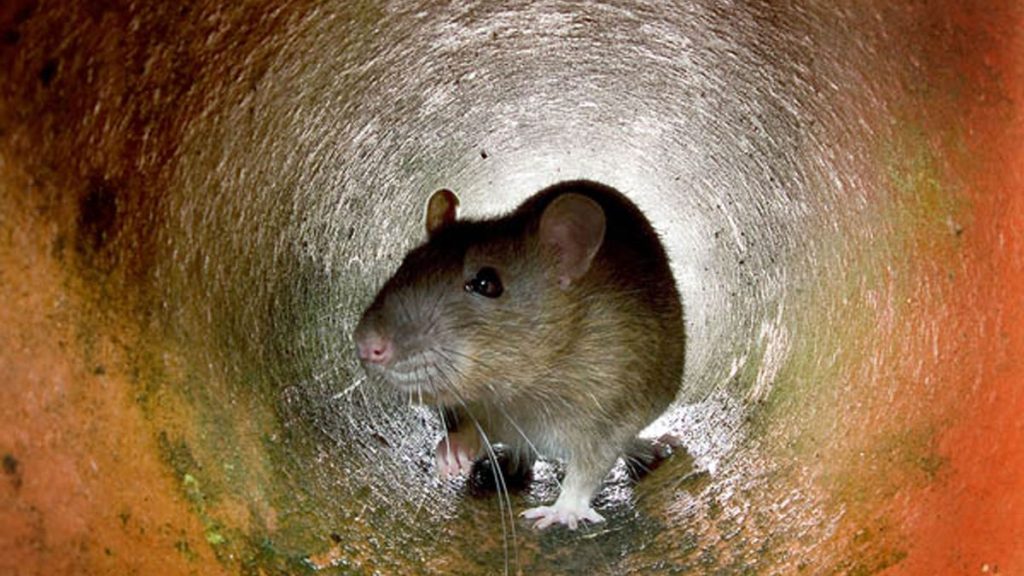
Brit loos have no disinfection system to stop hantavirus being spread by diseased rats scurrying through the sewers prompting a doctor to warn ‘All hell could break loose’

Docs have sounded the alarm the hantavirus outbreak could hit Britain hard(Image: AFP)
Medics fear the cruise ship virus that killed three could be spread across Britain by infected rats scurrying through the sewers. Dozens of Brits are under lockdown at home or in hospital following the hantavirus outbreak aboard MV Hondius.
Some experts are worried rats could pick up the Andes strain of the virus from humans and spread it further. Doctors have warned self-isolating Brits who were on board the ship or who had contact with passengers could develop the virus at home and then pass it into sewers.
While hospital waste is treated to make sure disease is not transferred into the sewer network no such disinfecting happens in domestic loos. One doctor, who has dealt with previous health outbreaks, said: “I am incredibly concerned that patients who are self-isolating may develop the virus and then pass it on through the sewers and infect sewer rats. Then all hell could break loose.”
Humans passing disease to animals is known as ‘reverse zoonosis’. Studies have shown the Andes virus can survive in an infectious state in mucus, saliva and urine – all of which end up in sewers.
The UK Health and Security Agency said it was not cost-effective to set up wastewater monitoring programmes to check whether the Andes virus was in sewers. But it insisted the risk was very low.
The Andes strain is spread in Argentina by the long-tailed pygmy rice rat. Eleven passengers on the ship caught the virus – which has a 40% death rate. Though there is no evidence it can pass to the brown rats that live in Britain’s sewers no studies have shown that it cannot.
A 2018 study in South America found it can also be carried by some species of mice. Dr Giulia Gallo, a post doctoral scientist in the viral glycoproteins group at the Pirbright Institute in Surrey, said she believed the risk was low but could not be ruled out.
“I can see where the concern for reverse zoonosis comes from,” she said.
“Hantaviruses have co-evolved with their rodent reservoir. A few animal studies suggest that viruses are adapted to the specific rodents but cannot productively replicate in a new rodent species.
The doc added: “Unfortunately there are no studies where researchers tried to infect different rodent species with Andes due to the difficulty to manipulate the virus. So while I think the risk for reverse zoonosis is low based on evolution studies and related hantaviruses we do not have the data supporting that statement that it would definitely not happen.”
Professor Davey Jones, a public health expert at the University of Bath, has been studying if viruses can be picked up in wastewater as an early indicator of epidemics. He said reverse zoonosis via the sewer network was ‘theoretically possible’ but believed several unlikely events would need to line up before it happened.
“It would then have to survive transport in the sewer system – quite probable – but importantly be present in high enough concentrations to cause infections,” he said.
“Given the dilution that is very, very unlikely. Since every virus behaves differently we really need to ramp up research to understand human-to-human transmission, develop control measures and vaccines, and learn how this virus persists in the environment.
A Canadian who sailed on the ship was the latest to test positive for the disease, officials in British Columbia said. They were one of four people isolating on Vancouver Island after leaving the ship and had mild symptoms.
Senior health officials said the four had not had any contact with the public since arriving in Canada. British Columbia health officer Bonnie Henry said: “Clearly this is not what we hoped for but it is what we planned for.
“I want to emphasise that hantavirus is a very different virus than the other respiratory viruses that we’ve been dealing with – like Covid, like influenza, like measles. It remains one that we do not consider to have pandemic potential.”
Health chiefs plan to analyse hantavirus genome sequences found in long-tailed pygmy rice rats in South America to understand how the virus is circulating. Experts suspect the first known infected individuals of the current outbreak – a Dutch couple on the cruise who died in April after falling ill – may have been exposed to the Andes strain in areas where the rats live.
Nearly 10% of long-tailed pygmy rice rats are thought to carry it. It spreads to humans who breathe in viral particles from rats’ faeces, urine, and saliva. Andes is the only strain of hantavirus known to transmit to humans.
For the latest breaking news and stories from across the globe from the Daily Star, sign up for our newsletter by clicking here.