China Successfully Catches Its First Reusable Rocket Booster at Sea
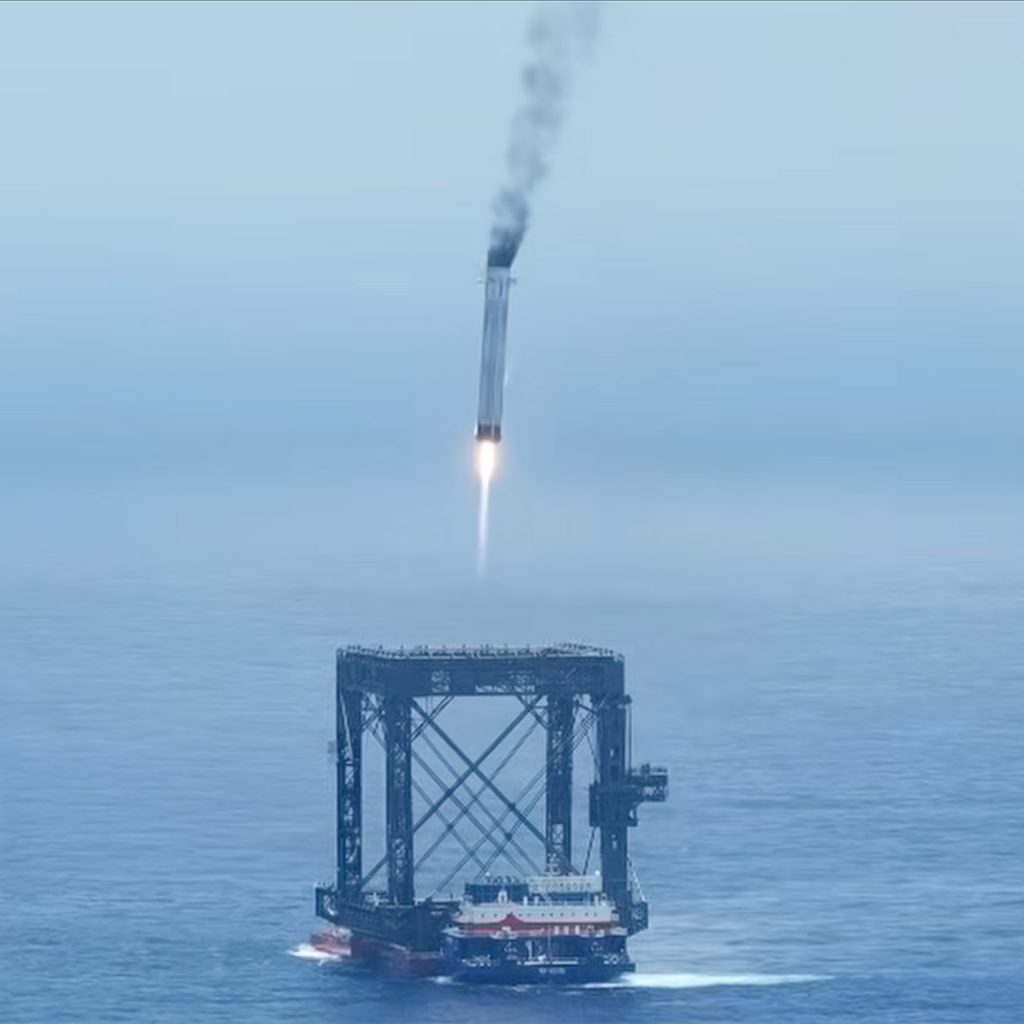
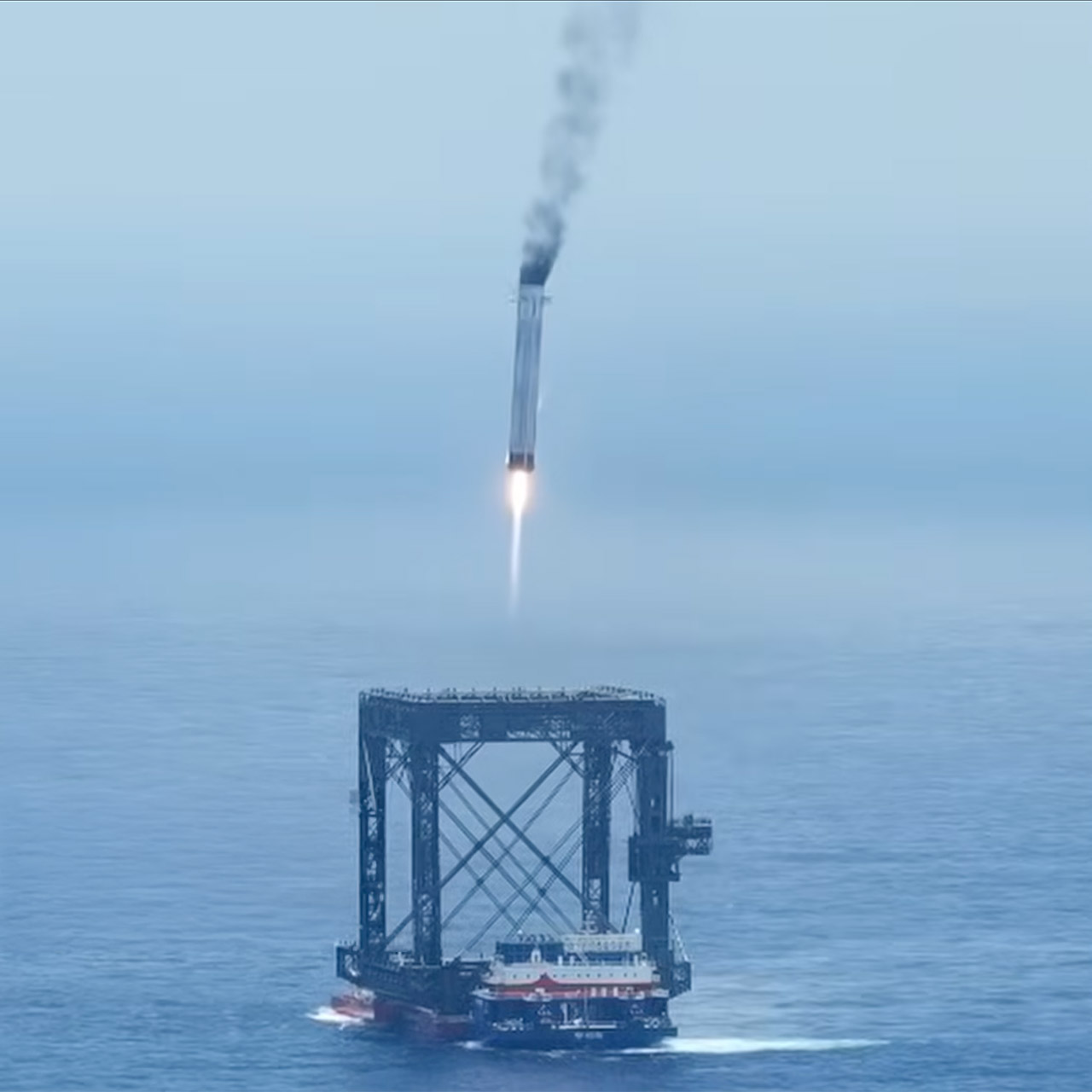
China pulled off a clean recovery of a rocket booster during an actual trip to orbit on July 10, and it did so with a system no other country has tried before. The Long March 10B lifted off from the Hainan commercial space launch site carrying a satellite. Roughly six minutes after the upper stage separated and continued upward, the first-stage booster flipped around, fired its engines to slow down, and settled onto a floating platform anchored offshore.
The booster didn’t land on legs like a Falcon 9, but rather on four hooks built into its base that grabbed onto a big net extended over a steel platform. Videos from the trip show the rocket descending straight down under power, its engines burning out just as the hooks caught the net, and the thing simply came to a rest, still intact. State media verified that the booster remained undamaged. This was the first time China has recovered an orbital launch rocket. Earlier attempts, including a February attempt with a similar Long March 10A, resulted in the booster simply splashing down near the platform rather than being properly attached. The July 10 flight changed everything. Officials from the China Aerospace Science and Technology Corporation were certain that the mission marked their first controlled recovery of a launch vehicle and the world’s first net-based recovery of its kind.

LEGO Icons NASA Artemis Space Launch System – DIY Rocket Model Building Set for Adults, Ages 18+ – Gifts…
- NASA rocket model kit – Launch into a creative project with the LEGO Icons NASA Artemis Space Launch System model building project for adult space…
- What’s in the box? – This creative building set includes everything you need to craft a multistage rocket with 2 solid-fuel boosters, an Orion…
- Features and Functions – This NASA-themed rocket model features retractable launch tower umbilicals, rocket support and crew bridge, detachable…
The method has obvious advantages, since the booster is substantially lighter because it is not need to carry all of the weight in the shape of landing legs and support equipment. This means that future flights will have a larger payload capacity. The net also gives a much larger catch area, so even if you miss the target slightly, it is less important than landing perfectly. Chen Muye, one of the CALT engineers, even mentioned this when discussing design selections with state media.
SpaceX has landed rocket boosters more than 600 times, all with legs on drone ships or ground pads. China has joined the United States as the second country to recover an orbital-class rocket from an actual satellite mission. The two approaches differ dramatically: one relies on legs and precision algorithms to get it right, while the other relies on a slew of hooks and a net that can withstand some variance. Both are pursuing the same goal: reuse.
The Long March 10B is approximately 63 meters tall, with the first stage running on kerosene and liquid oxygen and the top stage using liquid oxygen and methane. In reusable configuration, the rocket can transport at least 16 metric tons all the way to low Earth orbit. On this first mission, it placed its satellite payload into the planned orbit precisely before the booster returned home. China plans to launch this exact booster again before the end of the year, indicating that it has recovered well and is ready to fly. The fact that they want to fly the same booster again soon is a positive sign of how well the healing method is working. The Long March 10 family is part of a bigger goal to get people to the moon by 2030, and the data from this recovery will be used directly in those plans.
China Successfully Catches Its First Reusable Rocket Booster at Sea
#China #Successfully #Catches #Reusable #Rocket #Booster #Sea