China’s LineShine Supercomputer Takes the Crown as World’s Fastest Using Only CPUs
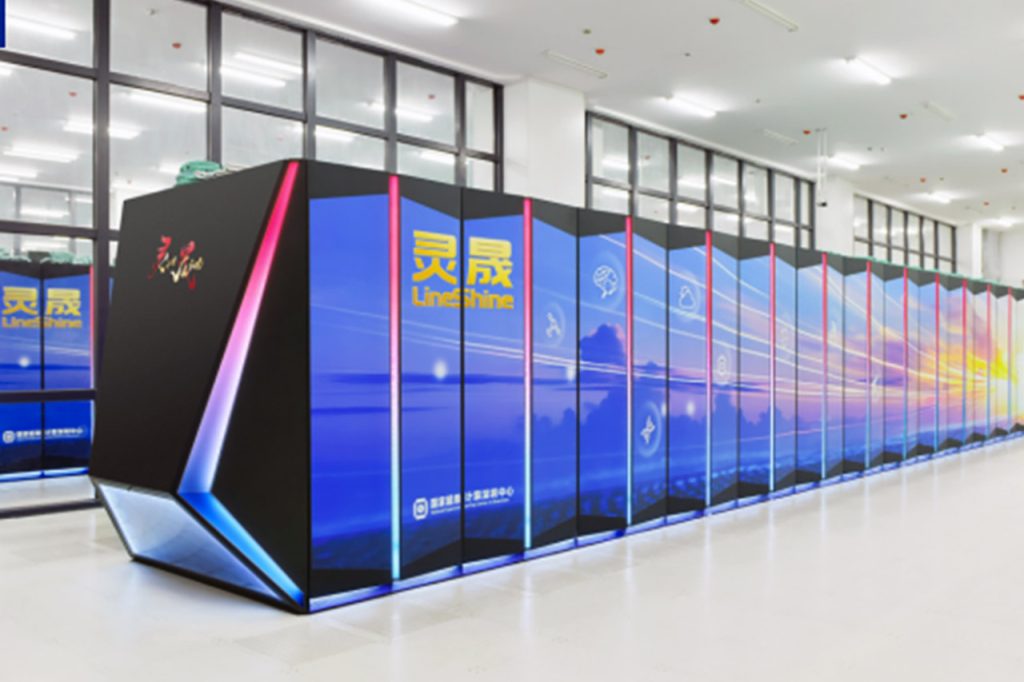
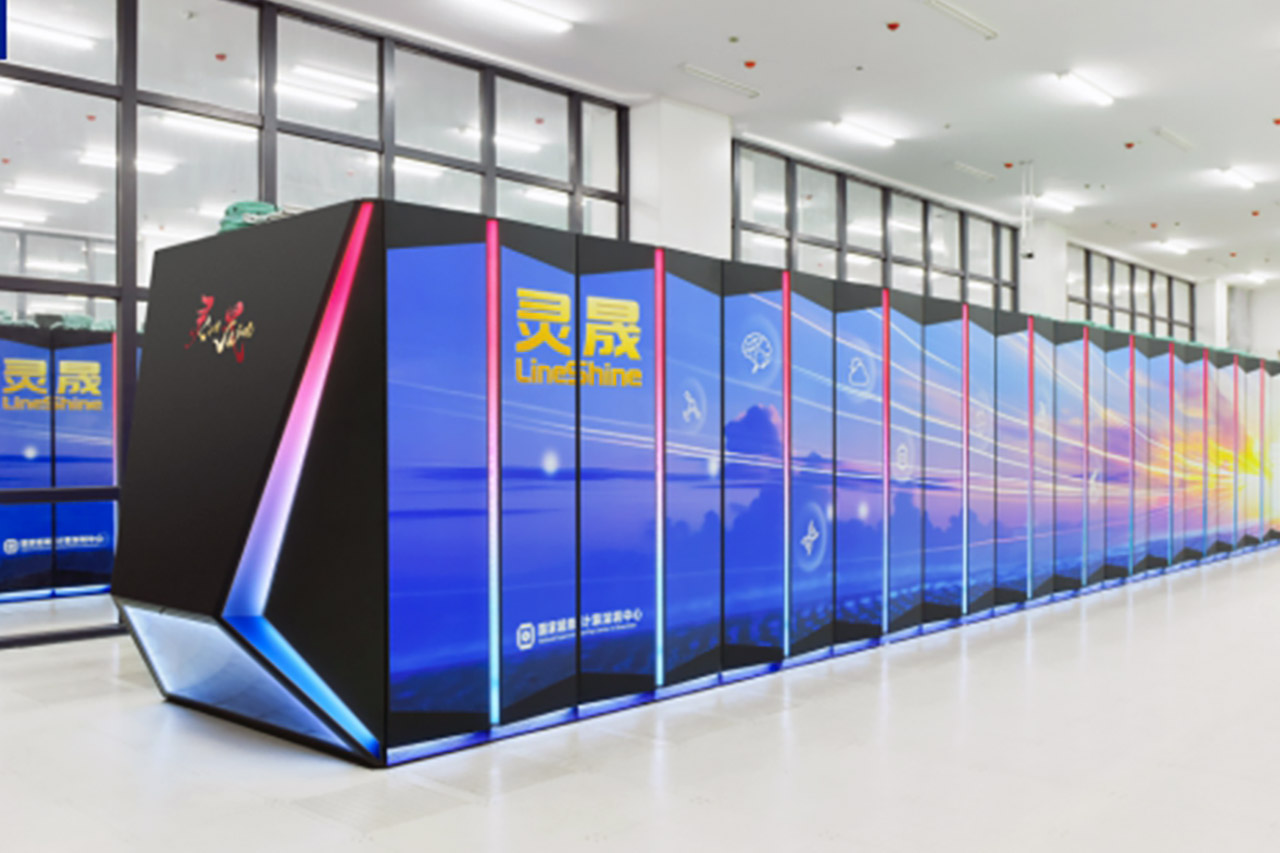
LineShine reached the top of the latest Top500 ranking this week. The machine, installed at the National Supercomputing Center in Shenzhen, delivered sustained performance of 2.198 exaflops on the standard High Performance Linpack benchmark.
That equates to more than two quintillion calculations per second in double-precision arithmetic. It is the first time a system on the public list has exceeded two exaflops while using only regular CPUs. Engineers designed the system with 13,789,440 cores spread among customized LX2 processors. Each CPU contains 304 cores running at 1.55 GHz, two compute dies, and integrated high-bandwidth memory. The cores are designed on the ARMv9 architecture and include units for high-precision vector and matrix computations.
Sale

ACEMAGIC Mini PC Windows 11 Pro, AMD Ryzen R2544(Beat 4300U/3500U, up to 3.7GHz), 16GB DDR4 RAM 256 SSD…
- ▪ [AMD Ryzen R2544, which is more powerful than the N150/3500U] – ACEMAGIC Mini PC is powered by Latest Processor AMD Ryzen R2544(4Cores/8Threads…
- ▪ [K1 Mini Computer – Meet Your Second PC] – Next-Gen Light Office Mini PC comes pre-installed with the Win11 Pro system, which is intelligent…
- ▪ [Large Storage Capacity, Easy Expansion] – Mini Computer K1 is equipped with a 16GB DDR4 and a 256GB M.2 2280 SSD, which allows the small PC to…
More than 22,000 nodes are contained in 90 cabinets, which are linked by a high-speed network created in house. The overall facility consumes around 42.2 megawatts while in operation and achieves approximately 52 gigaflops per watt on the primary benchmark. Previous leader El Capitan is now in second place. The AMD-based system at the Lawrence Livermore National Laboratory in California achieved 1.809 exaflops. LineShine is now more than 20% ahead. El Capitan uses both regular processors and graphics accelerators, but LineShine does not.
The design choice is noteworthy because most existing exascale computers rely heavily on graphics processors for raw performance on certain tasks. Instead, LineShine builds specialized acceleration circuitry right into its main chips. These circuits address the dense linear algebra at the heart of the benchmark test without the need for any additional accelerator hardware. China has regained the top rank in the Top500 for the first time since Sunway TaihuLight in 2017. For many years, the country concealed some of its most powerful weapons from the public eye. Submitting LineShine shows a willingness to benchmark freely again.
The supercomputer also leads the HPCG rating, which focuses on more realistic scientific workloads, with 22 petaflops. It performed worse on a mixed-precision test often used for AI-related tasks, demonstrating a preference for full 64-bit accuracy over the reduced-precision shortcuts employed in training large models. Scientists use machines of this size for climate modeling, advanced physics simulations, medical research, and nuclear stockpile stewardship work that demands high numerical accuracy. LineShine focuses on traditional high-performance computing applications rather than low-precision matrix computations, which are prevalent in many current AI programs.
Power consumption is higher than El Capitan’s (about 30-megawatt range), and efficiency falls short of the US system’s 60-plus gigaflops per watt. However, obtaining record double-precision performance on CPUs requires a distinct engineering path impacted by available components and design considerations. The processors run the Kylin operating system and interact across a proprietary network capable of 1.6 terabits per second per node. Everything is contained under a single, tightly integrated platform built on a single CPU family.
LineShine’s inclusion raises the total number of publicly validated exascale systems to five, which are spread across Asia, North America and Europe. Its introduction indicates that varied architecture options may still achieve high-quality results on the benchmarks that have defined supercomputing leadership for decades. Further tuning or additional nodes may increase performance, but the current numbers set a new benchmark for CPU-only architectures of this scale. The success is the result of synchronized improvements in CPU architecture, interconnect technology, and system integration, rather than a single breakthrough component.
[Source]
China’s LineShine Supercomputer Takes the Crown as World’s Fastest Using Only CPUs
#Chinas #LineShine #Supercomputer #Takes #Crown #Worlds #Fastest #CPUs