Gianni Infantino’s demise isn’t enough – Fifa must fundamentally change
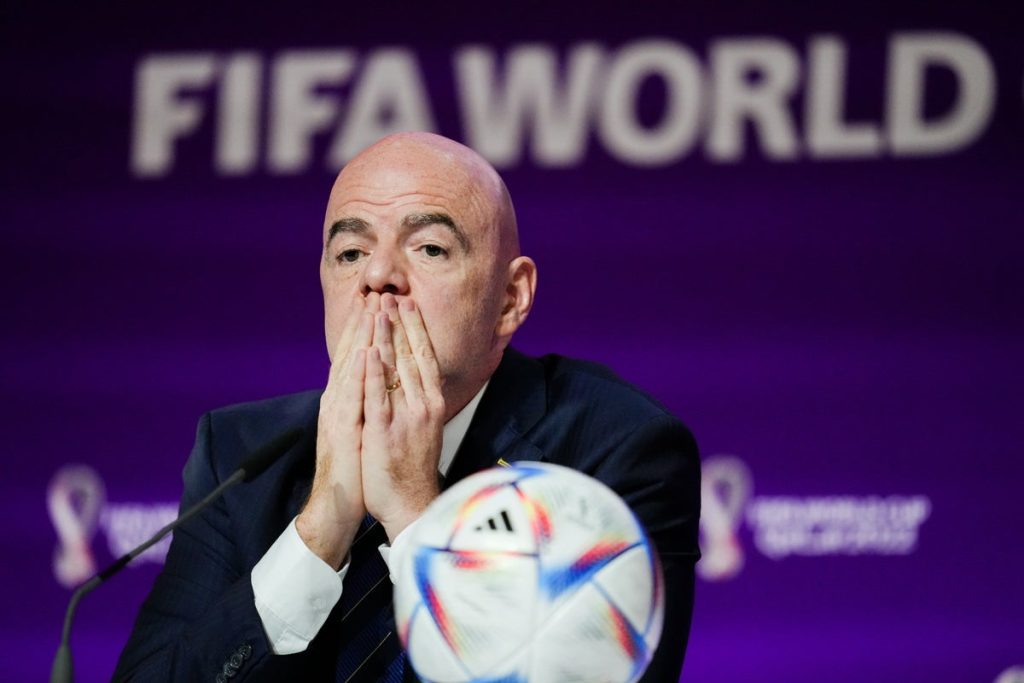
As football figures eagerly shared Gianni Infantino’s humiliating climbdown, many willingly staying up well into the early hours of Saturday, a resolve was only hardened.
The sentiment was very much that step one was achieved. Now for step two: “He’s still got to go.”
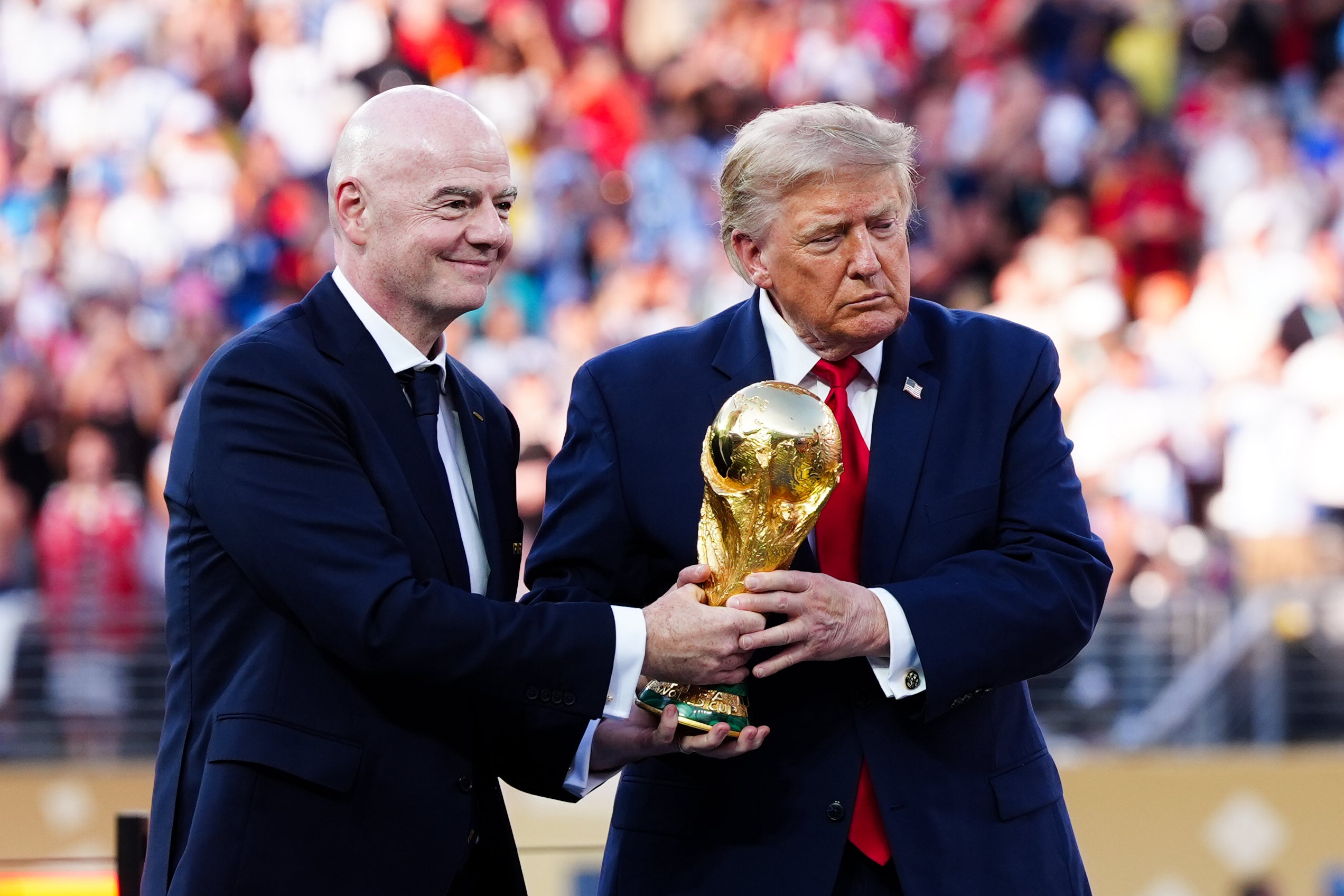
Most of Infantino’s power base has certainly gone, possibly right up to the patronage of Donald Trump. When the US president was asked whether he had been consulted about the plan on Friday, Trump dismissed it – and, by extension, a figure he has offered unusual praise for – with one word. “No.”
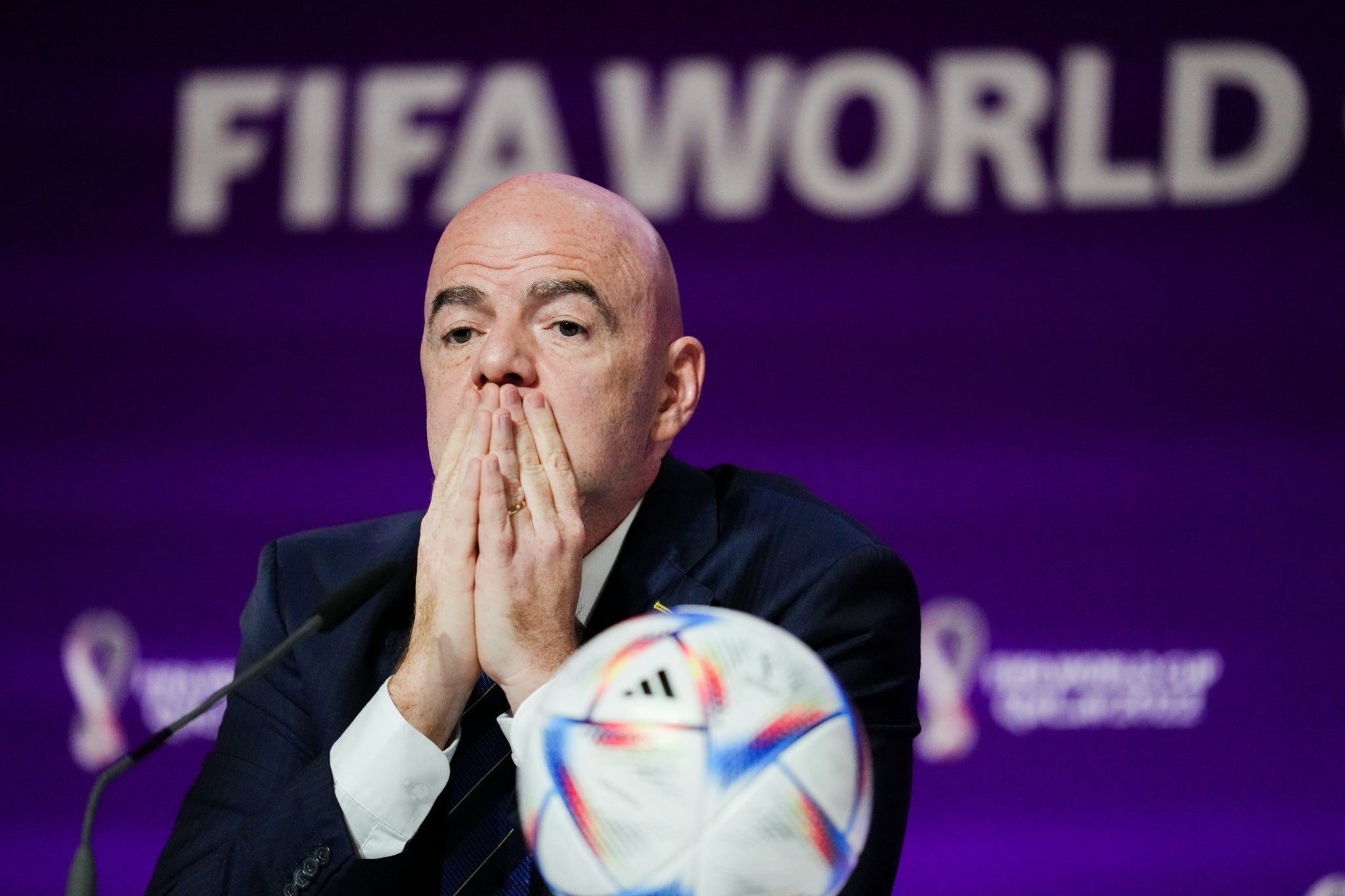
And that was it. This might be it now.
Uefa has already declared that it has “lost confidence”.
One leading figure spoke of how “his leadership has been exposed as poor, his character questionable, his interests self-interested and he is absolutely the wrong person to lead Fifa”.
Even by the standards of football and everything around Infantino, it’s been quite a week.

Monday: in an apparently unassailable position and heading for another presidential term, to the point he berates media for criticism.
Friday: his world collapsing and the rest of the world attacking him in a way that had previously been unseen.
No other serious organisation could go through this kind of public humiliation, with all credibility undermined, without heads rolling and thorough cultural inquests.
It’s why “step three” should be more important than one or two: that there is proper accountability and an acknowledgement that this is ultimately about much more than one man and one week.
Fifa executive Kevin Lamour, one of the few figures to come out of this with his reputation enhanced, summed it up superbly in a statement on Friday that was seen as the real killer blow to Infantino. “Regarding this project and what comes next, everyone must take responsibility.”
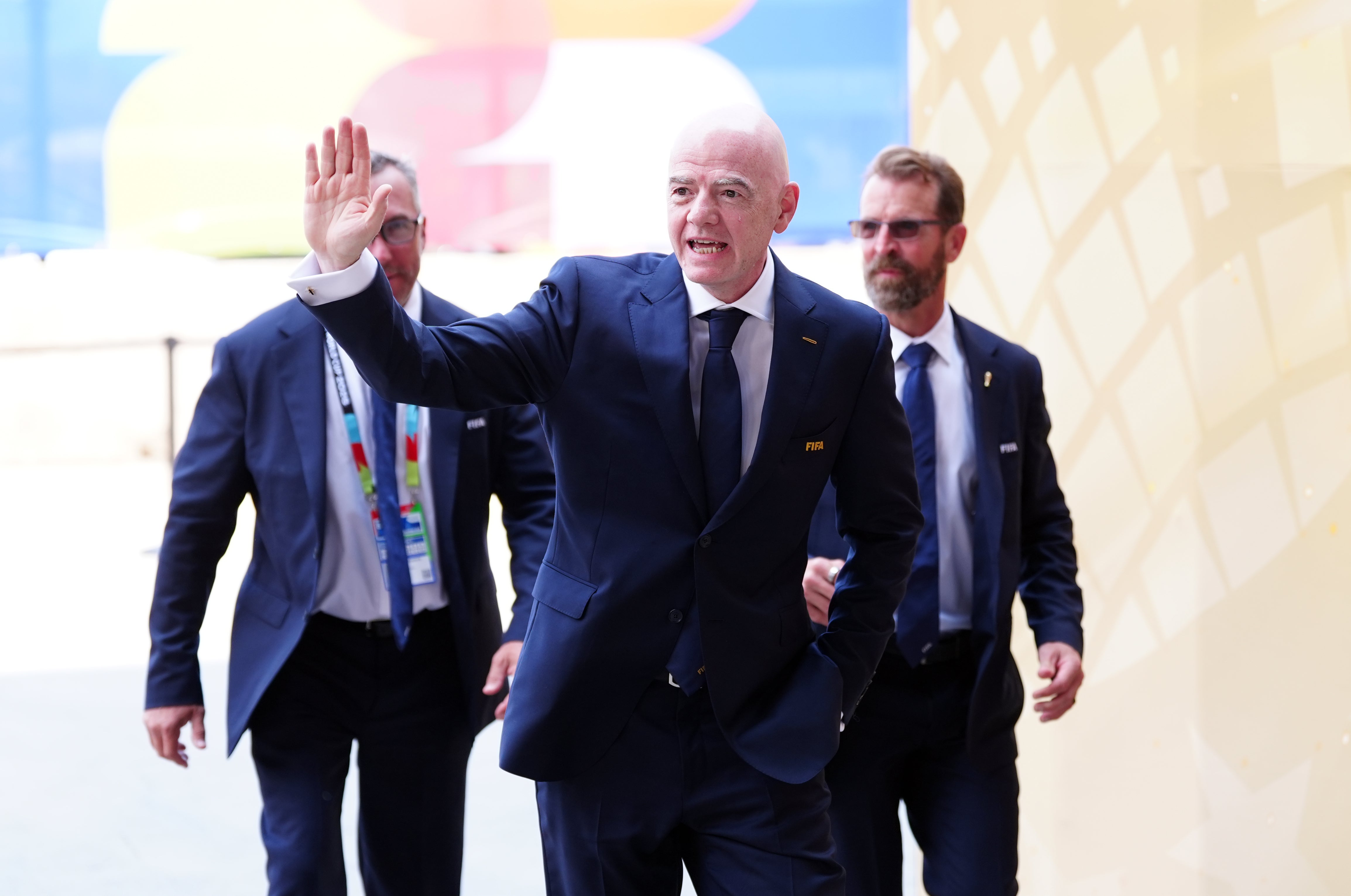
It has been a classic week of political collapse in that sense, with football figures comparing it to the demise of Margaret Thatcher. The fall might take a while, but when it comes, it comes quickly.
It is also why, as bad as such a week can initially be in terms of showcasing all the dismal forces dictating the game, it can bring out some of the good. Football executives, often criticised for lethargy, were “electrified”.
It is similarly very much a moral victory that the World Cup’s future and nature haven’t been decided at something like an invite-only billionaires’ retreat called the Allen & Co Conference, where the outline of this plan was decided last year. The gall of these people, especially in attempting to use the people’s game, is astonishing.
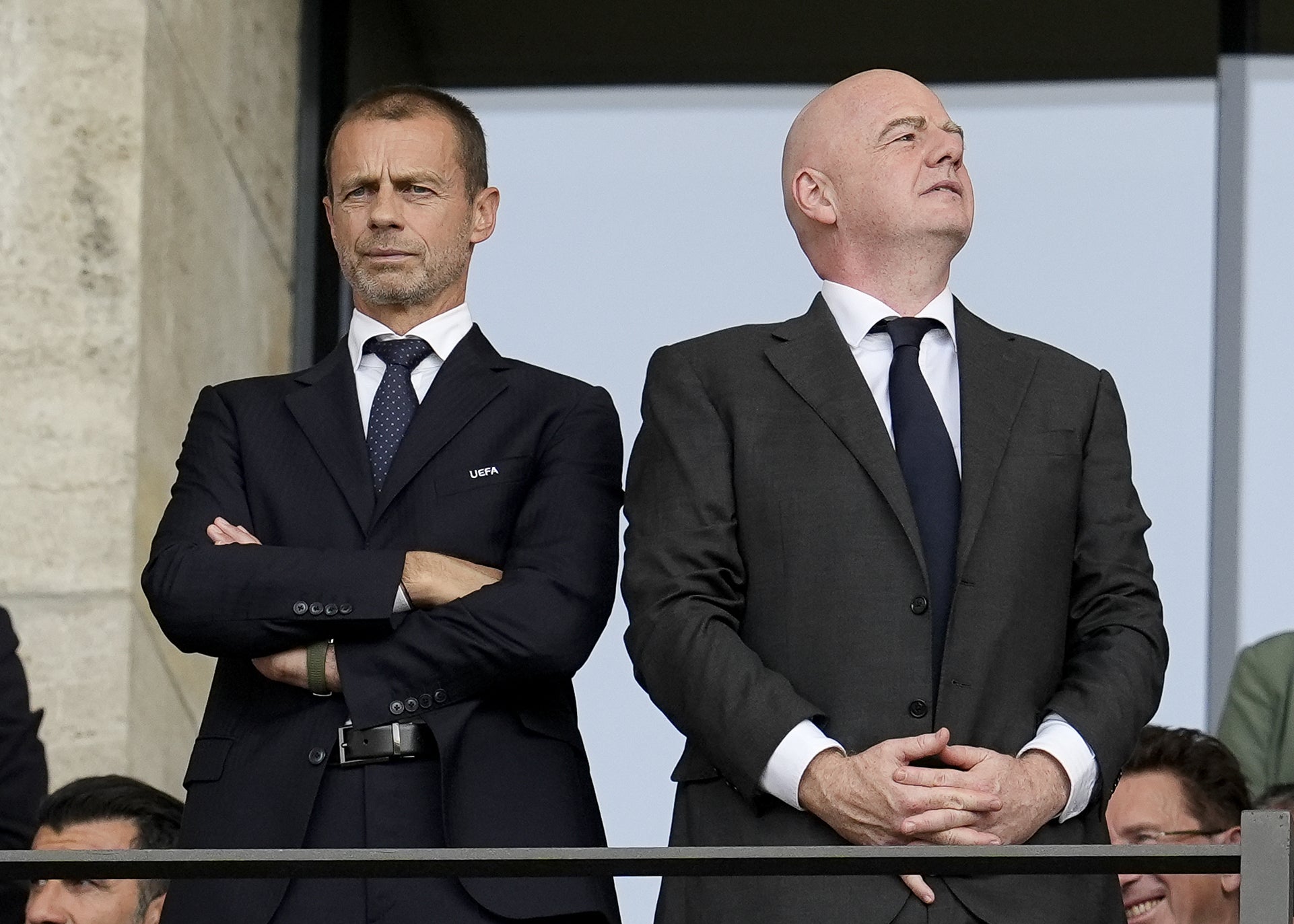
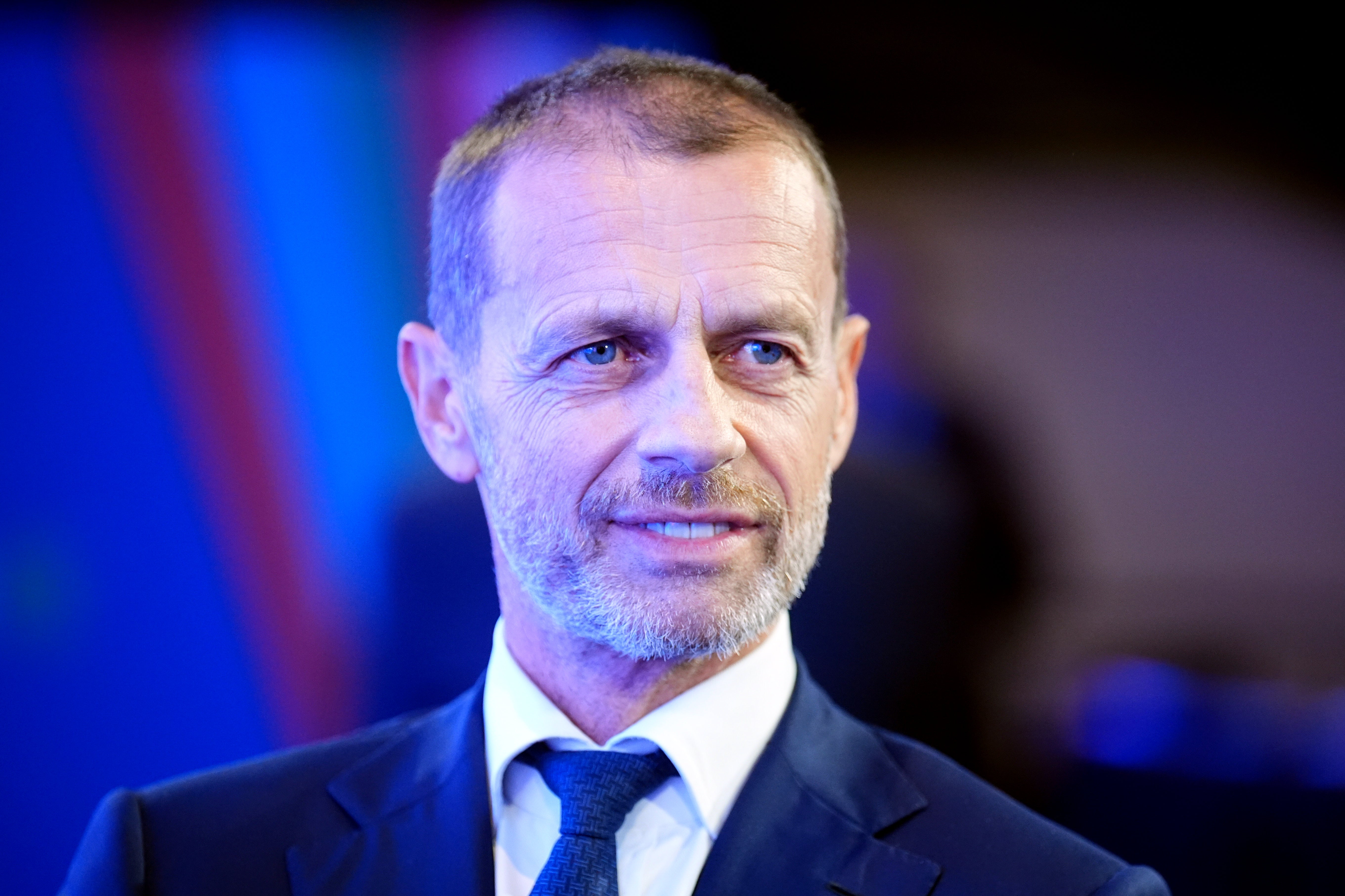
Uefa president Aleksander Ceferin, who can be rightly criticised for some of the same issues as Infantino, got to show what he excels at.
As with the Super League, he spoke admirably, and stirringly. As with the Super League, though, so many of the problems that led to this remain.
When one football figure began to relay the issues that Infantino has been responsible for, they suddenly stopped and laughed, saying that “the list is so long it’s ridiculous”.
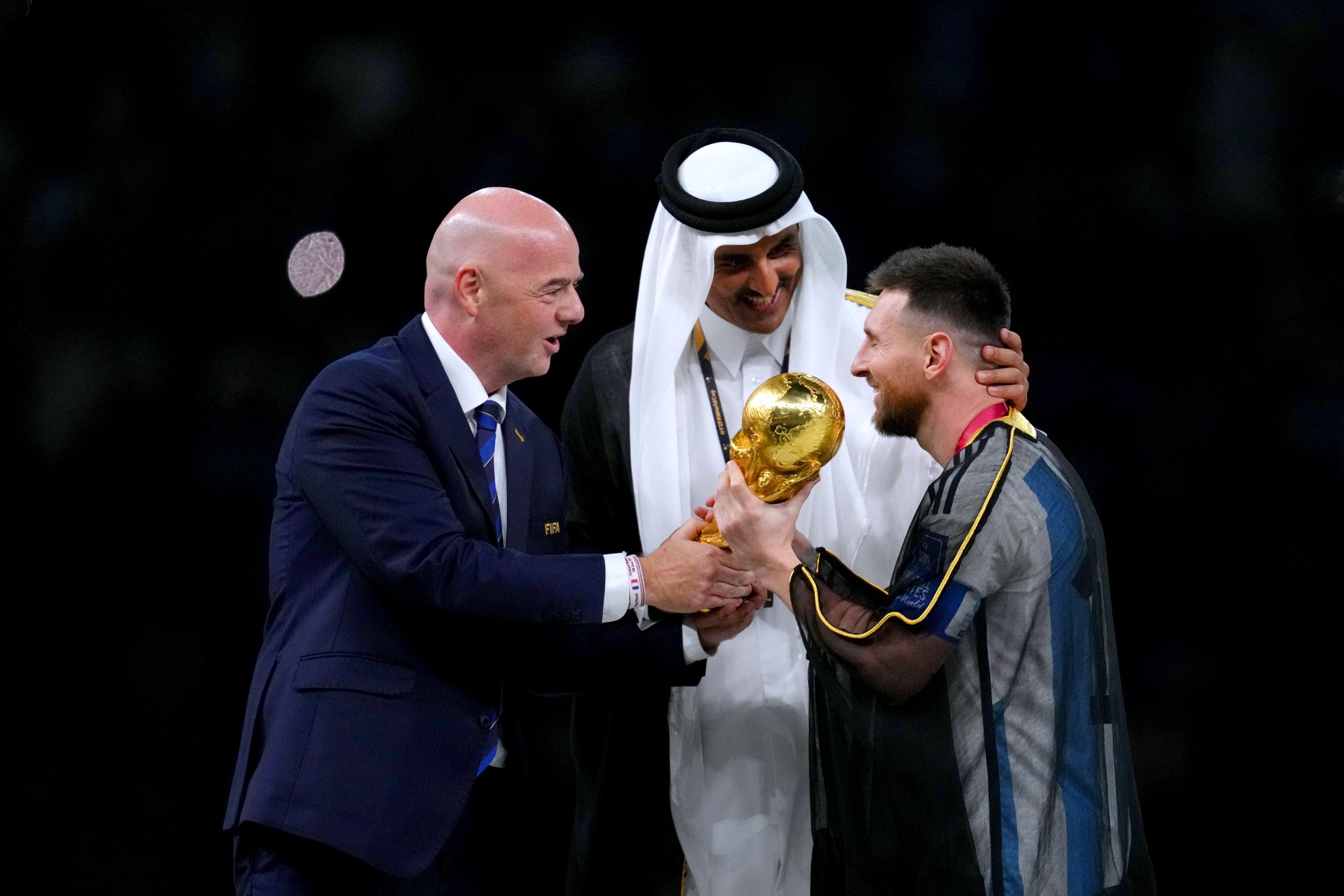
They also cover quite a range of issues, from outright governance failures to the style and demeanour. There’s the Qatar press conference, the “governance by Instagram”, trying to get the Israel and Palestine delegates to shake hands, telling everyone to “chill”. That list ignores justified criticism for more concrete developments that include: the initial involvement in the Super League; the attempt at previous private equity moves and a bizarre crypto fixation; the process behind the Club World Cup; the undermining of sporting integrity that came with Inter Miami’s inclusion in that event and the reduction of Cristiano Ronaldo’s World Cup suspension; the hydration breaks; the Folarin Balogun affair; the general ingratiation with questionable political figures and autocratic leaders; and – maybe above all – the process that led to Saudi Arabia 2034.
And yet Infantino may now go, but everyone still has to live with the consequences of those decisions. The football world will still have to traipse off to Saudi Arabia in eight years, having many of the same debates from Qatar about human rights and migrant labour.
And that’s because Infantino was allowed to do all of this by the same football politicians now condemning him.
One reason he felt emboldened to round on media criticism as recently as Monday was that he wasn’t used to any criticism within the game.
As one source said, “not enough national associations stood up to the unacceptable” – until it was unpalatable. The Fifa Council evidently did not exercise any oversight, to the point that it was kept in the dark on almost everything. Infantino was allowed to go way too far unchecked.
This isn’t entirely the fault of individuals. The structure of Fifa – and Uefa – affords the president undue powers, where it can become governance by fiat, and everything is shaped by a revenue redistribution system that becomes a vote-returning mechanism. Everyone knows the consequences of going against the president – as some Uefa nations felt even before Thursday’s meeting – can be rough for your own organisation. You lose the staging of showpiece events.
Lamour referenced “contempt and intimidation”. It’s also why there has been a “thrill” at how Infantino’s cynically overplayed use of this system has failed.
The feeling from within football was that he felt he could just get this privatisation plan through because… that’s how it works. It was vintage overreach from overconfidence.
As one member association head says, though: “I’m glad this ridiculous patronage system is exposed for what it is – the money rightfully belongs to the members anyway, not for buying votes.”
And that’s why reform, in the way that didn’t happen when Infantino succeeded Sepp Blatter in 2016, should now be the priority – as should proper separation of powers so the president is nowhere near as strong.
Will this actually happen? It would mean Ceferin, so central to the week’s action and now seizing an opportunity to see off a huge rival, having to limit his own powers. Uefa’s statement mentioned a “thorough and fundamental” review of Fifa leadership, but what about its own?
There needs to be proper checks and balances.
There is already a sense of football just moving on to the next stage, of simply getting in presidential nominations for the November deadline before the March election. In other words, business as usual, new names in an old system.
As the formidable president of the Norwegian FA, Lise Klaveness, said: “This cannot end as merely another power struggle conducted behind closed doors. All our efforts must be directed towards improving governance.”
That echoed Lamour, who said that “the time has now come for football political leaders to ask themselves the right questions and make the right decisions”.
That is not necessarily discussing who should replace Infantino, but what system should.
Some would go even further, insisting you can no longer have a Swiss association – “designed for a local bowls club” – running a multibillion-dollar international business. You need a limited company in a transparent jurisdiction with a proper board.
For now, most of the focus is on getting Infantino out. Executives are pointing to how this episode proves he has failed two of Fifa’s own statutes on the presidency, especially regarding the “aim to foster a positive image of Fifa” and seeking “to maintain and develop good relations” between the relevant parties. There is currently an attempt to get countries to withdraw the previous letters of endorsement. He has a lot of them.
By the same token, there was a slip in Infantino’s Saturday morning statement. After a lot of talk of “we”, there was suddenly “my intent”.
Football needs to get out of this. It needs to think much bigger.