Google DeepMind’s AlphaGenome Atlas Places a Score on Every Possible DNA Letter Change
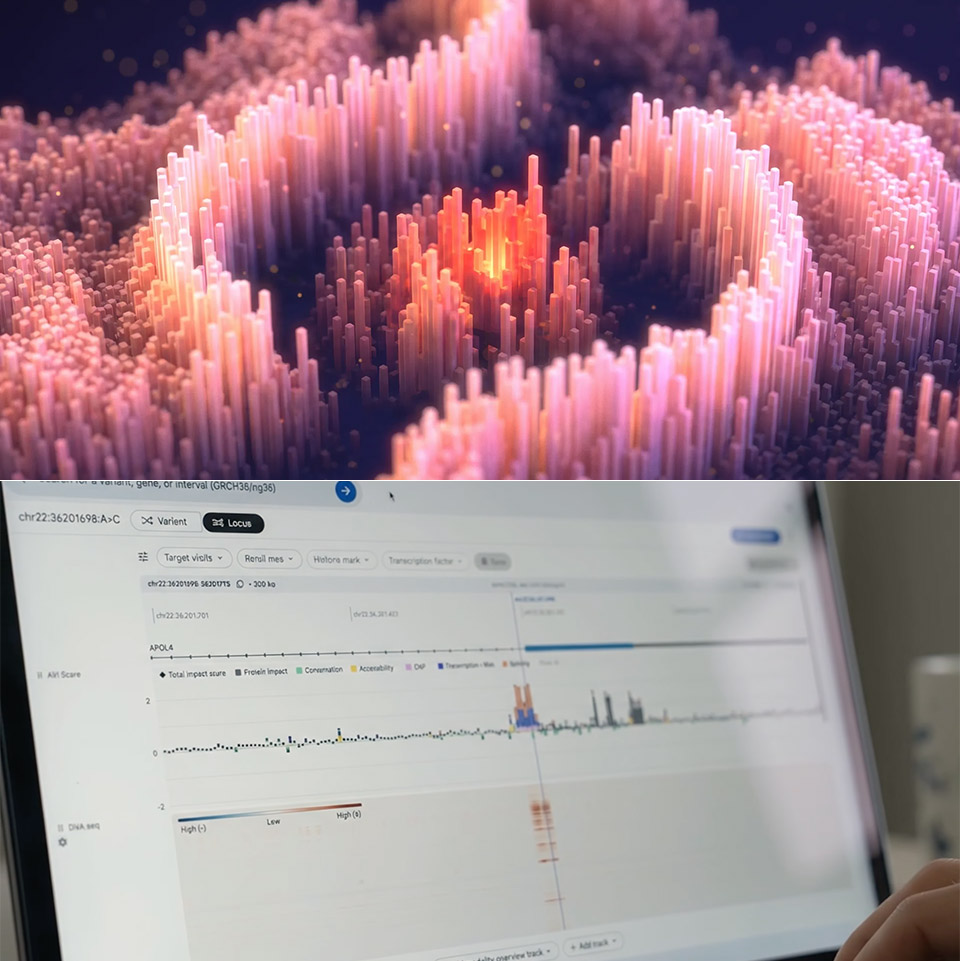
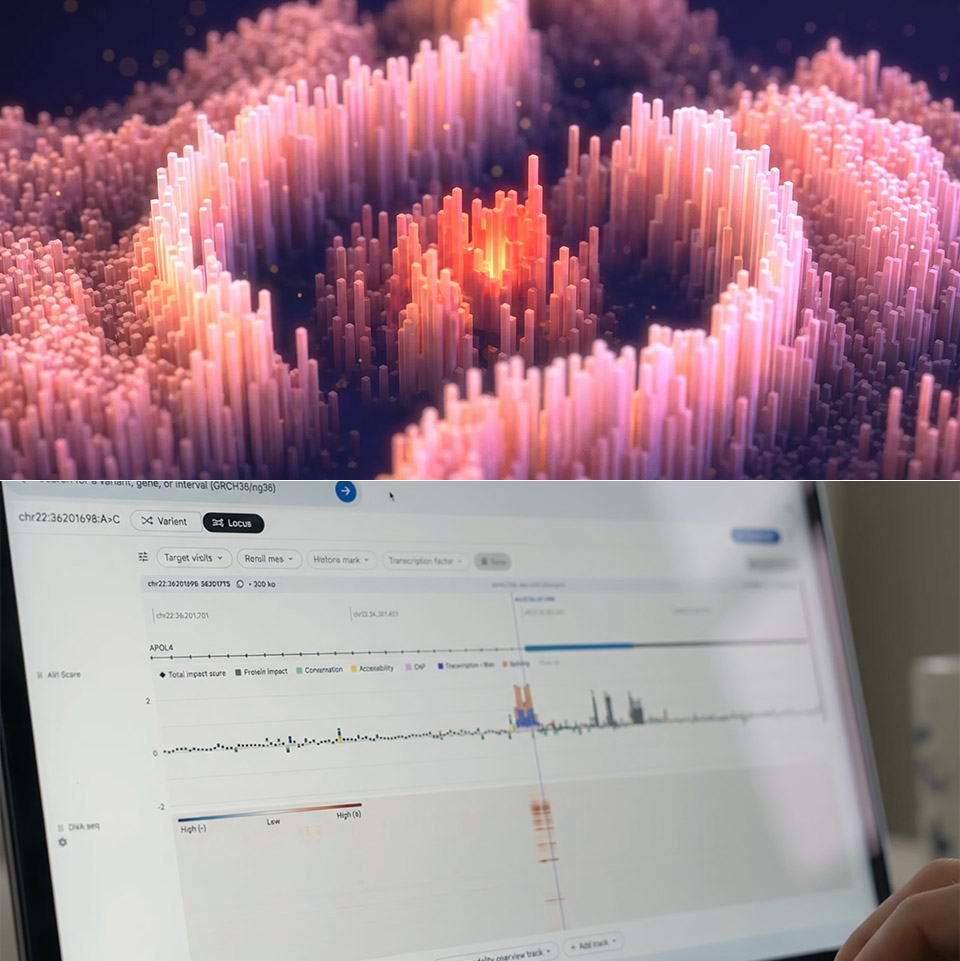
Google DeepMind opened AlphaGenome Atlas on September 8, 2026, as a free lookup table of predicted effects for every possible single-letter swap in human DNA. That catalog covers about nine billion single-nucleotide variants, plus more than one hundred million short insertions and deletions already seen in people. Anyone doing academic research can type a variant into a website and read the forecasts without writing code or running the original model.
Human DNA is 3 billion letters long, with just 2% of those characters actually coding for proteins, while the remaining 98% functions as a control center, determining when and where genes come to life. The control center contains the majority of variations associated with characteristics and diseases. Unfortunately, testing all conceivable one-letter alterations in a lab is simply impossible. Fortunately, Atlas has already done the tough job and crunched the statistics for us, saving the results in a database that is more than 30 times larger than the AlphaFold protein database, with a one petabyte collection that is just enormous in size.

Apple 2026 Mac mini Desktop Computer M6 chip
- LITTLE DO-IT-ALL — Mac mini packs pure power into a small, five-by-five-inch desktop as the M6 chip delivers next-level AI capabilities. Mac mini…
- M6 CHIP — Everything you do on Mac mini feels more responsive with the M6 chip and its next-generation CPU. Fly through AI workflows with up to 4.8x…
- CONNECT IT ALL — Features three Thunderbolt 4 ports, an HDMI port, and a 2.5Gb Ethernet port in the back, and two USB-C ports and a headphone jack…
AlphaGenome, the AI model that powers that catalog, made its debut in June 2025, and DeepMind has since aimed it at every single location in the genome to obtain its outputs. Atlas delivers thousands of comprehensive molecular projections for each variant across hundreds of human and animal cells and tissues, including gene activity, chromatin accessibility, RNA splicing, and all other processes. These detailed forecasts are then condensed into one all-important AVI score, a single ranking that measures how much of an impact you can expect, and this score is so good that it even outperforms the AlphaMissense protein-altering changes, and it’s not limited to just coding DNA; it also works well with non-coding DNA. The AVI score now outperforms the competitors in terms of pathogenicity and rare-disease benchmarks.
What’s truly intriguing is that feature attributions break down the AVI score into bite-sized parts, allowing researchers to determine whether the outcome was driven by splicing, conservation, or DNA accessibility. If you’re inquisitive about what’s going on behind the scenes, you can search through a database of over 2,500 short DNA sequences known as motifs, which are the regulatory components that really get things moving.
Recently, some Broad Institute researchers used the AVI scores to find a DNM1 variant that was a prime suspect in a severe form of epilepsy. Atlas predicted that the letter change would create a false splice site that would stretch the protein, and experimental screens later confirmed the prediction. If that wasn’t impressive enough, they discovered that grouping rare variants by predicted molecular effect yielded 22% more non-coding associations than previous methods, with these links including regulatory changes that affect PLA2G7, a protein associated with aging, and EGLN1, a sensor used by cells to detect oxygen. If you focus only on the top 1% of non-coding variants that have the most impact, you can identify 19 genomic areas that are all associated with body mass index.
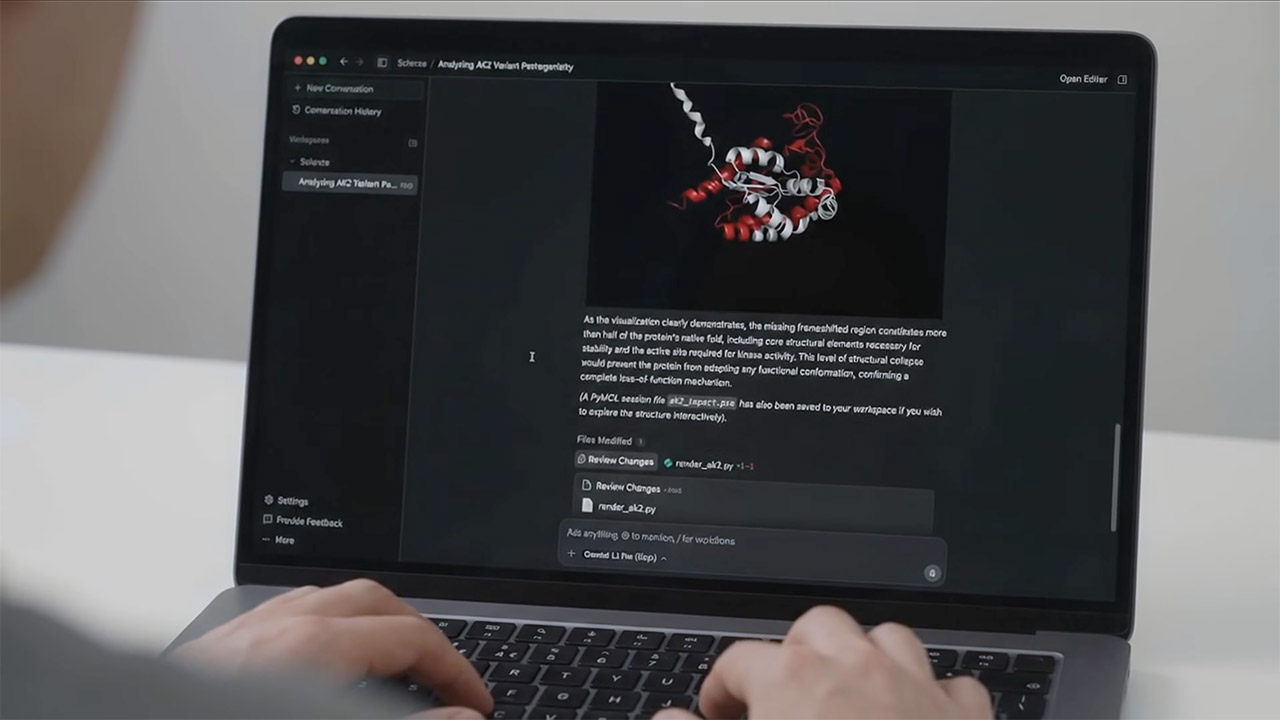
When working on non-commercial projects, researchers can use Atlas via a web portal and an API; commercial use is planned for Google Cloud; however, keep in mind that Atlas is a research tool, not a diagnostic tool, and has received no clinical approval. This implies that any predictions you make will need to be validated in the laboratory. Even then, Atlas has some limitations because it only looks at around a million letters around each variant, so distant regulatory switches may be missed, and many disorders require multiple variants operating together rather than just one letter change. Nonetheless, the catalog allows rare-disease teams to rate candidates more quickly, as well as population geneticists to group faint signals that were previously missed in the noise.
[Source]
Google DeepMind’s AlphaGenome Atlas Places a Score on Every Possible DNA Letter Change
#Google #DeepMinds #AlphaGenome #Atlas #Places #Score #DNA #Letter #Change