Mega-tsunami bigger than 24 pyramids stripped island and was ‘close call’ for humans
Scientists are terrified of mega-tsunamis becoming more and more frequent as glaciers melt – with the latest wave only narrowly missing hordes of people due to the time of day it struck

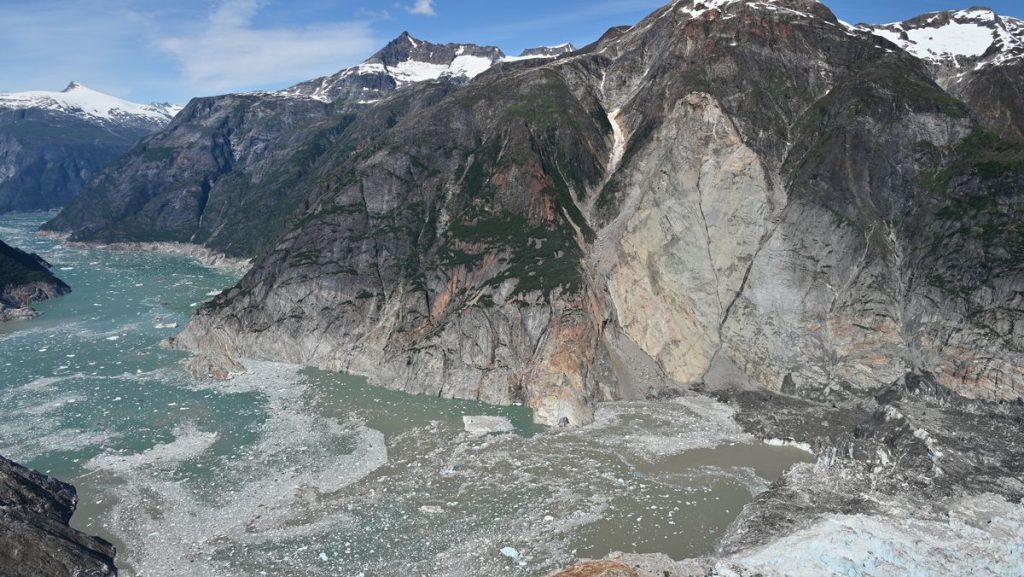
Tracy Arm fjord about 80 miles southeast of Juneau, Alaska(Image: AP)
A massive mega-tsunami wave larger than the World Trade Centre narrowly missed Canada and wiped out life on an entire island – narrowly missing countless tourists
Scientists are “terrified” for future chaos after a catastrophic event last year. In 2025 part of an Alaskan mountain crumbled into the sea creating the second tallest wave ever recorded. After devastation swerved the mainland, scientists warned of the ongoing risks of melting glaciers.
A terrifying 64 million cubic metres of rock, which is the same mass as 24 Great Egyptian Pyramids plunged into the sea. The force of this propelled a 500 metres tall wave into existence.
The towering body of water charged through a remote fjord in southeast Alaska, caused by a massive landslide, according to the BBC.
Dr Bretwood Higman, an Alaskan geologist who saw the damage at Tracy Arm Fjord, said it was “a close call”.

Japan’s 2011 tsunami devestated the country (Image: AFP via Getty Images)
“We know that there were people that were very nearly in the wrong place,” he said. ‘I’m quite terrified that we’re not going to be so lucky in the future.”
The only thing which stopped people getting hurt was that it happened in the early hours of the morning – meaning no tourist cruise ships were nearby.
Mega-tsunamis happen when a landslide caused by either an earthquake or loose rock hit the water below, but they are usually contained and disappear pretty quickly.
Other tsunamis can happen in the open ocean, after and earthquake or an under-water volcano.

It’s a popular place for tourist cruises(Image: Getty)
Like the 2011 Japan tsunami, these can travel for thousands of miles, hitting populated areas and causing huge natural disasters which scar countries for life.
The biggest megatsunami was in the 1950s and was over 500 metres. This latest megatsunami was the second largest ever recorded.
Dr Higman saw the devastation not long after the wave crashed into Tracy Arm Fjord a popular cruise ship destination.
The island was covered in broken trees, rock and the land was stripped of any life.
Because of its steep mountains, narrow fjords and frequent earthquakes Alaska is vulnerable to megatsunamis.

Sawyer Glacier sits at the end of Tracy Arm Fjord, Alaska(Image: Getty Image)
Dr Stephen Hicks of University College London said the glacier was previously “helping to hold up this piece of rock”, and so when the ice retreated, it exposed the bottom of the cliff face, “allowing that rock material to suddenly collapse into the fjord”, according to Science, external.
“More people are now going to remote areas – often these tourist cruises are going to see the natural beauty of the area to actually learn more about climate change – but they are also dangerous places to be.”
Dr Higman said mega-tsunamis will most likely be more common. At this point, I’m pretty confident that these are increasing not just a little bit, but increasing a lot,” he said.
“Maybe in the order of 10 times as frequent as they were just a few decades ago.”
The scientists are calling for wider monitoring of hazards in parts of Alaska that might be vulnerable to mega-tsunamis.
Some cruise companies have announced they are to stop sending ships into Tracy Arm amid safety fears.