Mike Shake’s Shockwave Cannon Shows What Happens When You Release a Lot of Air All at Once
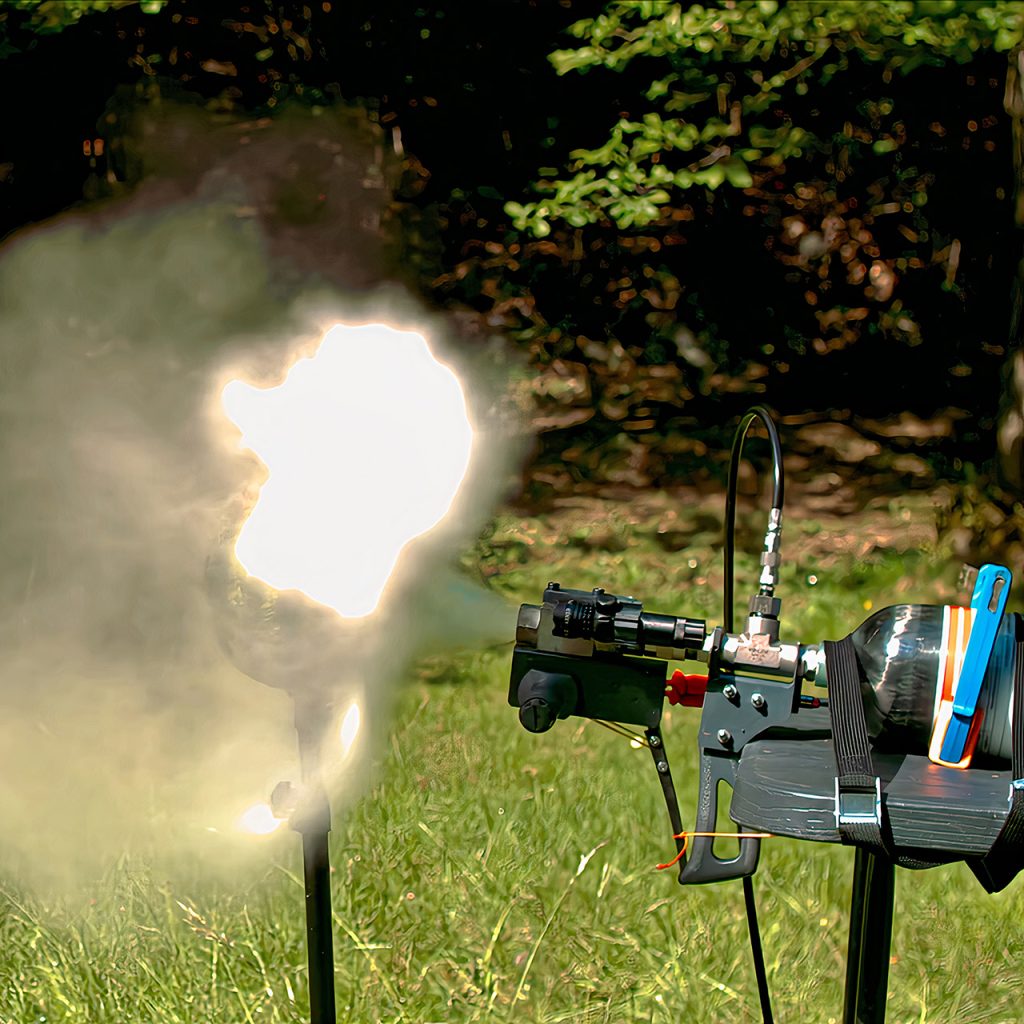
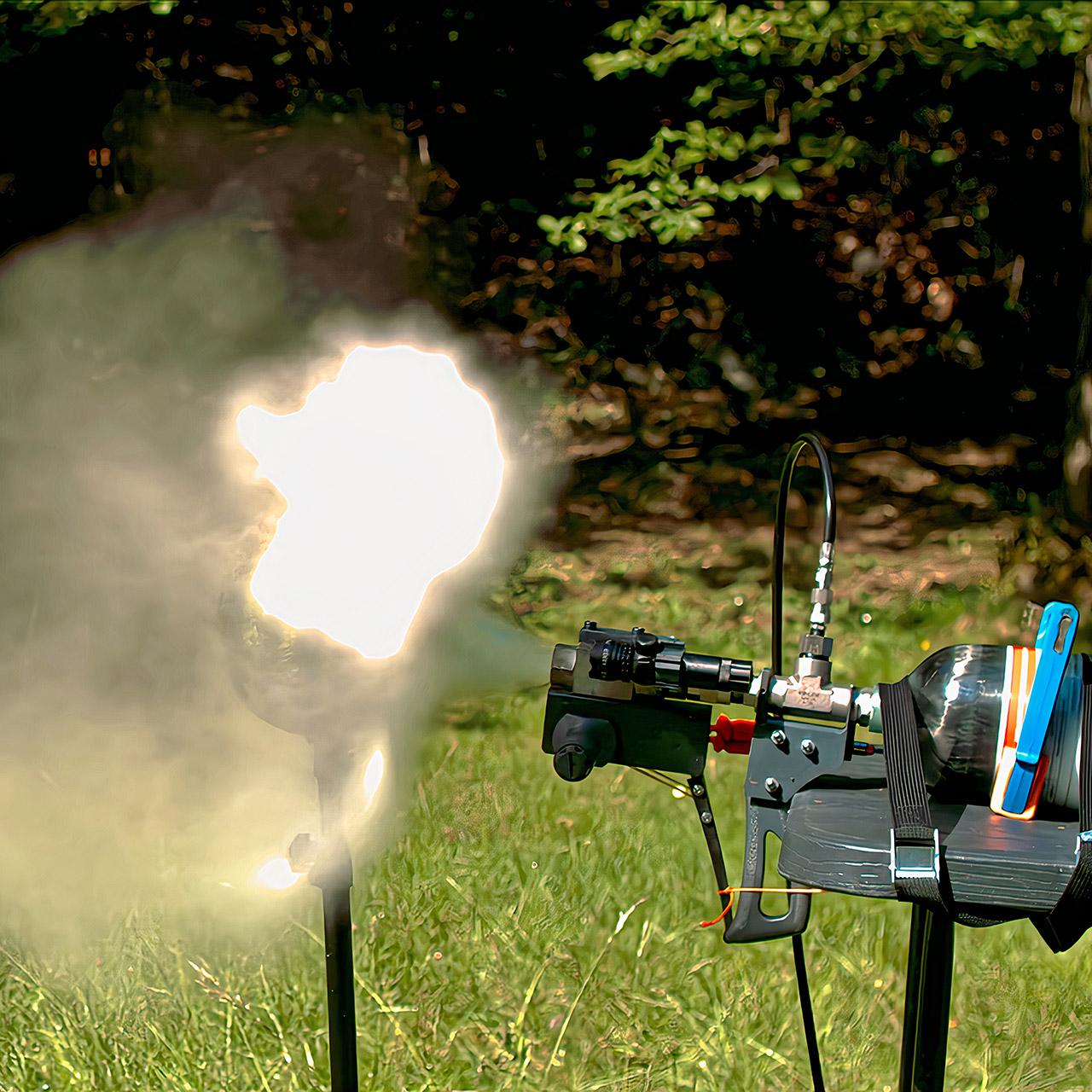
Mike Shake has spent years exploring the edges of what simple materials can do when pushed hard. His latest project takes compressed air and turns it into a directed force that moves tables, destroys targets, and leaves visible clouds in its wake. The device is not a gun in the usual sense. It contains no powder or projectile. Everything comes from the sudden release of air stored at extreme pressure inside a sturdy tank.
A few months ago, he put small cartridges through their paces, loading them to the gills at over 1000 pounds per square inch, producing a strong shockwave that could easily blast through a light object. The next challenge to answer was what would happen if the volume of air increased dramatically while releasing at the same rate. The solution arrived in the form of a three-liter tank capable of withstanding 4500 pounds per square inch pressure. At maximum pressure, that tank is essentially full to the brim with the equivalent of about 920 liters of air at normal pressure, and all that air is just aching to explode out the instant the valve is released.
Sale
XL Incog Water Guns: Stealth Design with 1200CC Tank for 60+ Powerful Shots and Long Range 32-38 ft Water…
- ONE LOAD, 60 PLUS LONG RANGE SHOTS: The clever Incog water gun handle doubles as a water tank – maximising the tank capacity to an impressive 1200CC…
- DURABLE, NO BATTERIES, NO BREAKAGES: the Incog water guns consistently deliver 32ft water jets, a stronger and more powerful shot than most electric…
- 2026 FEATURES: textured grips to help younger kids control a fully loaded Incog water gun, strengthened nozzle for stronger water jets, anti-leak…
The tank was only half the battle; the true engineering issue was ensuring that the air exited the tank quickly enough to create a good shockwave rather than a drawn-out whoosh. A conventional ball valve can easily empty a tank, but twisting the handle slowly causes the pressure to gradually seep off. But the shockwave requires the entire thing to go in a fraction of a second; else, it’ll be a feeble dribble. Mike rectified the problem by attaching thick rubber bands to the valve lever, similar to those seen on spearguns. Stretched out to more than three times their typical length, these bands deliver approximately 90 pounds of force. To ensure that force is not wasted, Mike created a bespoke metal lever and aluminum stop to keep the pull angle as efficient as possible. He then used his 3D printer to create the grip and trigger housing, leaving the tricky bits, such as the metal pieces that would be under the most strain, to the local machinists to supply.
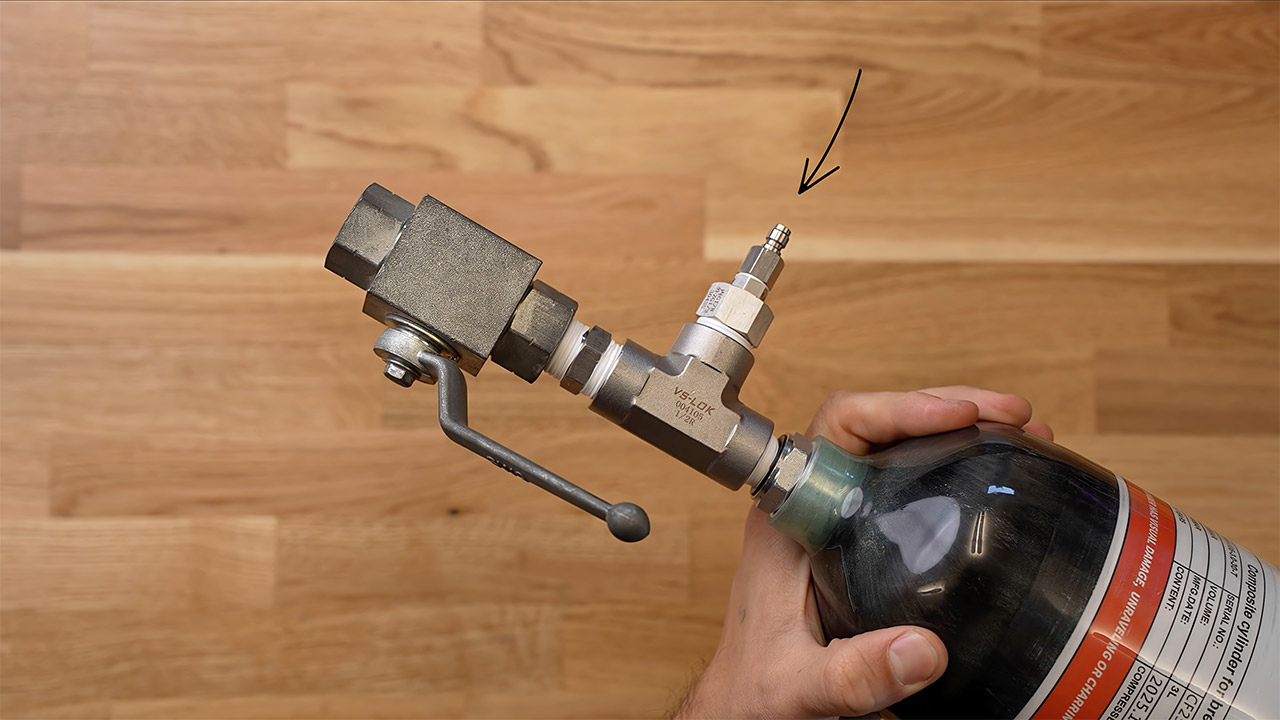
Filling is simple; just hook up a quick-disconnect connection to a water-cooled PCP compressor and you’re ready to go. Outdoors, a small gasoline generator kicks in to power the compressor, and once the tank is full, forget about the pressure slipping away; it’ll hold rock solid, dropping by only about 30 psi after a couple of minutes at maximum fill, which is important when you have to pull the trigger without being right next to the business end. Before deploying the larger guns, they conducted preliminary testing with a much smaller tank to fine-tune the time without putting anyone in danger. Time slowed dramatically, and they could see that the valve required to rotate in essentially one frame, after which it was only a matter of tweaking with the band tension and rope length to get it to go ‘whoosh’ rather than a wimpy puff.
Once they were satisfied with the mechanism, they upgraded to a medium tank and began making good progress right immediately. They blasted a watermelon sitting at a distance, sending a visible column of pressurized air whooshing out, and the recoil was severe enough to knock the shooter backwards. Encouraging, but partly because they understood the final version would require some major safety precautions if they wanted to keep themselves safe.
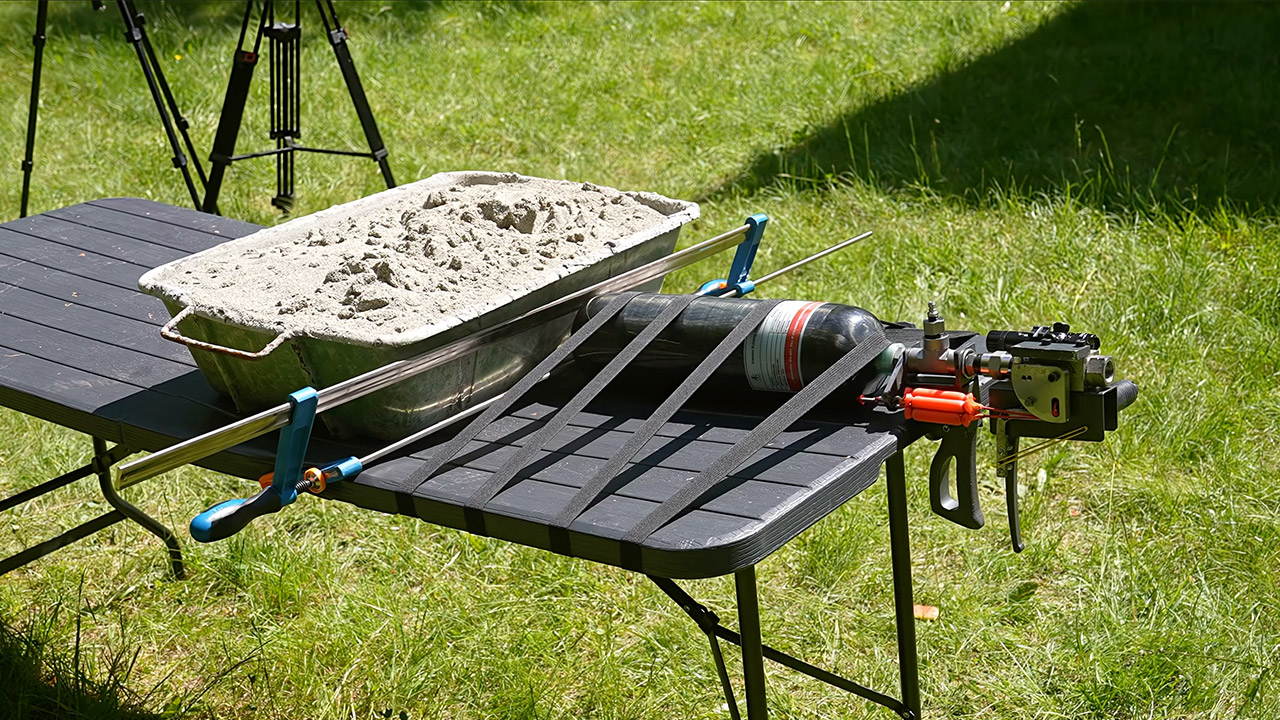
So, for the three-liter cannon, they simply bolted it to a large table and weighted it with a 40-kilo pail of sand for good measure. A long connection led out to a remote trigger, so no one had to be around while the thing went off. When the valve sprang open, the table legs cracked beneath the pressure, and the entire thing flung itself around 10 meters across the ground, scattering sand in all directions. It sounded as loud as a gunshot, and anyone standing nearby was caught in the blast.
It was put to good use by some too eager targets. A watermelon that got in the path vanished in an instant, leaving a massive mess of fragments all over the place. A ballistic dummy head lost its face and was left looking quite battered. Okay, maybe not the most delicate demonstration, but these were controlled tests of what happens when you release a large amount of pressure correctly.
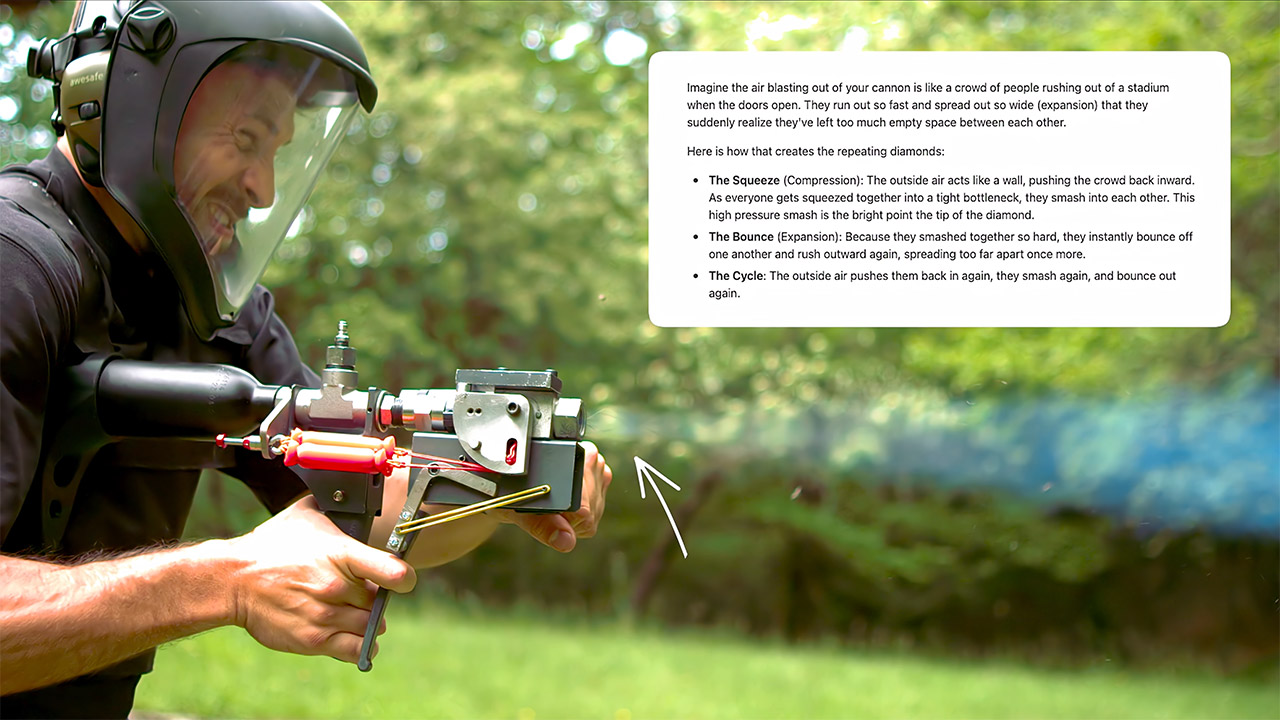
You also get some extremely visible effects, such as how air rushes out of the cannon at tremendous speeds, resulting in a large cloud of water vapor right quickly. The interesting part is that this cloud is simply ordinary water in the surrounding air condensing onto itself as the air becomes unexpectedly cold, as you can see in the diamond-shaped patterns (known to techheads as Mach diamonds) as it passes by. That is the same kind of thing you see trailing behind a supersonic airplane. No smoke, just frigid air.
Mike Shake’s Shockwave Cannon Shows What Happens When You Release a Lot of Air All at Once
#Mike #Shakes #Shockwave #Cannon #Shows #Release #Lot #Air