MIT’s Featherweight Flapping Wing Microrobot Carries Its Own Sensors and Computers for Free Flight
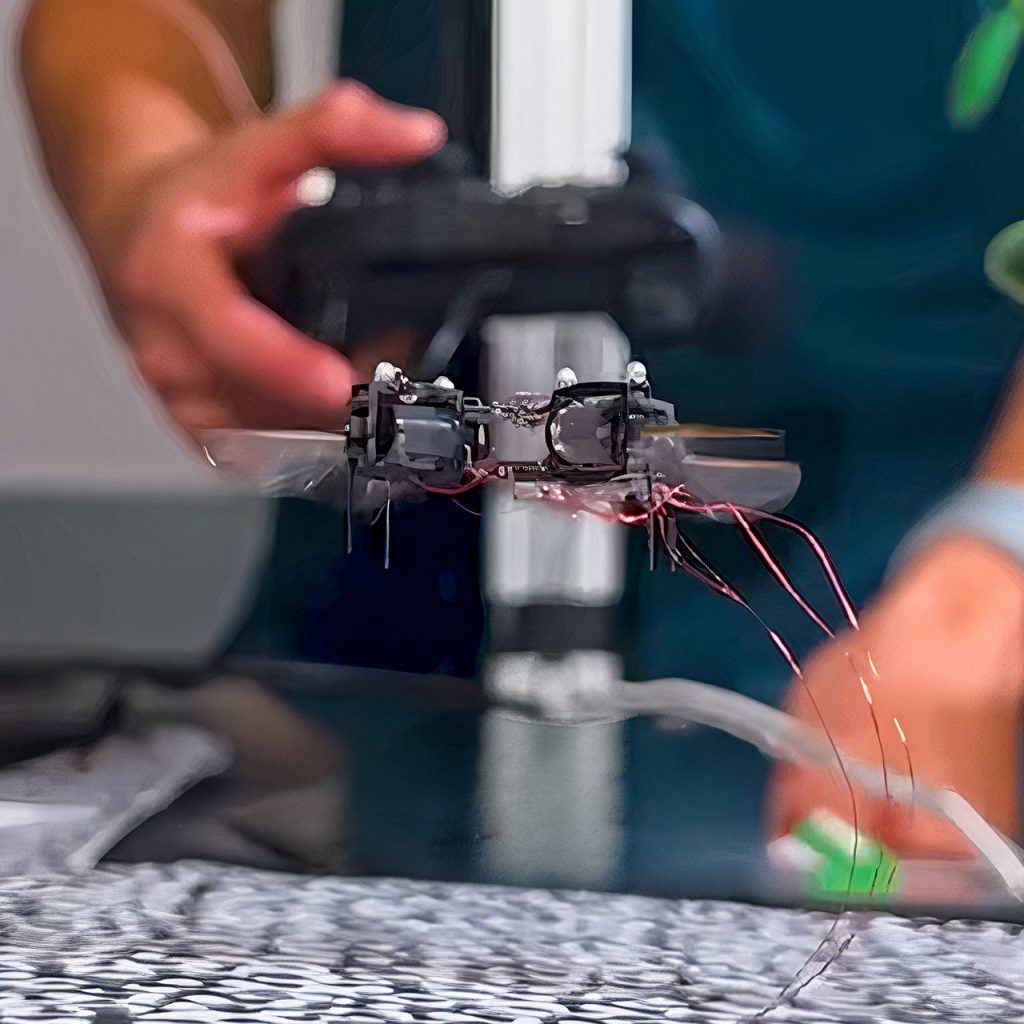
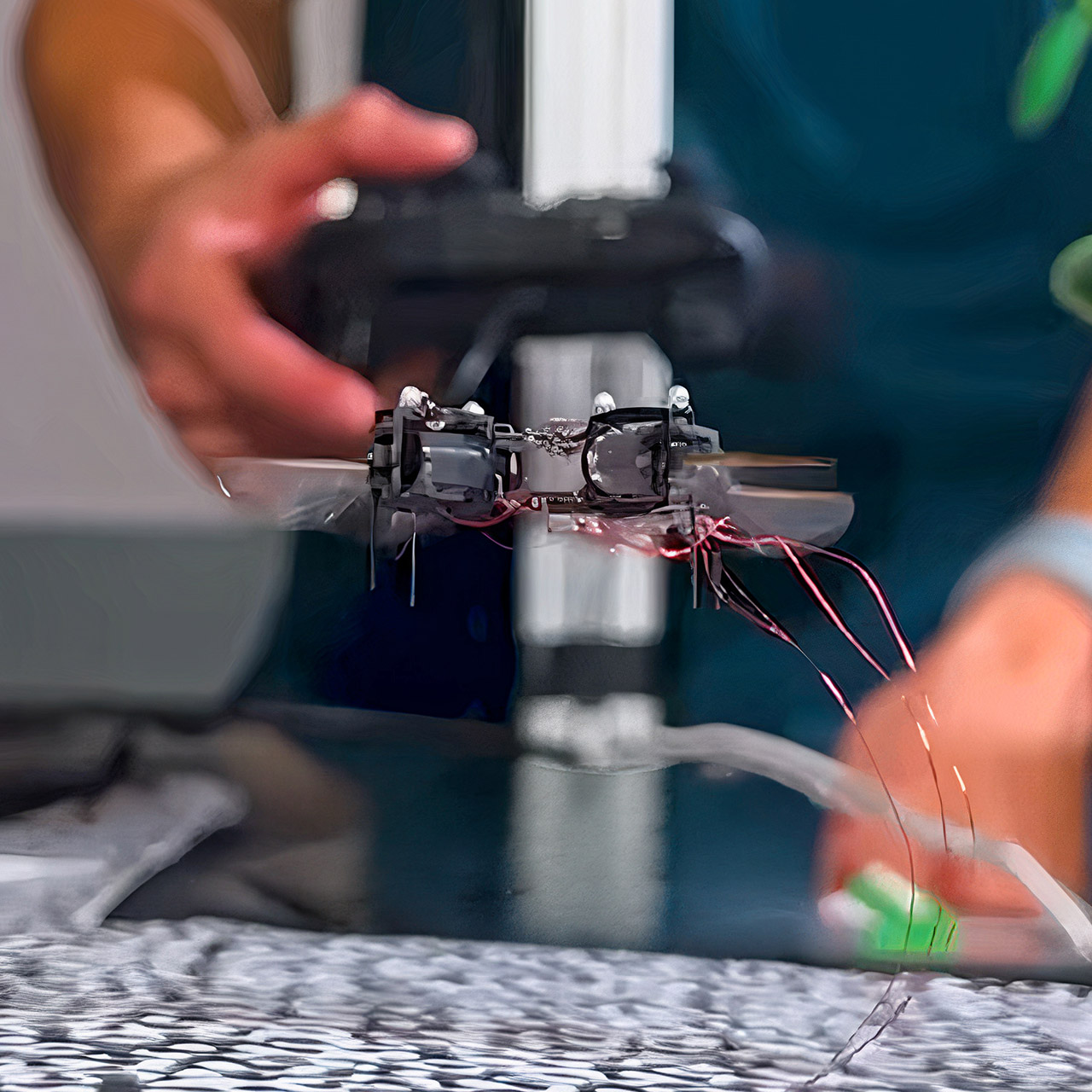
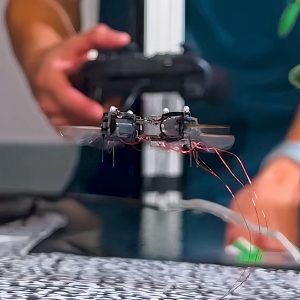
MIT engineers just showed a flapping-wing microrobot the size of a microcassette that weighs less than a paperclip and flies without the external camera rig that previous versions required. Four wings driven by soft artificial muscles keep it aloft, and the latest design enlarges those actuators by 50 percent. That change raises net lift force by 46 percent and produces a lift-to-weight ratio of 1.9, enough to carry a 244-milligram electronics package mounted on a fiberglass plate that stays put despite the vibration.
An inertial measurement unit monitors the robot’s orientation, while an optical flow sensor estimates sideways speed and location as best it can, and a time of flight sensor provides a fairly good indication of how high the little thing is. At the heart of it all is a microcontroller running a very simple motion estimator that receives position updates more frequently than orientation updates, resulting in a positional error of only a few centimeters, which is roughly equivalent to the lab’s external motion capture system. That level of accuracy means the robot can now hover at various heights, zoom from A to B, and land precisely on top of a sunflower when all you have to do is give it some high-level direction via a joystick.
Sale

DJI Neo, Mini Drone with 4K UHD Camera for Adults, 135g Self Flying Drone that Follows You, Palm Takeoff…
- Due to platform compatibility issue, the DJI Fly app has been removed from Google Play. DJI Neo must be activated in the DJI Fly App, to ensure a…
- Lightweight and Regulation Friendly – At just 135g, this drone with camera for adults 4K may be even lighter than your phone and does not require FAA…
- Palm Takeoff & Landing, Go Controller-Free [1] – Neo takes off from your hand with just a push of a button. The safe and easy operation of this drone…
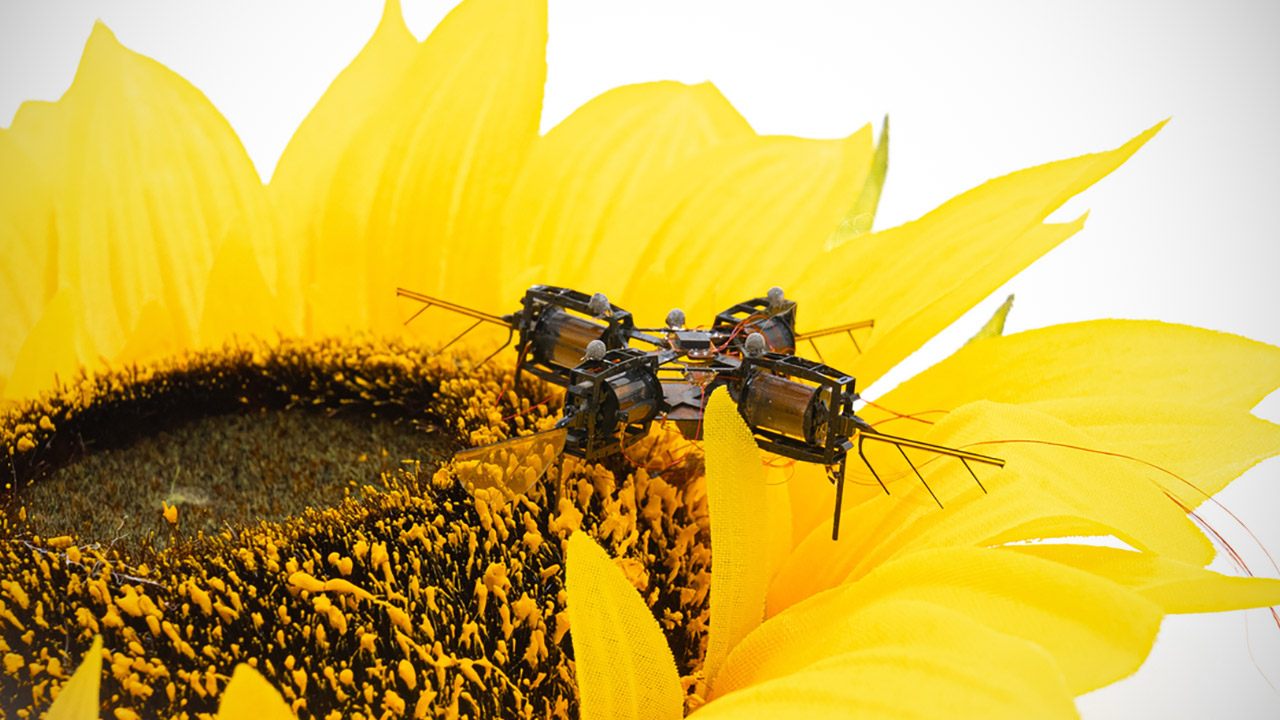
Power is still sent in via a cable, and the electronics only consume around 6% of the overall energy, leaving the rest for the wings to do their job. Kevin Chen, the leader of the Soft and Micro Robotics Lab, refers to this as the world’s first sensory and compute autonomous microrobot. Even their prior designs could keep up with a bumblebee in terms of speed and agility, and could even flip over, but they had to stay within a motion capture volume since they couldn’t support the weight of the navigation equipment. Scaling up the actuators without sacrificing power removed those constraints, and now this monster is free to travel the vast outdoors.
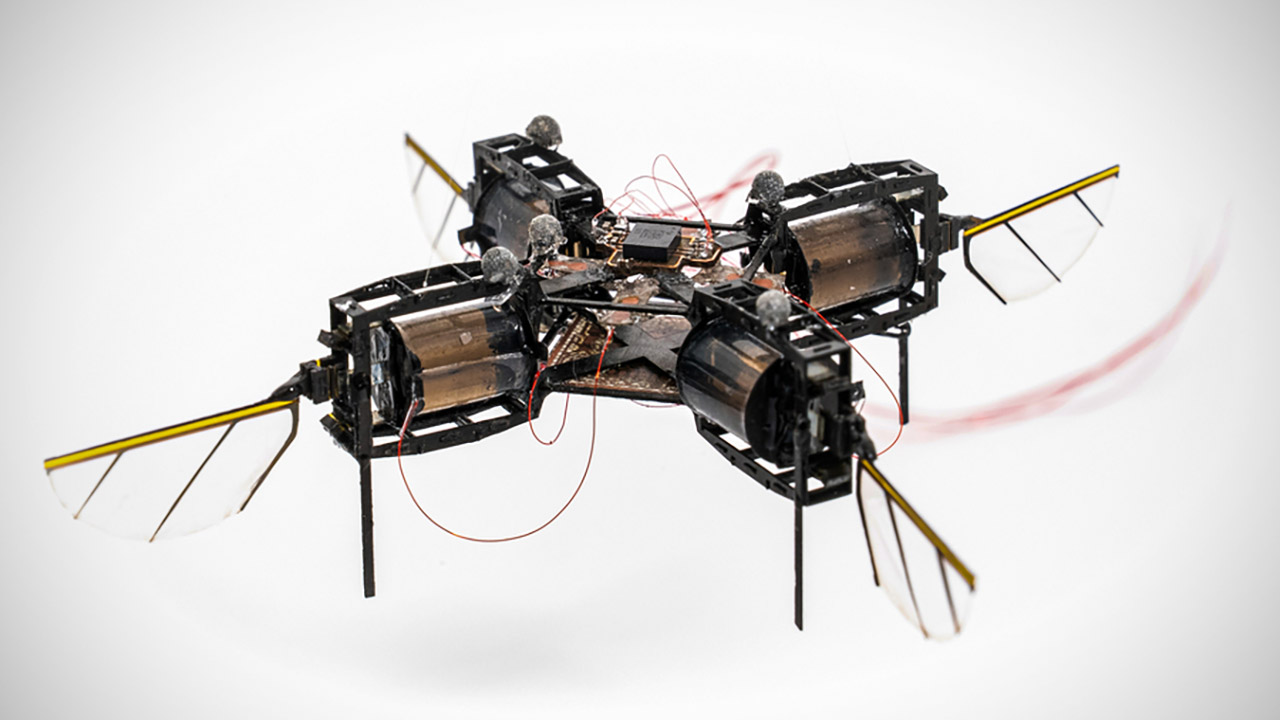
Precision agriculture is the most obvious application for this. This thing is small enough to fly between trees or bushes to pollinate flowers where local bees aren’t showing up to do the job anymore, or to simply ping around floating above the leaves to check on crop health and spot pests before they cause any real damage. The same holds true for industrial surveillance and search and rescue, as larger vehicles cannot fit in the same tight spaces as this tiny bot. The next step is to add a camera so it can see and avoid its own things, as well as the required power and battery increase to finally let it fly free of a tether. The improved sensor suite, modified actuators, and flying testing are all described in a report published in Science Robotics.
[Source]
MIT’s Featherweight Flapping Wing Microrobot Carries Its Own Sensors and Computers for Free Flight
#MITs #Featherweight #Flapping #Wing #Microrobot #Carries #Sensors #Computers #Free #Flight