Nā ʻUhane Māhoe Huki Pū i ke Ola, Project Hōkūlani Names Two Galaxies Still Mid-Merge
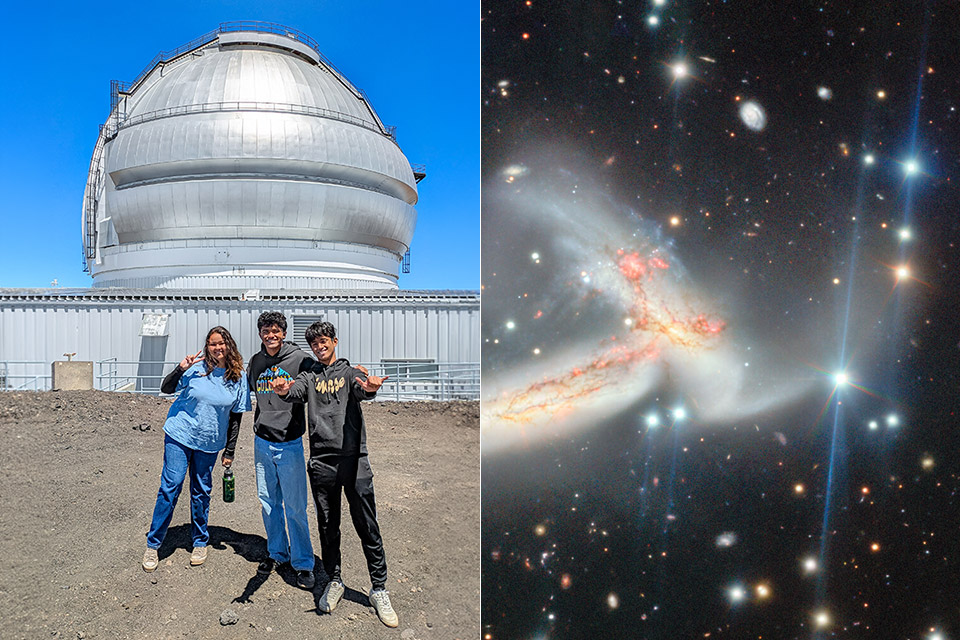
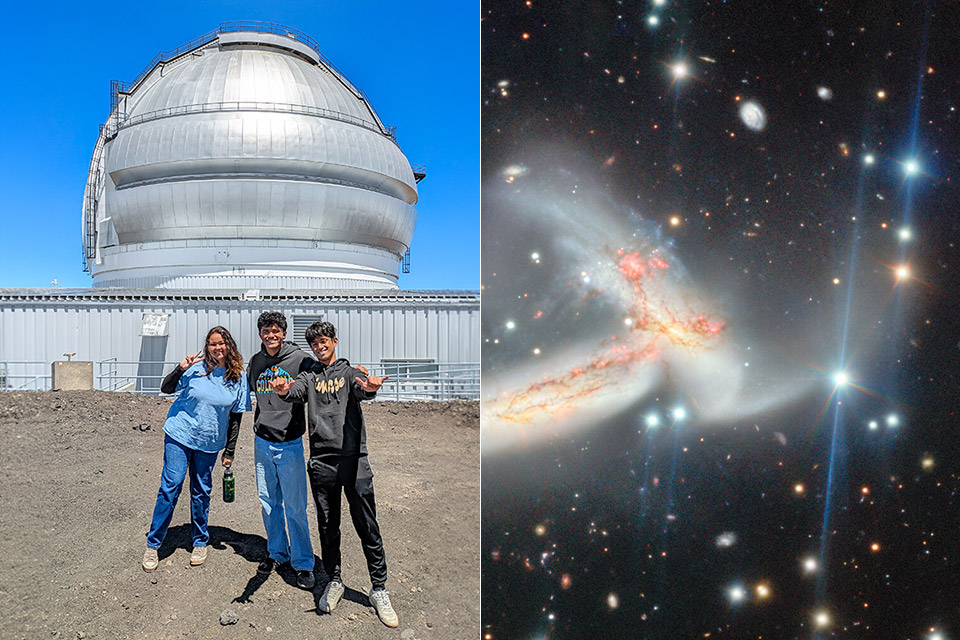
Photo credit: International Gemini Observatory / NOIRLab/NSF/AURA
High school students on Hawaiʻi Island gave NGC 7253 a name that already feels heavier than its catalog number. Nā ʻUhane Māhoe Huki Pū i ke Ola translates to “The Twin Spirits Pulling Together Creating Life,” and Gemini North on Maunakea recorded the pair with enough reach that pink knots of newborn stars sit in plain view. More than 200 million light-years out, in the stretch of Pegasus known in Hawaiian as Ka Lupe o Kawelo, two spiral galaxies tug at one another across about four million light-years of open space.
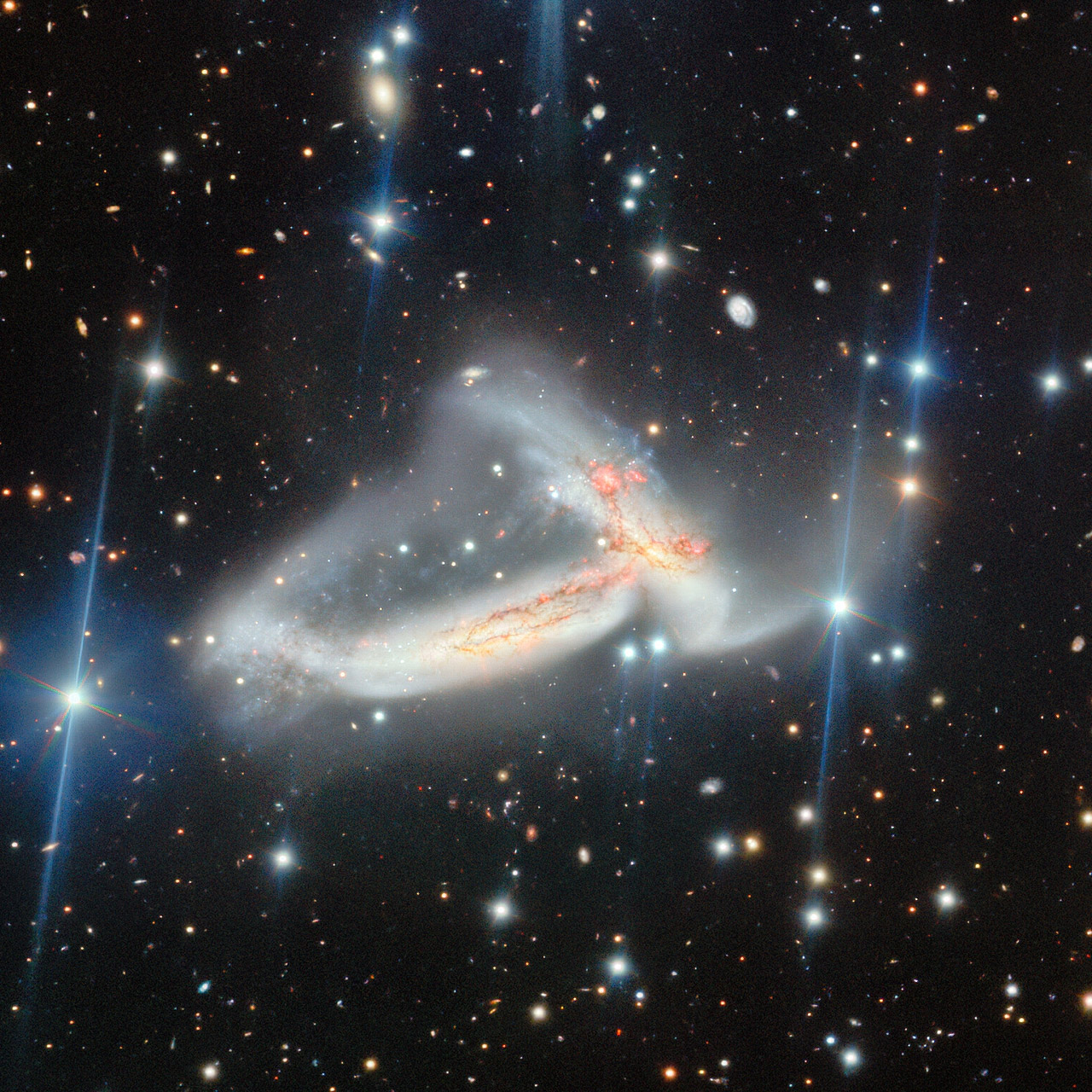
Gas and dust in those galactic arms collide, eventually doing the work of gravity. That compression then sets off a new wave of starlets. The blazing young stars emit radiation that ionizes the surrounding hydrogen. As a result, H II areas, which are essentially clouds of ionized hydrogen, show as big, bright pink patches in the Gemini North image. Halton Arp used to refer to the system as Arp 278 because it was a weird interacting galaxy. Albert Marth first discovered it on September 9, 1863. We can now see up close owing to the 8.1-meter telescope’s GMOS-N instrument, which took photos with g, r, i, and H-alpha filters. These covered an area of approximately 5.1 by 4.1 arcminutes. Billions of years will pass until the two merge.

LEGO Icons Hubble Space Telescope 11382
- EXPLORE THE HUBBLE SPACE TELESCOPE – Celebrate one of humanity’s greatest scientific feats while enjoying a relaxing building experience with the…
- REPLICA SPACE MODEL – Recreate the legendary space-based telescope with posable solar arrays and antennas, an opening aperture door and a detailed…
- AUTHENTIC DETAILS – Remove the exterior panels to reveal a detailed instrument bay, which features gyroscopes alongside primary and secondary…
This shot was captured in October 2025, when a group of students arrived at Gemini North Hilo Base Facility. Raiyan Rahman, Rafan Rahman, and Alia Tamanaha represented Waiākea High School and Volcano School of Arts and Sciences. They spent a week learning about how the observatory collects data, hanging out with Maunakea, and settling on a target system. Raiyan later noted that NGC 7253 stood out since it was located in a Hawaiian constellation, unlike many of the other objects.
In June 2026, a second team arrived from Keaʻau High School and Kamehameha Schools. Mylin Wilson, Manu Silva-Sampaio, and Samantha Silva-Sampaio were there to look for mergers and name ideas for the system. Nā ʻUhane Māhoe examines two similar galaxies, their wispy arms, and the twin Gemini telescopes in Hawaiʻi and Chile. Huki Pū highlights the gravitational attraction and individuals from many backgrounds who made this internship possible. i ke Ola tells the story of how new stars arise after collisions, as well as the simple fact that our sun is one of them, and we cannot live without it.
Project Hōkūlani, a collaboration between the International Gemini Observatory and the University of Hawaiʻi at Mānoa, engages local middle and high school students in science and engineering vocations through quick, hands-on activities. Six students will now be granted credit for a frame in the NOIRLab Legacy Imaging Program. Gravity has a long way to go in NGC 7253.
Nā ʻUhane Māhoe Huki Pū i ke Ola, Project Hōkūlani Names Two Galaxies Still Mid-Merge
#Nā #ʻUhane #Māhoe #Huki #Pū #Ola #Project #Hōkūlani #Names #Galaxies #MidMerge