Peter Ryseck’s Self-Balancing Pole Stands for Hours on a Coin-Sized Point
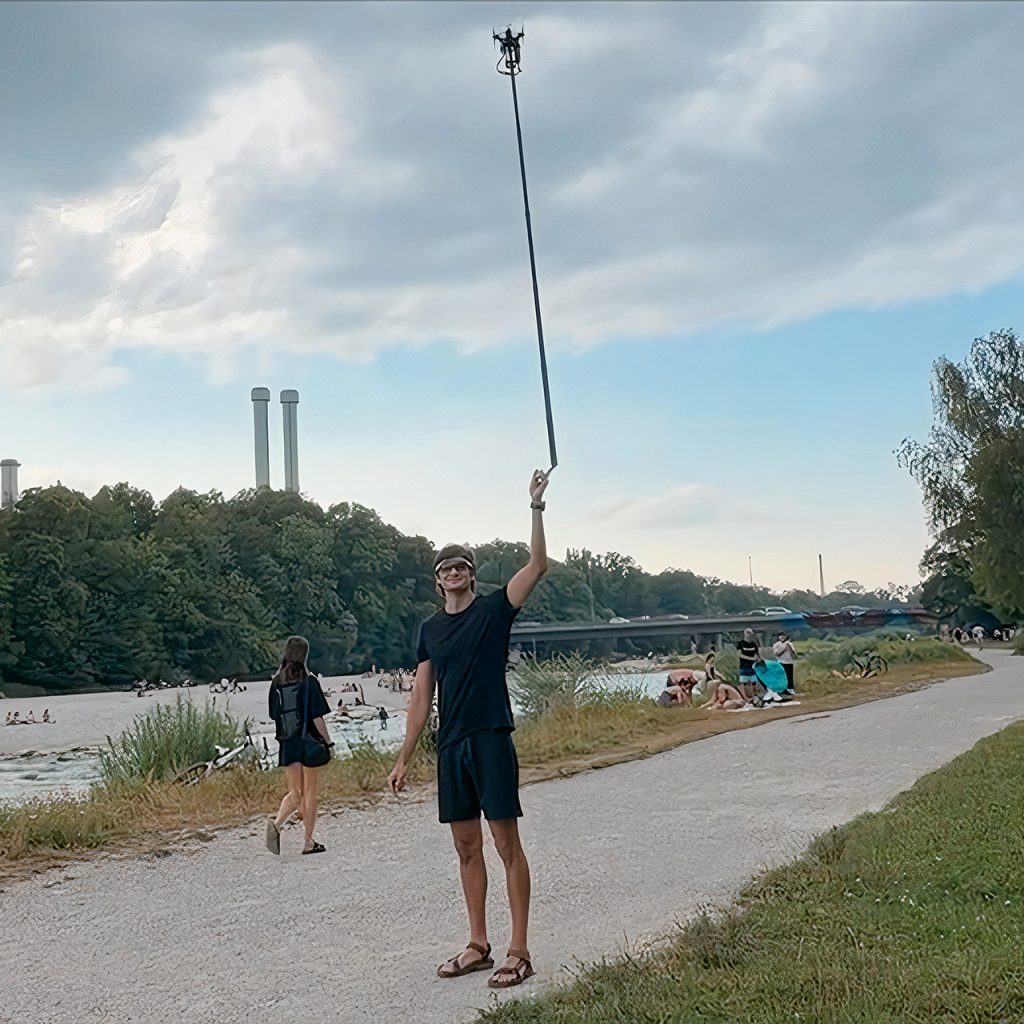
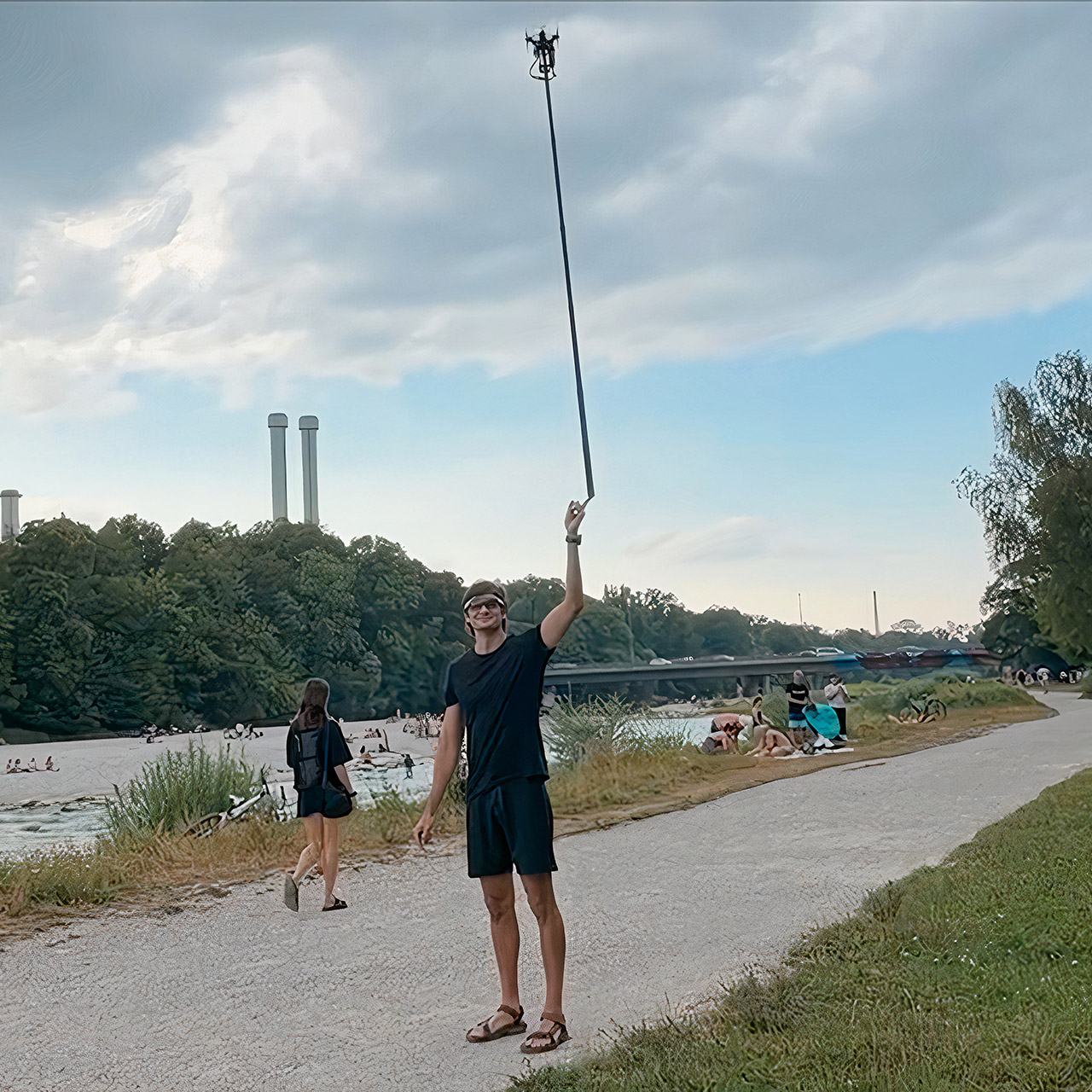
Peter Ryseck built a pole that balances on a contact patch about the size of a coin and stays there long after most people would have walked away. Four drone propellers sit on a 3D-printed mount at the top and give small sideways pushes whenever the shaft begins to tip. Nearly all of the weight still travels down the tube and into the ground, so those motors spend most of their time barely above idle.
He took the shaft from a carbon fiber swimming pool cleaning net and secured the electronics with a single screw. A pixhawk running the PX4 OS handles all sensing and control, while a 3s LiPo battery provides power. On paper, the gear appears to be far too simplistic to complete the job. The major challenge was getting the device to respond quickly and softly enough.

Bambu Lab A1 mini 3D Printer + LED Lamp Kit, Ready-to-Use for Beginners
- A1 mini + LED Lamp Kit for Creative Light Projects: Bring your ideas to life with the included LED Lamp Kit. Simply print compatible lamp models and…
- The Perfect 3D Printer for Beginners: A1 mini 3D Printer is designed to make 3D printing easy from day one with automatic calibration, simple setup…
- Experience the Bambu Lab Ecosystem: Access MakerWorld’s huge library of ready-to-print models, manage prints through the Bambu Handy app, and enjoy…
First, he attempted large, slow-turning props, which were chosen for their efficiency and minimal noise. The difficulty was that they refused to accelerate quickly enough, which was a major issue. You’d get a lean, and the controller would call for a correction, but the blades were still catching up. It would oscillate and then simply hang there. He then tried smaller props, only three inches in size, but they lacked the authority to complete the task. It needed five inch props to strike the proper balance: enough force to catch a fall while remaining light enough to spool up before the pole passed the point of recovery.
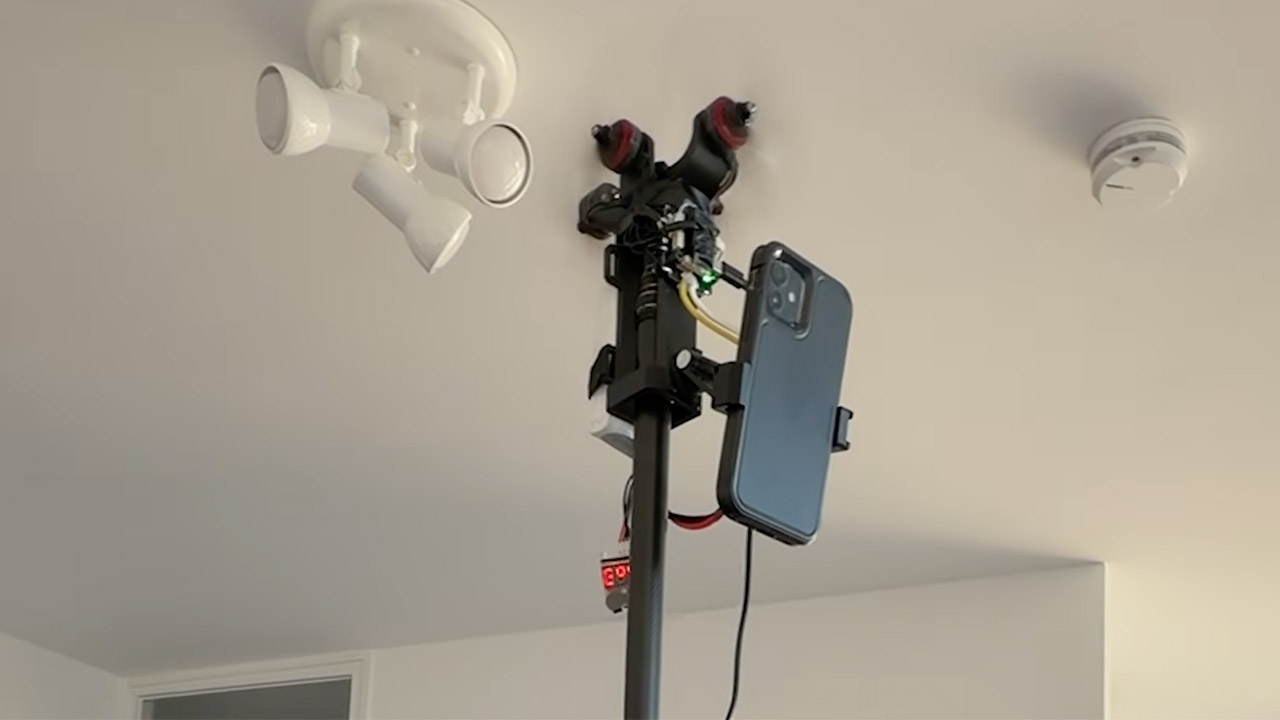
So the system uses a simple PD loop, which monitors how much the pole has slanted over as well as how quickly it is tilting, and attempts to balance both at the same time. Ryseck first simulated the tuning before applying it to the real system. He was seeking for a single set of numbers that could withstand a longer shaft, a larger load (he used a phone for a selfie as an example), and some outdoor gusts without having to re-tune every time something changed.
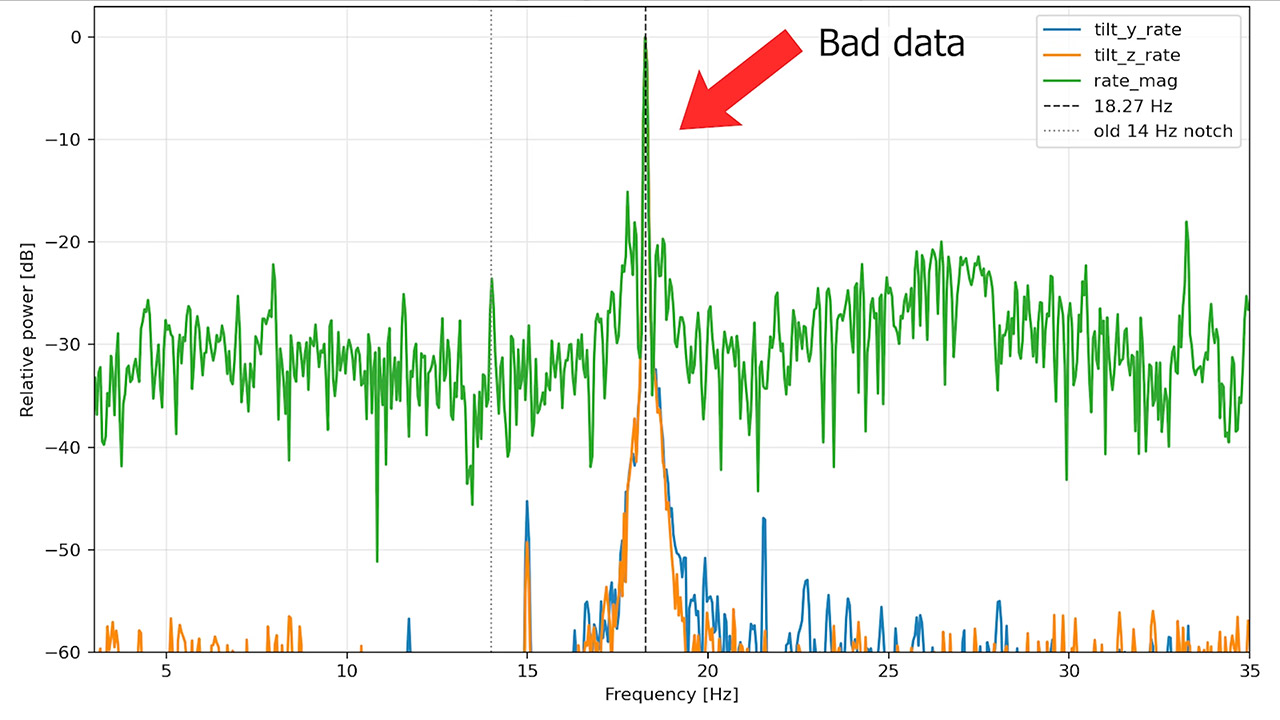
The carbon fiber pole flexes, indicating a high structural resonance near 18 hertz, which the earlier model did not have. Actual balancing motions are considerably below 5 hertz, therefore a dynamic notch filter is now operating on the flight controller, which detects those frequencies every time the system is armed and shuts them out without slowing the response when the pole begins to fall. There’s also a low-pass filter in the chain.
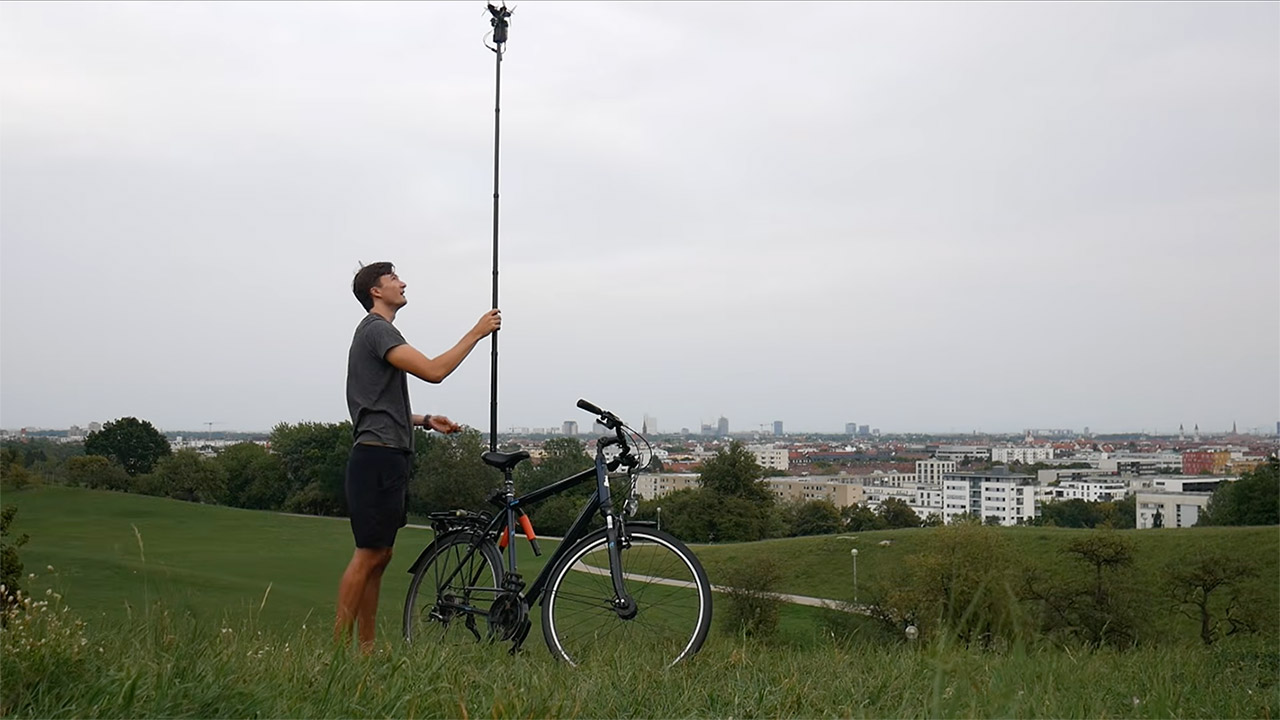
If you left it to steady wind and IMU drift, the motors would just keep pushing all day. Instead, software gradually adjusts the goal angle so that the pole leans only a few degrees into the crosswind. Then gravity does the majority of the work in keeping it there. The motors keep close to idle, the setup is quiet, and the pack lasts much longer. When Ryseck tried setting the idle to zero, he discovered that it contributed some instability, so he kept on a small amount of throttle just to keep the propellers spinning.
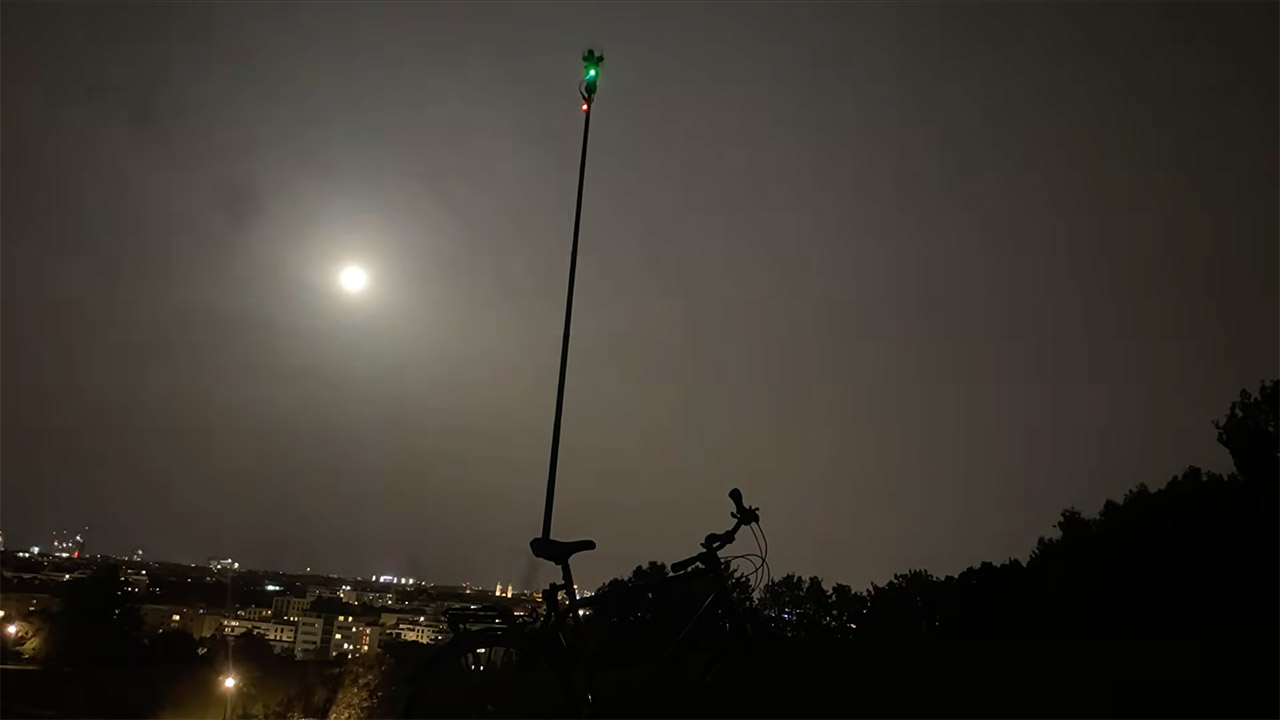
Ryseck left the finished pole in Olympia Park on a windy day and walked away. Two hours passed. Three hours passed. After 3.75 hours, the shaft remained in the same location. The voltage on the 12.6v battery had decreased to 11.1 volts, and nite had fallen – but the pole remained as steady as possible. Troy Wigton was one of the persons that contributed with some of the control ideas. Give the item a tiny push, and the four props whisper gently, the shaft straightens itself, and it returns to doing almost nothing. You’d think that was a very typical control challenge, yet the end result is surprisingly quiet.
[Source]
Peter Ryseck’s Self-Balancing Pole Stands for Hours on a Coin-Sized Point
#Peter #Rysecks #SelfBalancing #Pole #Stands #Hours #CoinSized #Point