Physicists Watched Time Invent Itself Inside a Cloud of 24,000 Ultracold Atoms
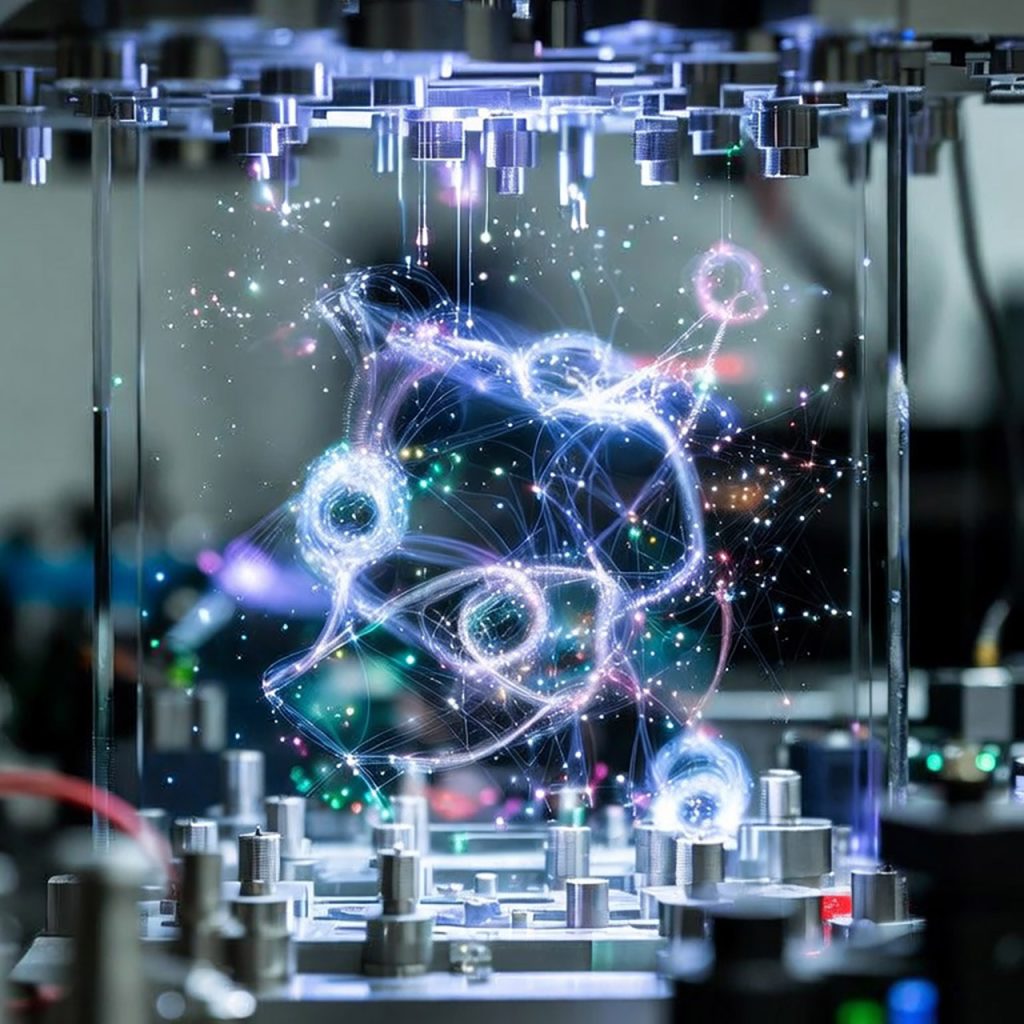
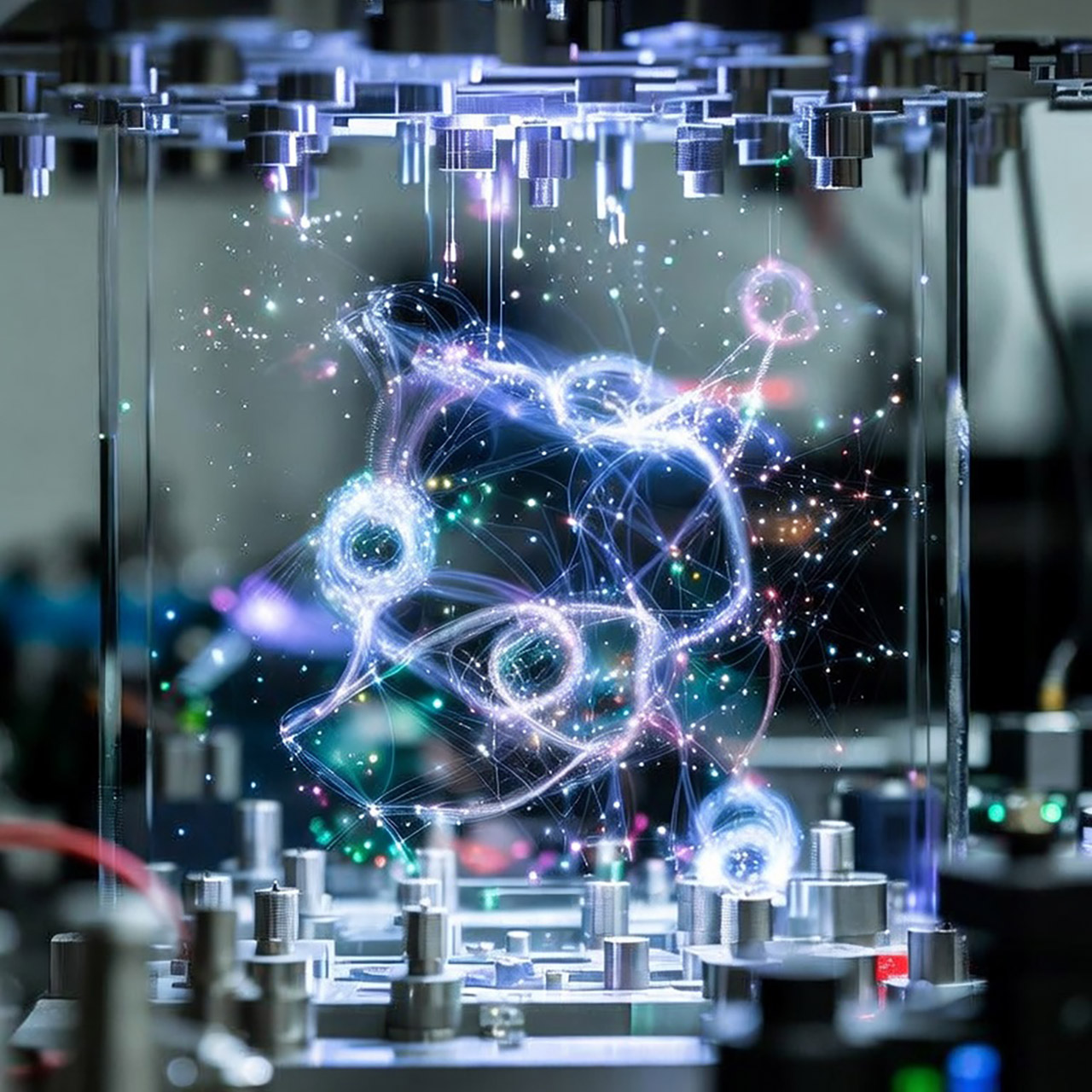
A cloud of 24,000 rubidium atoms, chilled to within a few billionths of a degree above absolute zero, has given researchers their clearest experimental window yet into how time can arise without any external clock keeping track. The work, published in Physical Review Research, shows that a usable form of time, complete with its one-way direction, emerged directly from changes inside an isolated quantum system.

The formation of a Bose-Einstein condensate transformed all the atoms into a single gigantic wave, which was stuck inside a trap held in place by a series of very tight laser beams. The lasers were aligned to form a thin barrier that divided the cloud of atoms down the center. The people doing the experiment could only see one half of the cloud, while the other half remained hidden. The thing is, atoms were able to simply wander across that barrier in both directions, causing the visible part to expand, then contract, and then expand all over again, in a cycle that resembles how a small universe might, or might be getting its final gasp.

Amazon Smart Plug, Works with Alexa, Simple Setup, Endless Possibilities
- Amazon Smart Plug works with the Alexa app and compatible Alexa devices to add voice control to any electrical outlet.
- Simple setup – No smart home hub required. Just plug it in, open the Alexa app and follow the stress-free directions to get started in minutes.
- Compatible with many lamps, fans, coffee makers, and other household devices with a physical on/off switch.
None of this required costly laboratory clocks to tell the researchers what was going on; instead, they relied on the distribution of atoms throughout this visible patch of cloud to keep track of time. The pace at which the atoms flowed back and forth over the barrier in the other direction was the most important issue here, as the quicker they moved, the more time seemed to speed up inside the model, and the slower they went, the more time seemed to drag on and on. The atoms eventually ceased moving about and rearranging, and the internal clock came to an end. The researchers devised this concept of time based on how entropy varied over time (i.e., how much disorder was present), and guess what, it worked perfectly; all of this occurred repeatedly in the same order, even as the cloud of atoms rose and then shrank back down again. The tempo of it all shifted in fairly obvious ways as well; fast atom exchange across the barrier meant time sped by, slow exchange meant time dragged, and when everything eventually balanced out, all movement came to a halt.
Using this internal clock concept to rewrite the Schrödinger equation resulted in predictions that began to correspond to the behavior of the atoms in the trap, all without the need for an external clock. This battle held even as the cloud expanded and then contracted. Giovanni Barontini was in charge of the experiment at the University of Birmingham. He believed that depending on what the atoms were doing, the internal clock would speed up, slow down, or stop completely, and that this worked out much better than most studies. He observed that the fact that time exists and moves in one direction could simply be because every observer can only see a little portion of a much larger picture.
This way of operation was a test of theories that had been floating around for quite some time, attempting to connect quantum physics and gravity. The majority of these concepts are difficult to grasp since they result in universe portrayals that do not include time. The Wheeler-DeWitt framework is one such system, which considers the entire universe to be a single static quantum state, with any notion of time formed from interactions between its numerous components. This cold-atom method is a much more realistic way to study these types of correlations than simply plugging them into a whiteboard equation.
[Source]
Physicists Watched Time Invent Itself Inside a Cloud of 24,000 Ultracold Atoms
#Physicists #Watched #Time #Invent #Cloud #Ultracold #Atoms