Sonay Kartal makes history by reaching biggest final of her career in Wuhan

Want to bookmark your favourite articles and stories to read or reference later? Start your Independent Membership today.
Already a member?
Log in
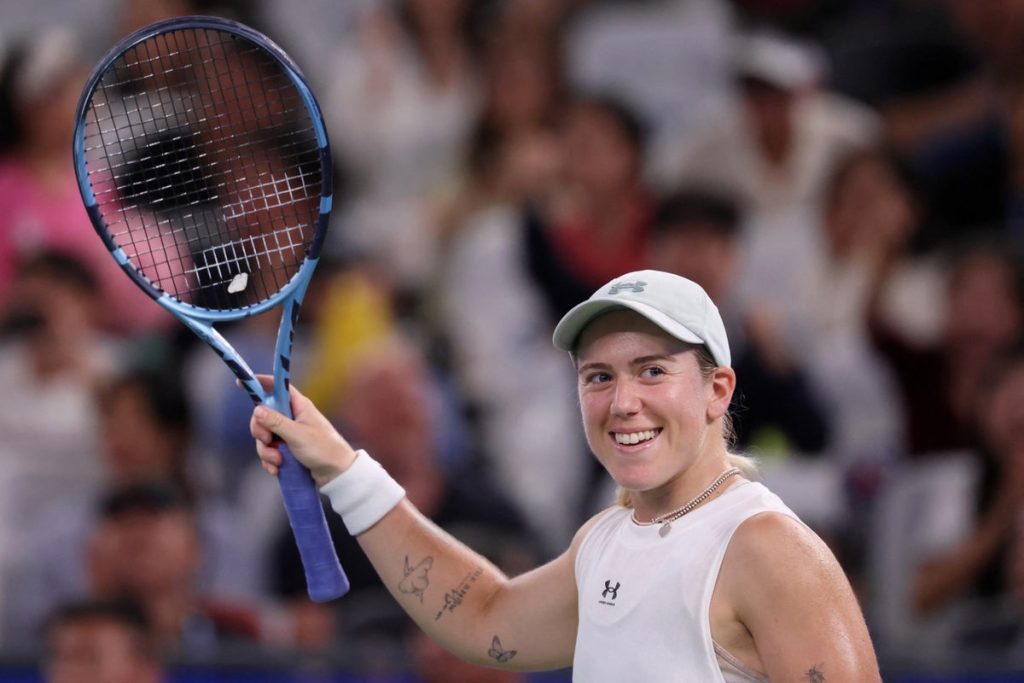
Great Britain’s Sonay Kartal made WTA history as she defeated Jelena Ostapenko to reach the biggest final of her career at the Wuhan Open in China.
Kartal began the tournament ranked No 170 in the world having missed six months of the season due to a back injury, but has made up for lost time superbly in what is just her second tour-level tournament since March.
The 24-year-old has become the lowest-ranked WTA 1000 finalist since the format was introduced in 2009, with victory over former French Open champion Ostapenko adding to impressive wins against world No 6 Elina Svitolina, former Olympic champion Belinda Bencic and former Wimbledon finalist Jasmine Paolini this week.
It took another gutsy display from Kartal, who trailed in both sets against the big-hitting Ostapenko but prevailed in a rollercoaster encounter to win two tiebreaks 7-6 (11-9), 7-6 (7-5), saving all six set points she faced across the two-hour battle.
Kartal, whose only career title came in the WTA 250 event in Monastir, Tunisia two years ago, will play either six-time grand slam champion Iga Swiatek or French Open finalist Maja Chwalinska in Sunday’s final, with the all-Polish semi-final taking place later on Saturday.
“Wow! That was probably one of the toughest of matches I’ve played,” Kartal said after converting her second match point. “I knew exactly how she was gonna play. At times, she’s unplayable, and sometimes you just have to ride that wave.
“Mentally, I think this is one of the best performances I’ve had in my career, so, I’m very, very proud of that one.”
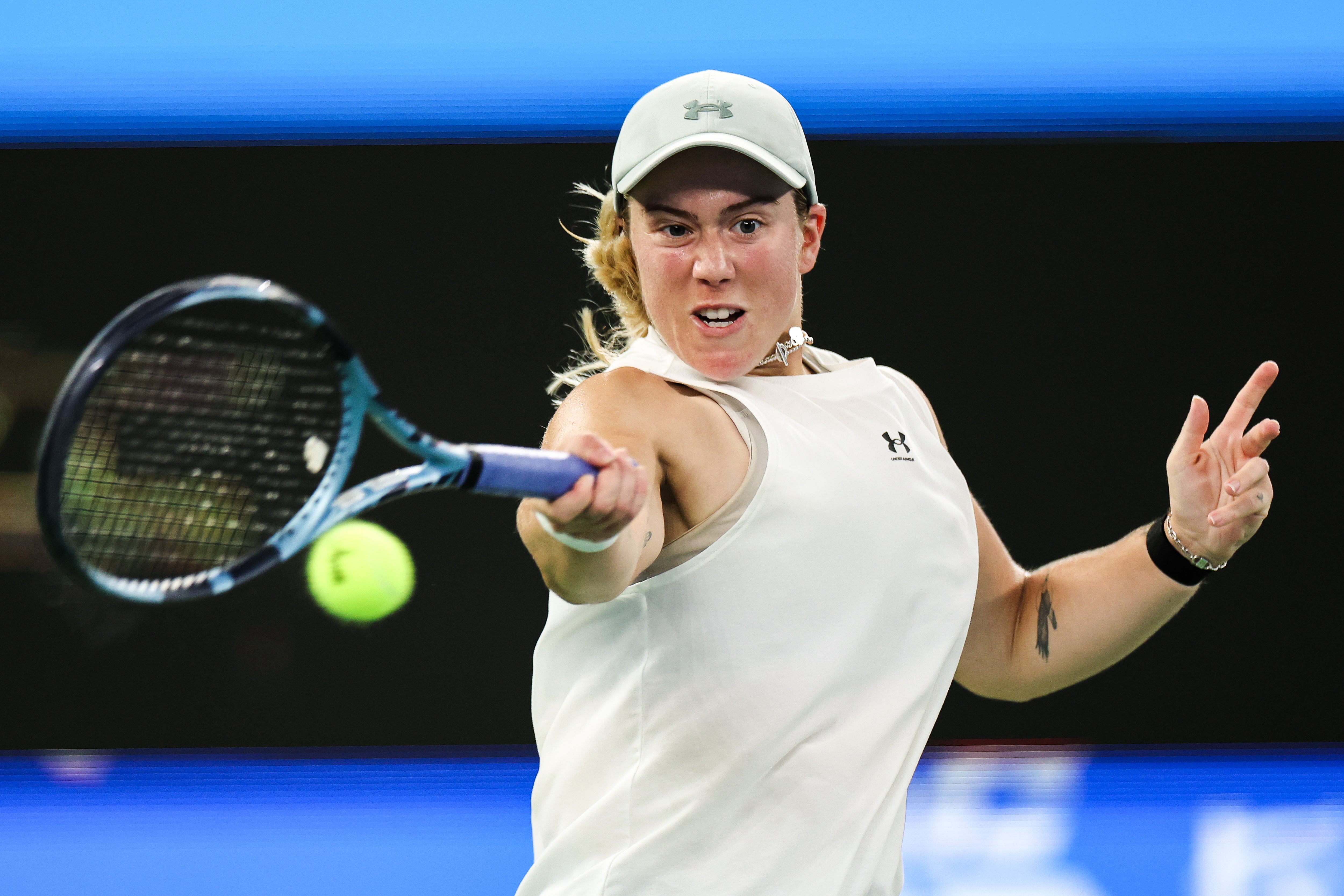
The Brighton-born Kartal had triumphed against Ostapenko before and defeated the expressive Latvian in the first round of Wimbledon in 2025, where she reached the fourth round at her home grand slam.
And as Kartal admitted during her post-match interview, the pattern of her match against Ostapenko was entirely predictable: the match was dictated by Ostapenko’s racket and she finished with 50 winners to 41 unforced errors, compared to a ratio of 13-13 for Kartal.
Ostapenko raced out of the blocks with the opening break and twice served for the opening set, but Kartal broke back on both occasions and saved her first set point as she made it through to the first tiebreak. Kartal had to save two more set points before converting her third set-point opportunity to take the lead.
The second set followed the same rhythm and Ostapenko broke Kartal’s serve early before errors crept back into her game. Kartal recovered the break but was forced to save three more set points on serve to make it through to the second tiebreak, where she held her nerve to reach her second career final.
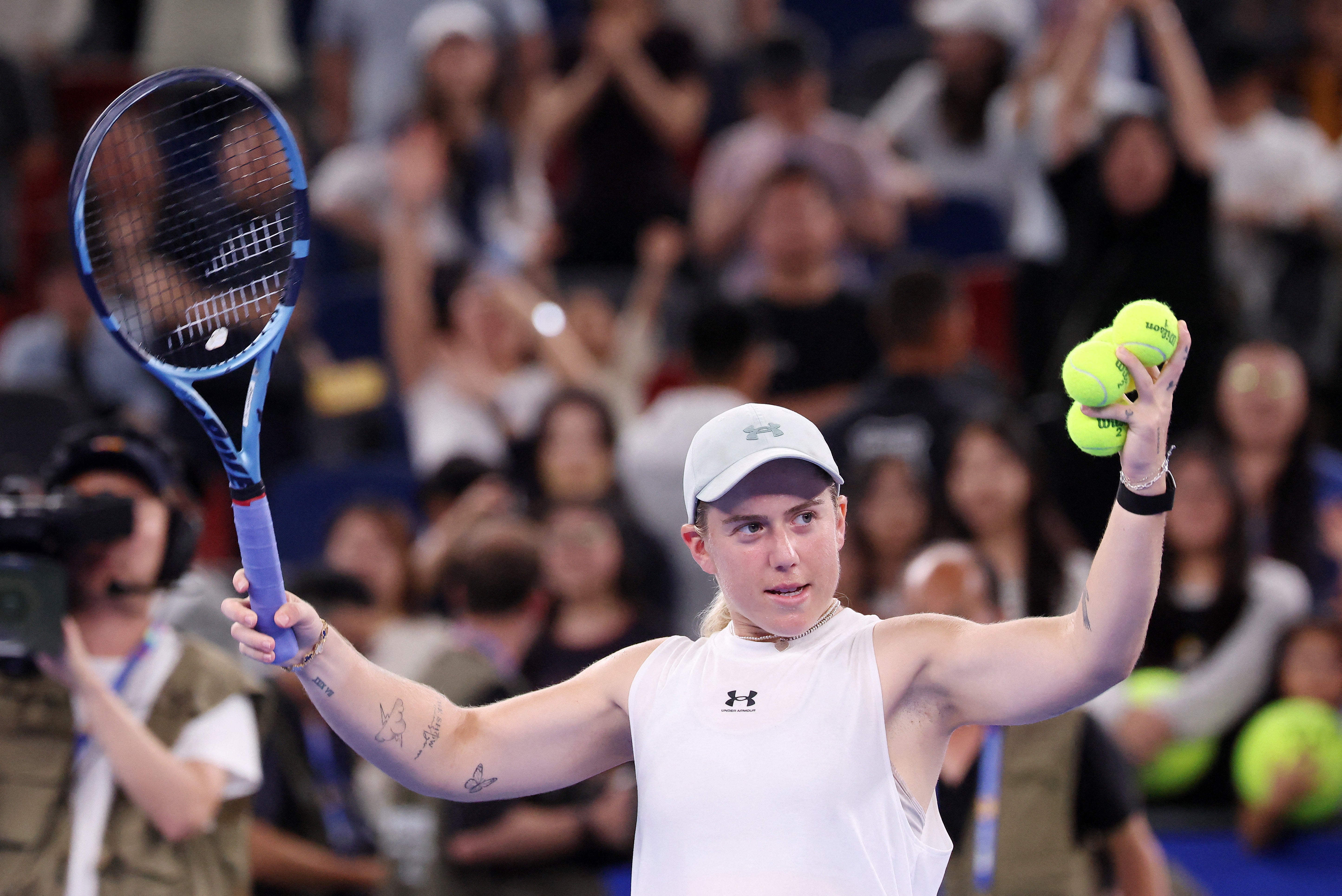
After Kartal’s back injury forced her to miss the middle six months of the season, including Wimbledon and the grass-court campaign, the former world No 54 opted to use her protected ranking to enter the two WTA 1000 events at Beijing and Wuhan in China.
Kartal admitted she was “throwing herself into the deep end” but her gamble has paid off handsomely, first reaching the third round in Beijing before winning five matches in a row, all against top-50 opponents, to advance to the Wuhan final.
“I was dreaming of playing these matches when I was fully fit, so before the injury,” Kartal added. “So to be able to come back here in my third event, and to achieve this, regardless, is a huge milestone for me. I’m gonna recover and enjoy every second of it tomorrow.”
The series of WTA 1000 tournaments sit in the rung below the four grand slams and Kartal is just the second British player to reach a final at that level. Former world No 4 Johanna Konta won the Miami Masters in 2017, and also reached finals in Beijing and Rome.
Meanwhile, by reaching the final in Wuhan, Kartal will jump 120 places in the WTA rankings to No 50 in the world. It also means Kartal will replace Katie Boulter as the new British No 1.