Toshifumi Suzuki, ‘god of retail’ 7-Eleven pioneer dies of heart failure aged 93
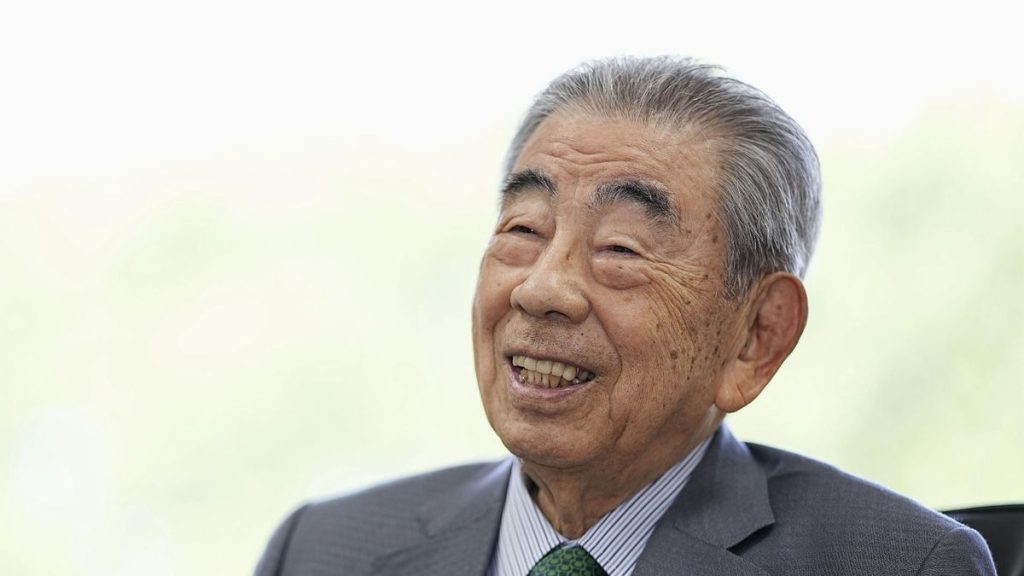
Toshifumi Suzuki, the man dubbed the ‘god of retail’ has sadly passed away after creating the much-loved 7-Eleven convenience store and turning it into a global retail empire

Toshifumi Suzuki was hailed for helping turn 7-Eleven convenience-chain global retail empire(Image: Chika Ohshima/Kyodo News via AP)
Japanese businessman Toshifumi Suzuki, dubbed in the country as the ‘god of retail’ has sadly passed away after being credited with creating the 7-Eleven convenience-chain global retail empire.
Suzuki, an honorary adviser at Seven & i Holdings, died on May 18 of heart failure at the age of 93 at his Tokyo home, the company said Monday (May 25).
Suzuki founded the Japanese unit that operates the seemingly ubiquitous 7-Eleven “conbini” outlets, where busy people can hop in and grab sandwiches, rice balls, drinks, chips and other meals on-the-run, use ATMs, pay utility bills and copy documents.
His impact of the stores revolutionised how generations in Japan and other countries now shop with the brand becoming a widely recognised global brand.
The 7-Eleven stores, now numbering more than 80,000 worldwide, are the biggest convenience-store chain in Japan.
The business started out in Japan under a franchise agreement with the U.S. 7-Eleven in 1973. The first store opened in Japan the following year.
After The Southland Corp., which founded 7-Eleven, ran into financial difficulties the Japanese company bought a majority stake in the 1990’s. It made the American counterpart its 100% owned group company in 2005.
Several years ago, the Canadian retailer Alimentation Couche-Tard, which runs the global Circle K convenience store chain, sought to take over Seven & i Holdings. But it dropped the effort in 2024, citing frustration with negotiations that showed “a lack of constructive engagement.”
Suzuki, born in Nagano Prefecture, northern Japan, in 1932, graduated from the prestigious Chuo University in Tokyo.
Before beginning his career in the convenience store business, he worked at Ito-Yokado, a major Japanese retail chain that sells a variety of products including groceries, cosmetics and clothing, which is also owned by Seven and i Holdings.
Apart from leading 7-Eleven, Suzuki engineered the acquisition of Barney’s Japan in 2015 and added banking functions to the empire.
He said he wanted to provide customers with what he called a lifestyle shopping experience. Over the years, the retailing giant also brought under its wing the Sogo and Seibu department stores.
Suzuki became chief executive of 7-Eleven Japan in 1978. He is widely seen as having innovated how Japanese consumers shop. Convenience stores have led retailers in Japan in implementing new retail technologies.
Funeral services are being held privately with family, and messages, flowers and other condolence gifts were politely declined, according to the company. Details of a public ceremony will come later, it said.
Suzuki is survived by his wife and two children.
For the latest breaking news and stories from across the globe from the Daily Star, sign up for our newsletters.