U.S. monitoring Chinese activity in South China Sea around disputed shoal
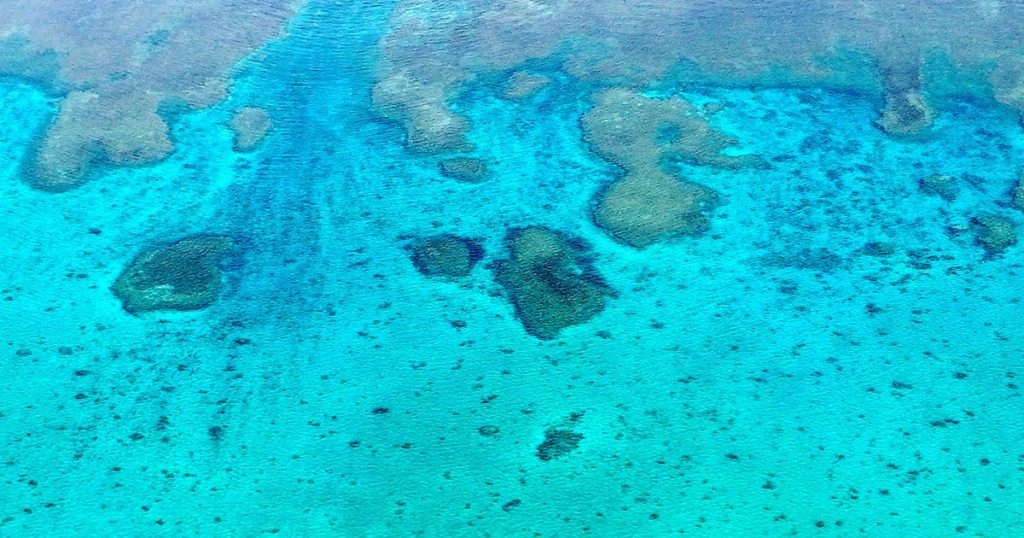
Washington — U.S. intelligence agencies are closely monitoring activity at a disputed shoal in the South China Sea amid growing concerns that China may be laying the groundwork for a more permanent presence at one of the region’s most volatile maritime flash points, a move that could further inflame tensions with the Philippines and test Washington’s commitment to a treaty ally.
Analysts are scrutinizing a series of recent Chinese maritime operations near Scarborough Shoal, an uninhabited but strategically located atoll roughly 140 miles west of the Philippine island of Luzon, according to U.S. officials familiar with the intelligence who spoke to CBS News under condition of anonymity to discuss national security issues. The officials said the Chinese government installed what Beijing has called a “scientific structure” in the middle of the reef, which has angered the Philippines in the disputed atoll.
The U.S. engaged the Chinese government over the structure. The People’s Liberation Army, the military wing of the Chinese Communist Party, claimed the structure was not military, but Chinese officials also did not fully disavow that some element within the structure could be used by the PLA, according to the officials.
The Office of the Director of National Intelligence has not responded to a request for comment.
The Scarborough Shoal, known in the Philippines as Bajo de Masinloc and in China as Huangyan Dao, sits within Manila’s exclusive economic zone in the South China Sea, but Beijing has maintained a near-constant presence around the shoal after seizing de facto control in a tense 2012 standoff.
Some U.S. officials worry that recent activity could represent another incremental step in China’s long-running effort to consolidate control over disputed features across the South China Sea — a view shared by Philippine officials.
Philippine authorities disclosed the presence of a floating structure inside Scarborough Shoal earlier this week. In a statement released Tuesday, the Philippine government’s National Task Force for the West Philippine Sea said aerial surveillance had identified a 6-by-6-meter floating platform equipped with what appeared to be an antenna. Recent imagery also shows personnel standing atop the structure, while monitoring by the Philippine Coast Guard indicated the platform was operating inside the shoal.
“The Department of Foreign Affairs has already undertaken appropriate diplomatic action with the government of the People’s Republic of China in connection with the illegal presence of this floating structure,” the task force said, adding that Philippine agencies were assessing the “nature, purpose, and implications” of the installation.
China rejected Philippine objections, maintaining that the platform is located in an area under its control, not the Philippines’.
“Huangyan Dao has always been China’s territory. China has indisputable sovereignty over it and its adjacent waters,” Liu Pengyu, an embassy spokesperson for China, told CBS News. “It is fully within China’s sovereign rights to carry out activities including scientific research at Huangyan Dao.”
“China urges the Philippines to stop all infringement activities, provocations and false accusations at sea,” Liu continued. “China urges the U.S. to stop sowing discord and stoking confrontation.”
The development has drawn the attention of U.S. intelligence analysts and military planners because of China’s history of gradually establishing physical control over disputed maritime features before expanding its presence. Over the past decade, Beijing transformed several reefs and outcroppings in the Spratly Islands into fortified artificial islands equipped with airfields, deep-water ports, radar systems and missile sites.
“Over the past 20 years we’ve witnessed the largest military buildup since World War II by the PRC,” said retired Navy Adm. John Aquilino in 2022 during an interview with the Associated Press and the U.S. Indo-Pacific commander. “They have advanced all their capabilities and that buildup of weaponization is destabilizing to the region.”
Concerns about Chinese activity in the area have been a recurring feature of U.S. military planning. Last year, CBS News reported that the U.S. military had drawn up plans to stage a “show of force” against recent Chinese aggression near the Scarborough Shoal that was intended to signal Washington’s intent to push back against Beijing’s expanding presence and defend Philippine sovereignty and long-standing fishing rights.
Last year, Beijing announced a plan to create a “national nature reserve” in the area that drew condemnation from Secretary of State Marco Rubio and was viewed by officials in Manila as another step toward solidifying Chinese control.
“Beijing claiming Scarborough Reef as a nature preserve is yet another coercive attempt to advance sweeping territorial and maritime claims in the South China Sea at the expense of its neighbors, including by preventing Filipino fishermen from accessing these traditional fishing grounds,” Rubio said in a statement. “China’s actions at Scarborough Reef continue to undermine regional stability.”
U.S. monitoring Chinese activity in South China Sea around disputed shoal
#monitoring #Chinese #activity #South #China #Sea #disputed #shoal