Webb Captures Centaurus A in Fresh Detail, Showing a Galaxy Marked by Cosmic Violence from Billions of Years Ago
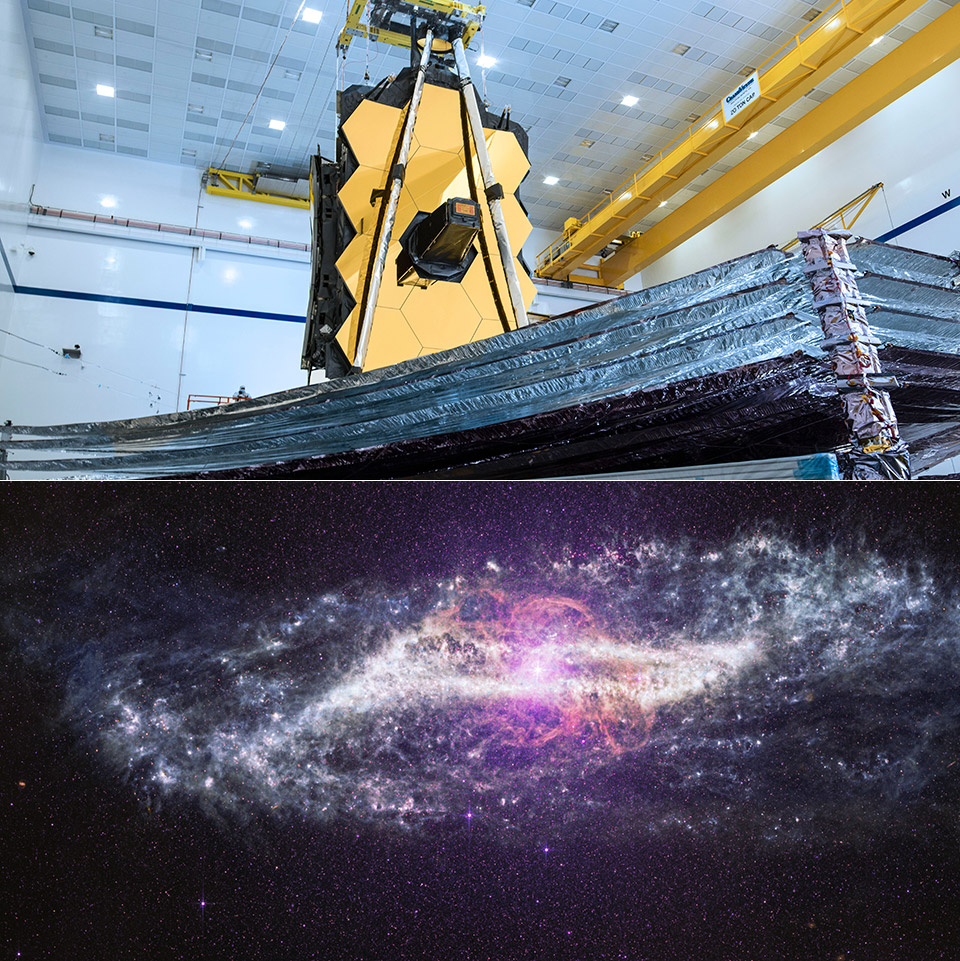
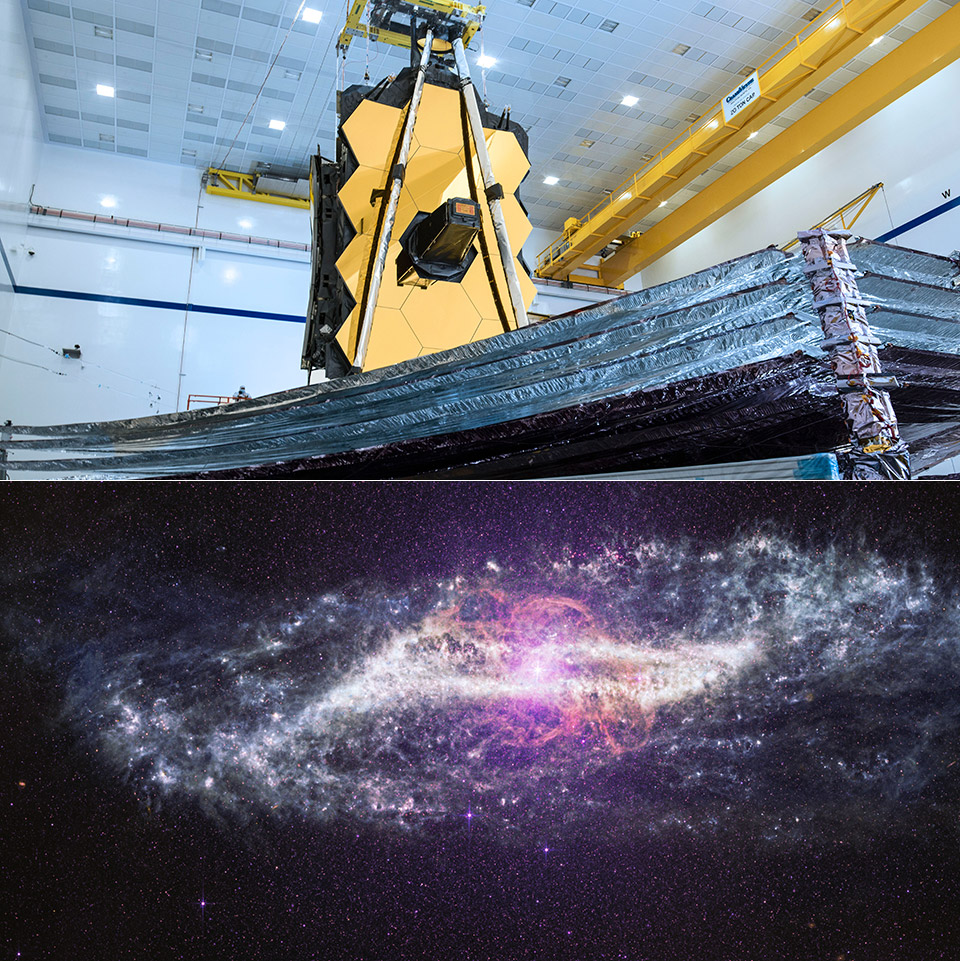
Photo credit: NASA/Chris Gunn
Eleven million light-years away, Centaurus A has served as a favorite target for telescopes for good reason. It sits close enough for serious study yet displays features that hint at a far more dramatic history than its current appearance first suggests. A new image from NASA’s James Webb Space Telescope, released to mark four years of science operations, brings that history into much clearer view.
The galaxy spans diagonally across the frame. A bright, sparkling white core sits at its center, with a broad band of golden-orange dust flowing through it that you can nearly reach out and touch. It’s shaped like a parallelogram and covered in a variety of mottled spots, brilliant knots, and wonderful thin filaments that snake through the material like tapestries. Just above the center is a fainter peach-colored ribbon that follows a mild S curve.
Sale

LEGO Technic Planet Earth and Moon in Orbit Building Set, Outer Space Birthday Gift for 10 Year Olds…
- Interactive model – Inspire kids to build a representation of the Earth, Sun and Moon in orbit with this LEGO Technic Planet Earth and Moon in Orbit…
- Educational space toy – Kids can turn the crank to see how the Earth and the Moon orbit around the Sun
- Includes months and moon phases – This solar system toy includes printed details, like the month and moon phases to help kids see how the Earth’s…
At first view, the galaxy’s edges appear to be a fuzzy tangle, but they are actually made up of millions of individual stars that are now appearing as discrete points, particularly in the packed middle regions. The near-infrared camera detected these stars one by one. Its mid-infrared instrument also penetrated the dust that prevents us from seeing anything at shorter wavelengths, revealing warm structures blazing away within the lanes.
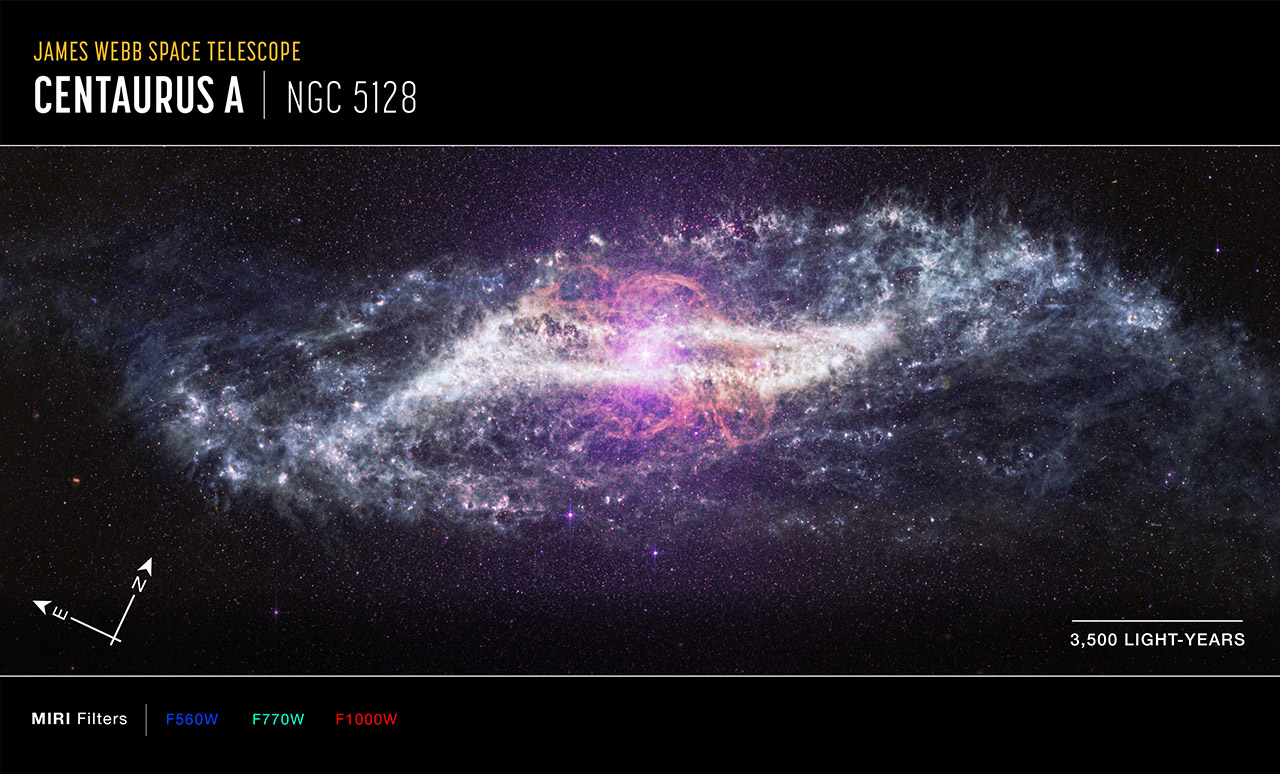
Astronomers have long believed that Centaurus A formed as a result of a massive collision. About two billion years ago, another galaxy collided with what was considered to be the original galaxy, pushing gas and stars into new orbits and initiating new waves of star formation. And the new image merely adds to the existing picture. Different groups of stars appear in various locations, some of which formed before the crash, while others appear in regions that were formed around the time of the accident, others appear in places that were disorganized following the catastrophe. By tracing these different generations of stars, researchers are able to provide a more detailed chronicle of the galaxy than previously possible.
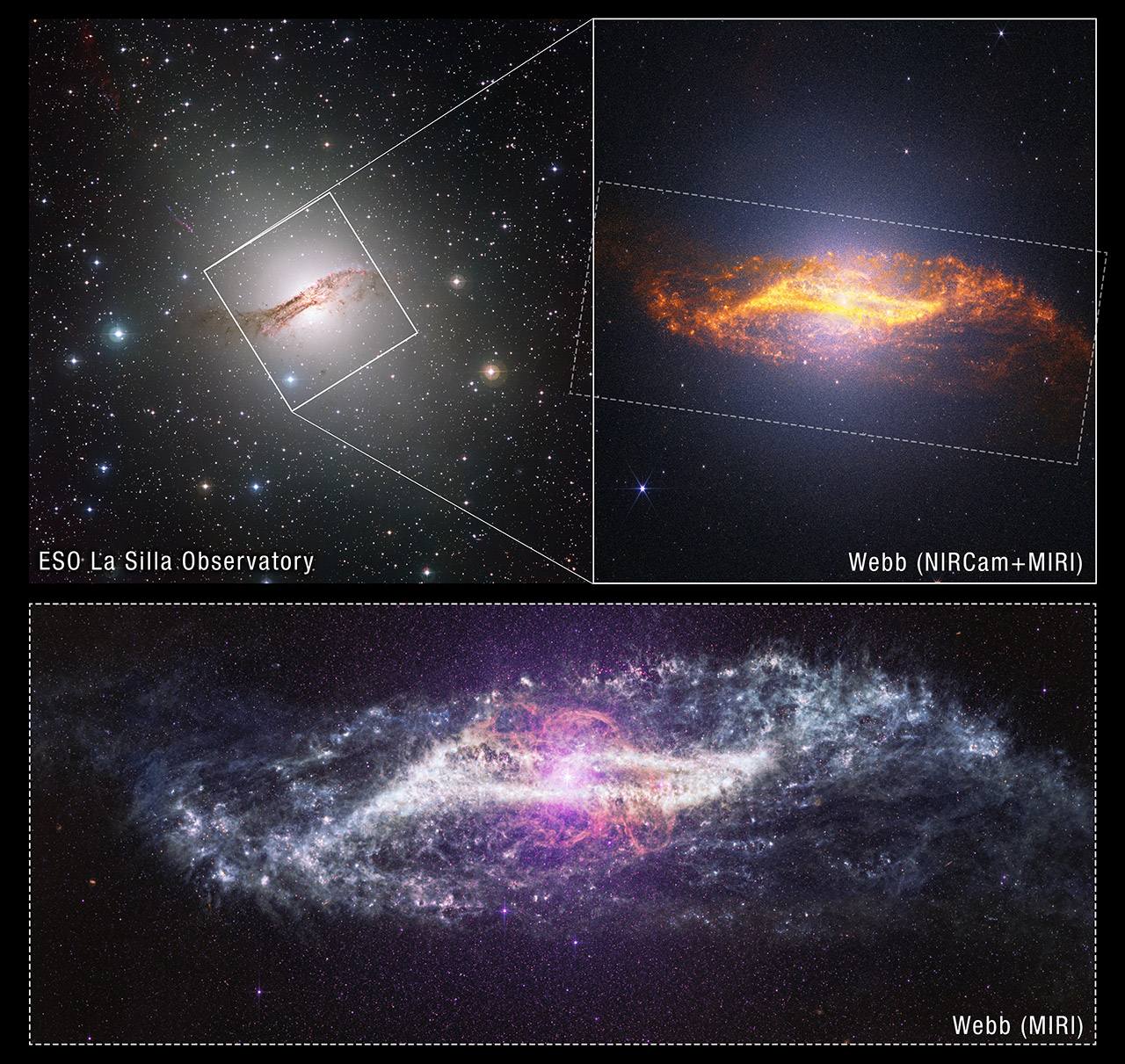
Then there’s the center supermassive black hole, which is actively involved in the ongoing story. It just keeps pulling in the surrounding material and blasting out powerful jets that help shape the whole thing, but it’s almost as if the black hole is simultaneously encouraging star formation in some places by squishing the gas together and limiting it in others by pushing the material away. Even now, all of this activity continues. The earlier collision left behind a distorted disk of gas and dust, which continues to feed both the black hole and young stars.
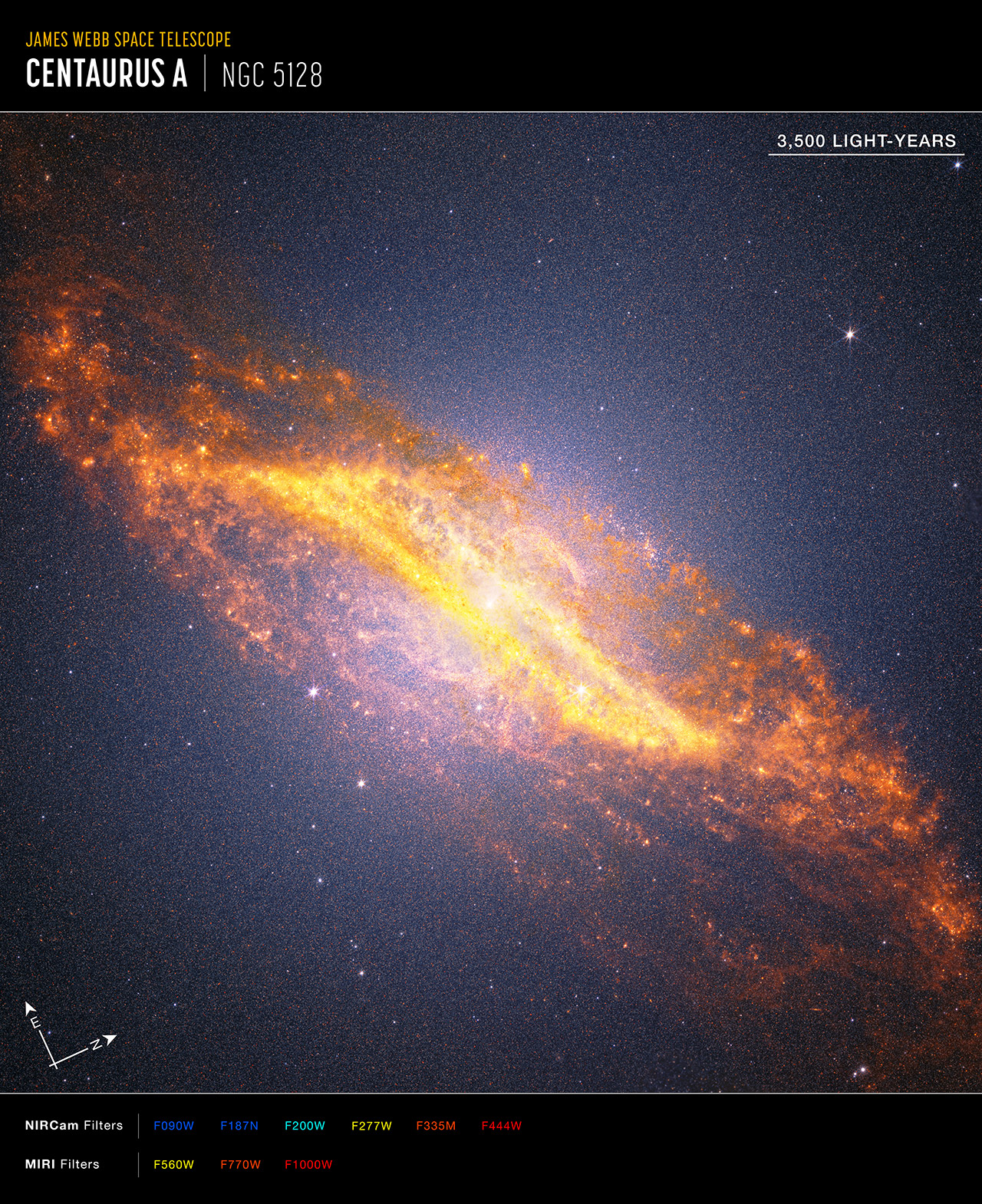
Older telescopes could only see a small portion of all of this. Hubble’s visible light photos simply stopped where dust obstructed them. Previous infrared observations revealed large-scale structures but were unable to distinguish the individual stars clustered in the center, but Webb provides not only the power to see through the dust but also the sharpness to show each and every star, transforming a familiar old object in our skies into a true detailed record of its own history.
Webb Captures Centaurus A in Fresh Detail, Showing a Galaxy Marked by Cosmic Violence from Billions of Years Ago
#Webb #Captures #Centaurus #Fresh #Detail #Showing #Galaxy #Marked #Cosmic #Violence #Billions #Years