Webb Uncovers Survivor from the Milky Way’s Chaotic Early Years, Confirms it as Prototype of Bulge Fossil Fragment
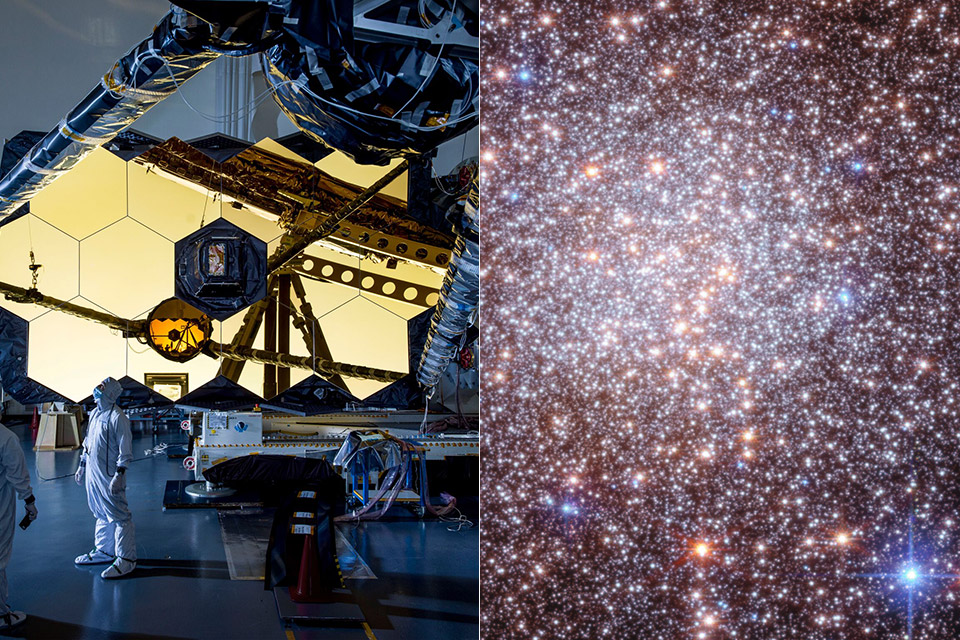
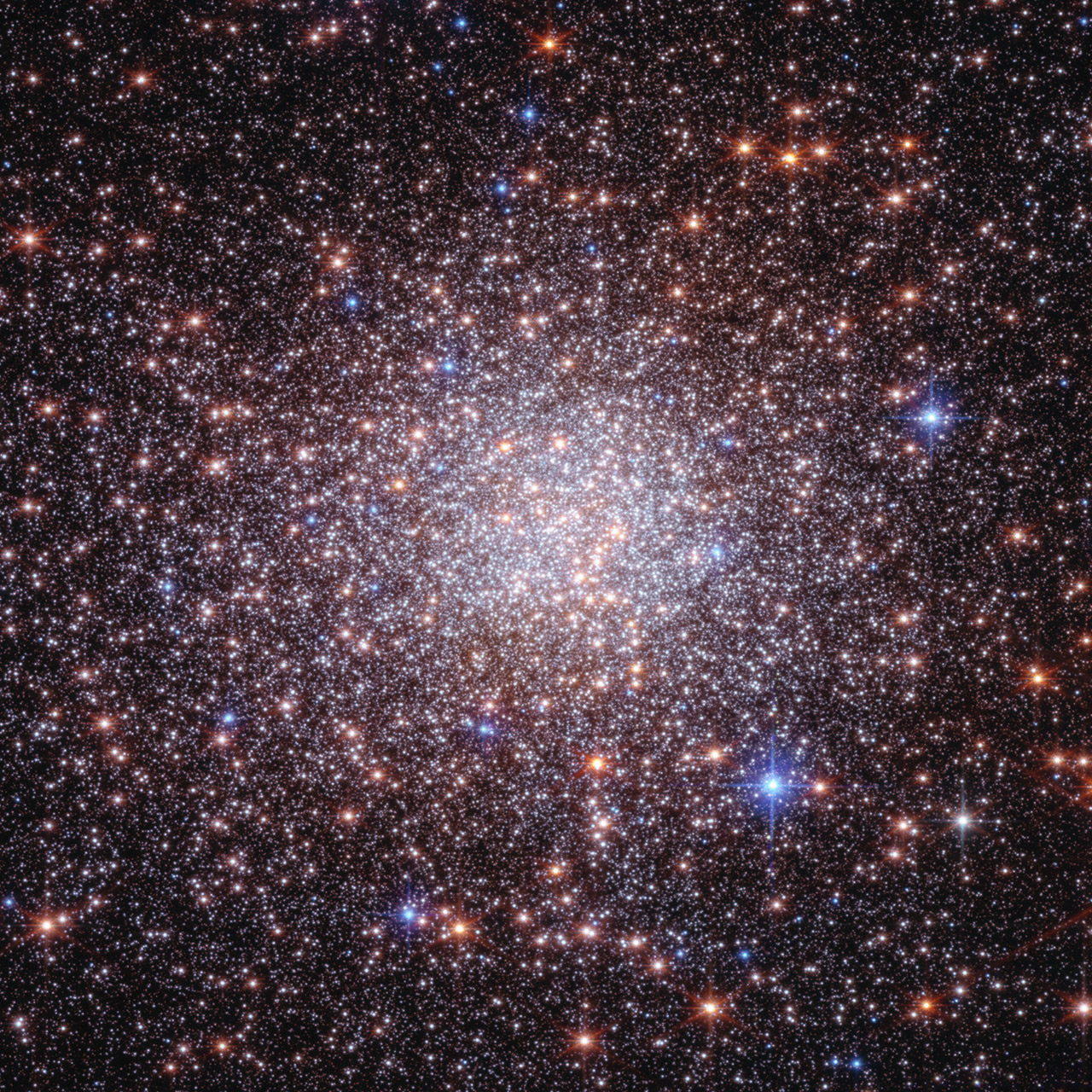
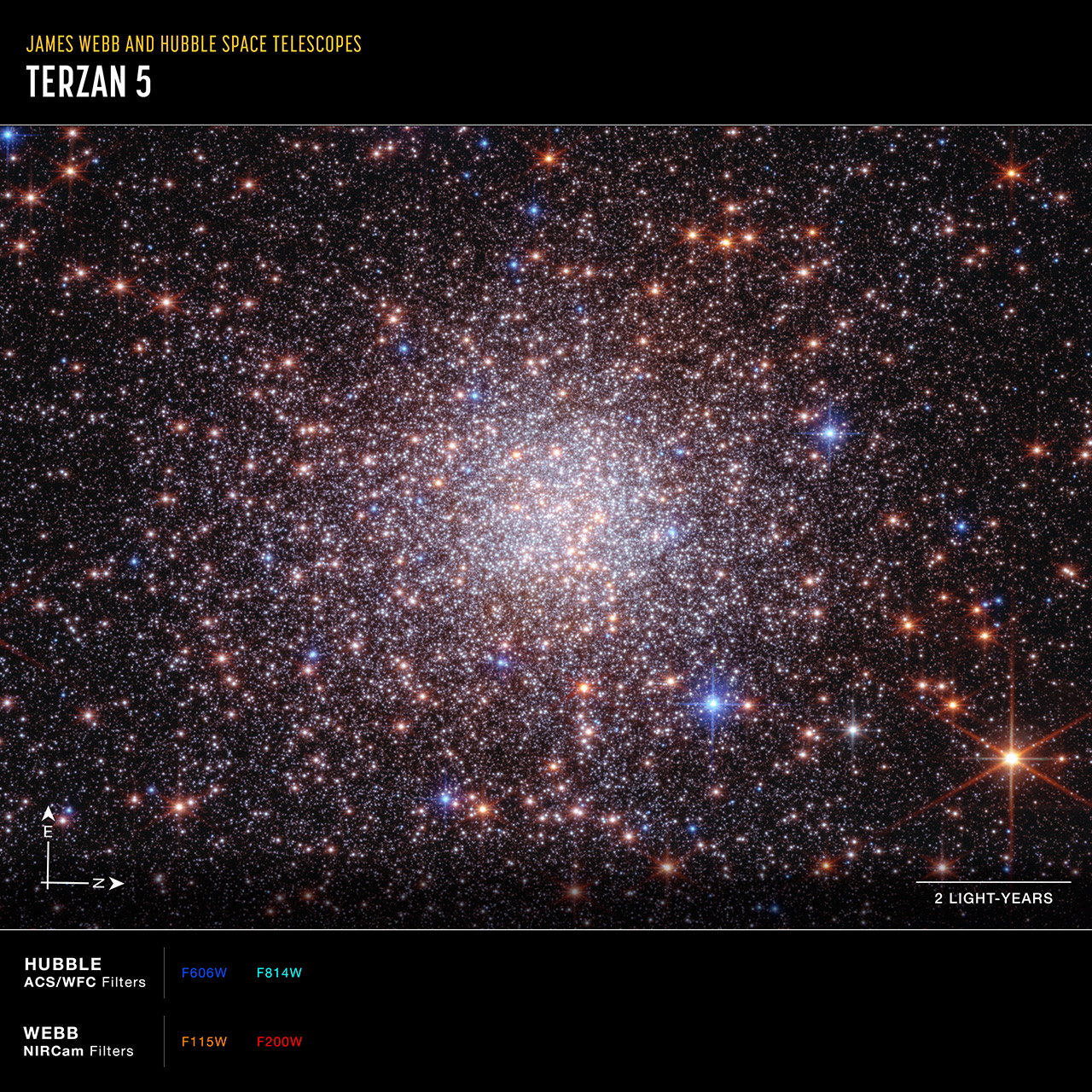
Astronomers have long studied dense collections of stars known as globular clusters scattered throughout the Milky Way. Most appear to have formed in one quick burst early on and then evolved quietly for billions of years. One object in the galaxy’s crowded central bulge always stood out a bit, though. New data has now shown why. Observations collected by the James Webb Space Telescope, working alongside archival records from the Hubble Space Telescope, have established that Terzan 5 contains not one but four distinct generations of stars. This discovery turns the object from a standard cluster into something researchers now call a bulge fossil fragment.
Dust and the overlapping brightness of stars make it difficult for scientists to study that part of the galaxy. Webb’s capacity to detect near-infrared light cuts through much of the obscuring debris, allowing astronomers to see more clearly. Having said that, Hubble’s long-term tracking of star movements over twelve years allowed scientists to assign individual stars to Terzan 5 or the surrounding bulge field. This left them with a rather detailed catalog, allowing four separate groups of stars to shine through with astonishing clarity. Anyway, the oldest of these groups stretches back a staggering 12.5 billion years. Then there’s a second generation of stars, which appeared approximately 4.7 billion years ago. A third crop emerged 3.8 billion years ago, and finally, stars in the system formed barely 2.5 billion years ago.

LEGO Technic NASA Artemis Space Launch System Rocket Building Toy for Boys & Girls – STEM Learning…
- BUILD AN OFFICIAL NASA ROCKET – Kids prepare to explore outer space with the LEGO Technic NASA Artemis Space Launch System Rocket (42221) building…
- 3-STAGE ROCKET SEPARATION – Young builders can turn the hand crank to watch the rocket separate in 3 distinct stages: solid rocket boosters, core…
- STEM BUILDING TOY FOR KIDS – This educational rocket kit was created in collaboration with NASA and ESA to showcase the authentic system that will…
As we progress through the generations, we can see that each one exhibits clear traces of chemical enrichment from the supernovae of the stars that preceded them. The cluster’s vast size has allowed it to retain gas and dust that smaller systems would have lost. That material, in turn, has provided fuel for the creation of stars over time. Francesco R. Ferraro, the Webb program’s lead scientist and a professor at Bologna University, stated unequivocally that this strange collection of stars evolved independently of the bulge and was not destroyed when the bulge formed. As a result, Terzan 5 is now regarded as the template for what scientists refer to as a bulge fossil fragment, because it corresponds to the kind of fundamental blobs of stars that scientists believe would have fueled bulge expansion in the early universe.
Computer models of galaxy formation reveal that early galaxies used to have large, unstable disks of gas floating around. These disks would split apart into enormous clusters, becoming stars swiftly. Then, many of these clusters would spiral in towards the galaxy’s center, merging to form the massive core bulges seen in mature galaxies such as the Milky Way. The majority of these cluster groups lost their distinct characteristics in the process. The point is, Terzan 5 appeared to have gotten away with maintaining its own identity somehow. Barbara Lanzoni, a professor at the same university, described how the early cosmos was home to massive gas disks that split into clumps, which eventually formed stars. These clumps would then travel towards the cores of the galaxy where many would then unite to form the central bulges of the galaxy.
These latest results appear to be consistent with that theory and provide a useful nearby example for astronomers to investigate in depth. Webb’s views of the distant universe show comparable clumpy galaxies. It allows us to observe the same processes in progress. Furthermore, ground-based spectroscopy at sites such as the Keck Observatory and the European Southern Observatory’s Very Large Telescope provided chemical fingerprints demonstrating the gradual enrichment of the four populations.
Webb Uncovers Survivor from the Milky Way’s Chaotic Early Years, Confirms it as Prototype of Bulge Fossil Fragment
#Webb #Uncovers #Survivor #Milky #Ways #Chaotic #Early #Years #Confirms #Prototype #Bulge #Fossil #Fragment