Webb’s Extended Gaze Reveals 16 Million Stars Scattered Across the Cigar Galaxy
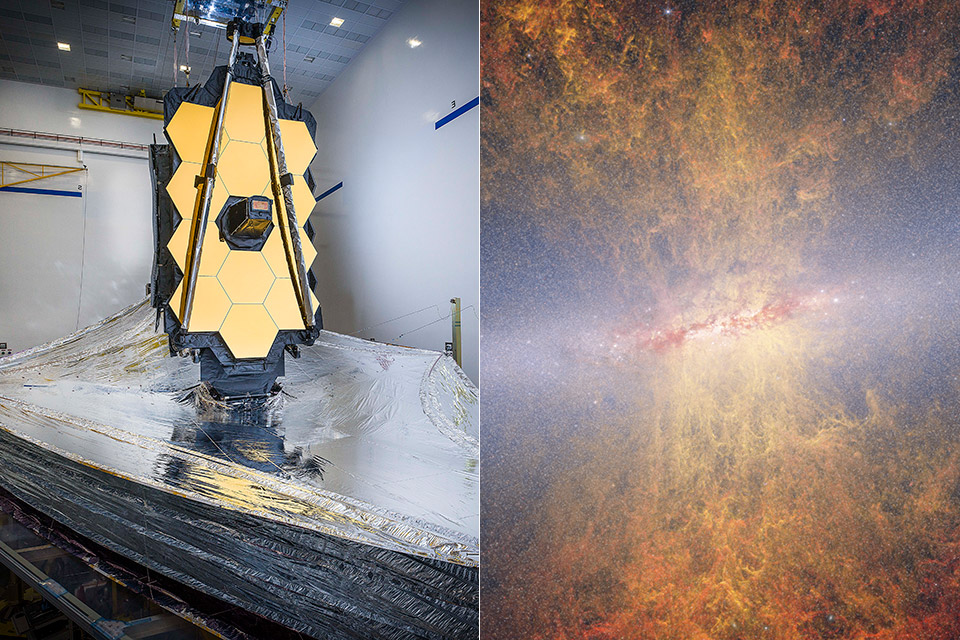
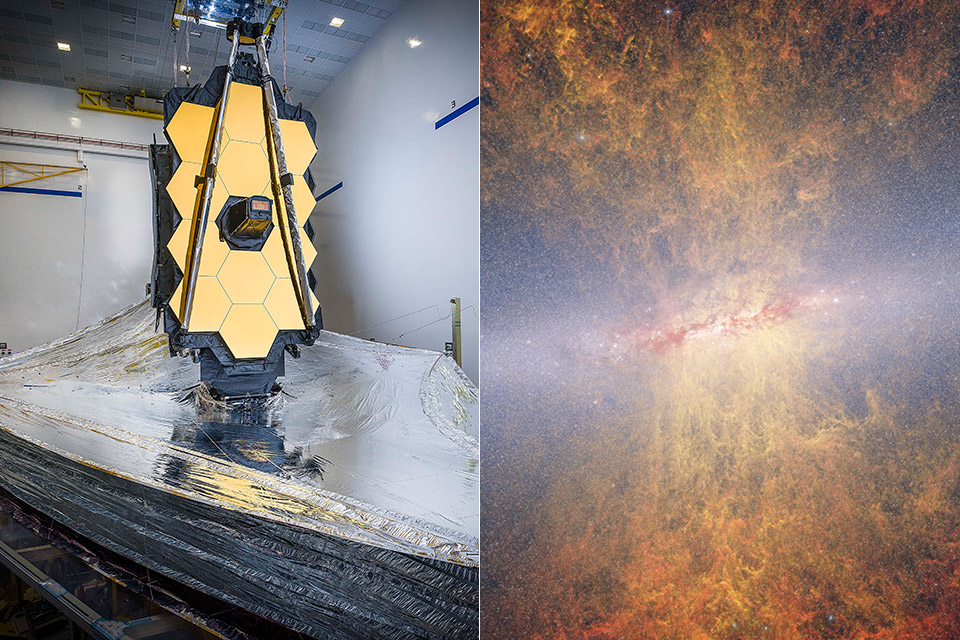
Astronomers have released a striking new image of the Cigar Galaxy (M82) taken with NASA’s James Webb Space Telescope. Data for the portrait came from a dedicated 65-hour survey using the telescope’s Near-Infrared Camera. This extended observation time let Webb cut through dense dust clouds that normally hide the galaxy’s stellar population from view. Roughly 16.5 million individual stars now stand out clearly across the galactic disk in the resulting composite view. These stars show up as luminous blue-white specks scattered throughout the structure.
The Cigar Galaxy, located in the constellation Ursa Major, is 12 million light years away and appears edge-on to us on Earth. Its nickname stems from its thin, elongated shape. There is evidence that a previous merger with another galaxy distorted and stretched the disk into an uneven form, as one side is notably brighter and extends farther than the other. That gravitational disturbance most likely caused the current burst of star creation.
Sale

Gskyer Telescope, 70mm Aperture 400mm AZ Mount Astronomical Refracting Telescope for Kids Beginners…
- Superior Optics: 400mm(f/5.7) focal length and 70mm aperture, fully coated optics glass lens with high transmission coatings creates stunning images…
- Magnification: Come with two replaceable eyepieces and one 3x Barlow lens.3x Barlow lens trebles the magnifying power of each eyepiece. 5×24 finder…
- Wireless Remote: This refractor telescope includes one smart phone adapter and one Wireless camera remote to explore the nature of the world easily…
New stars are forming at approximately ten times the rate observed within the Milky Way. However, these rapid-fire bursts cannot last eternally because gas reserves are expected to run out in a few hundred million years. The same uncontrolled energy that drives star formation is also responsible for the tremendous outflows that propel material into space. These outflows produce sweeping plumes above and below the galaxy, like a large hourglass shape in the sky.
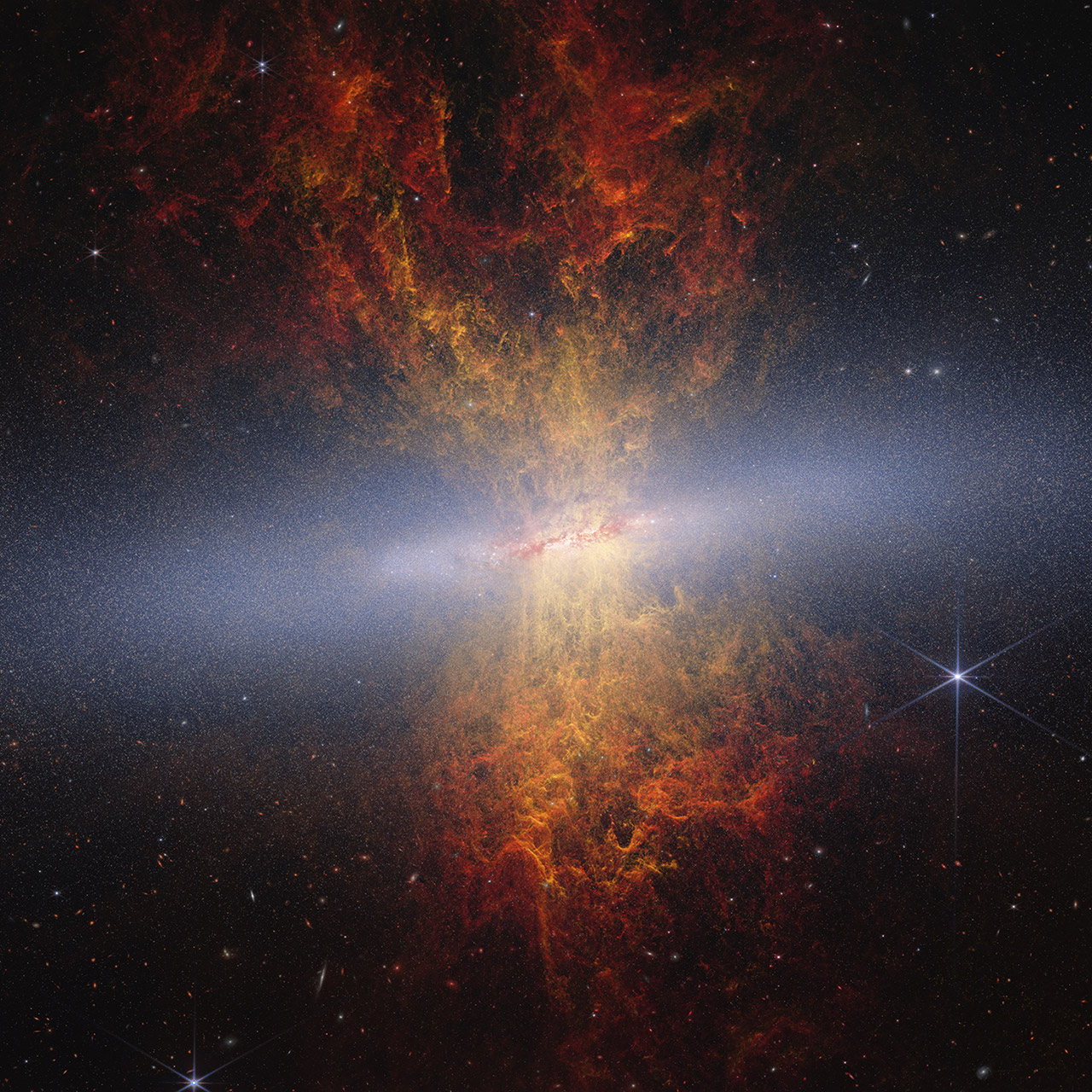
Multiple layers can be seen inside the plumes, such as a golden glow near the disk caused by ionized hydrogen. It turns more orange as you get further away, thanks to microscopic dust grains containing polycyclic aromatic hydrocarbons. These dust particles disclose a lot about how young stars and supernovae emit radiation, which transports interstellar material into space.
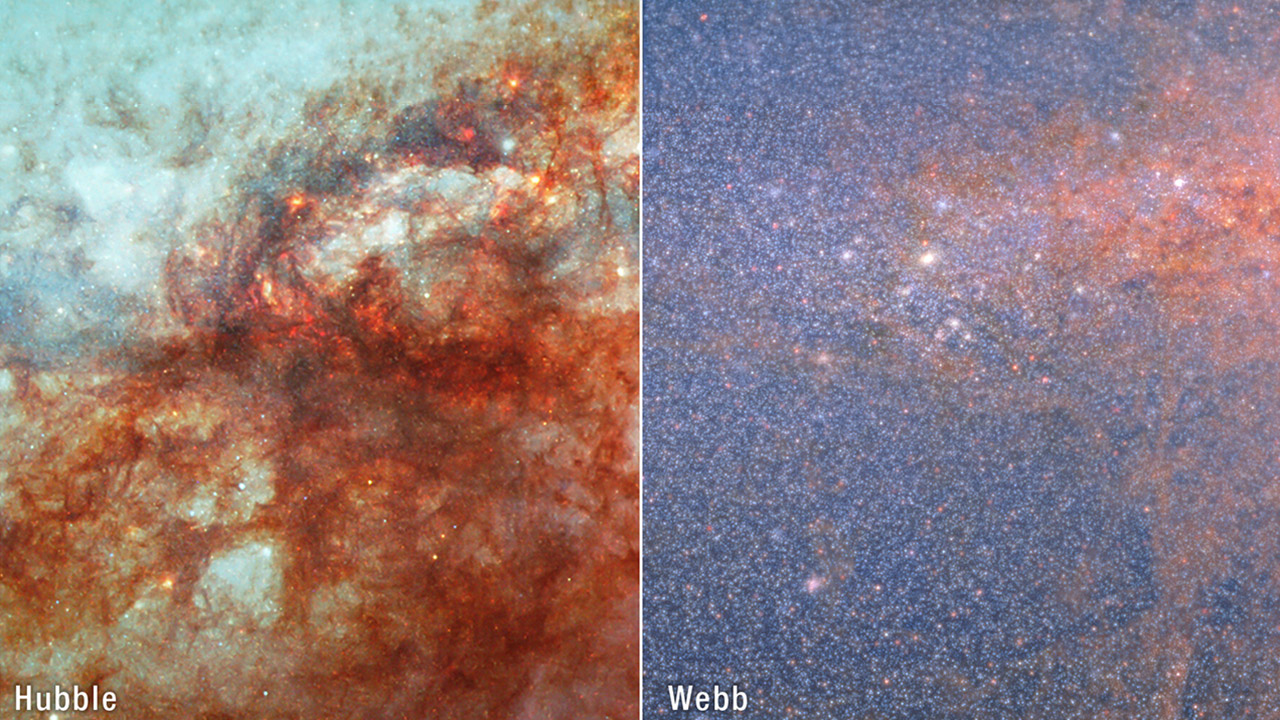
Earlier Hubble Space Telescope photos revealed the galaxy’s incandescent gas and dust lanes in visible light, but many individual stars remained obscured by thick dust. The Webb telescope’s new and improved images showcase the stars themselves as well as where the warmer dust and gas reside. A composite of the new images, along with older Hubble images, provides a much more detailed glimpse of all those pinpoint stars and dust clouds.
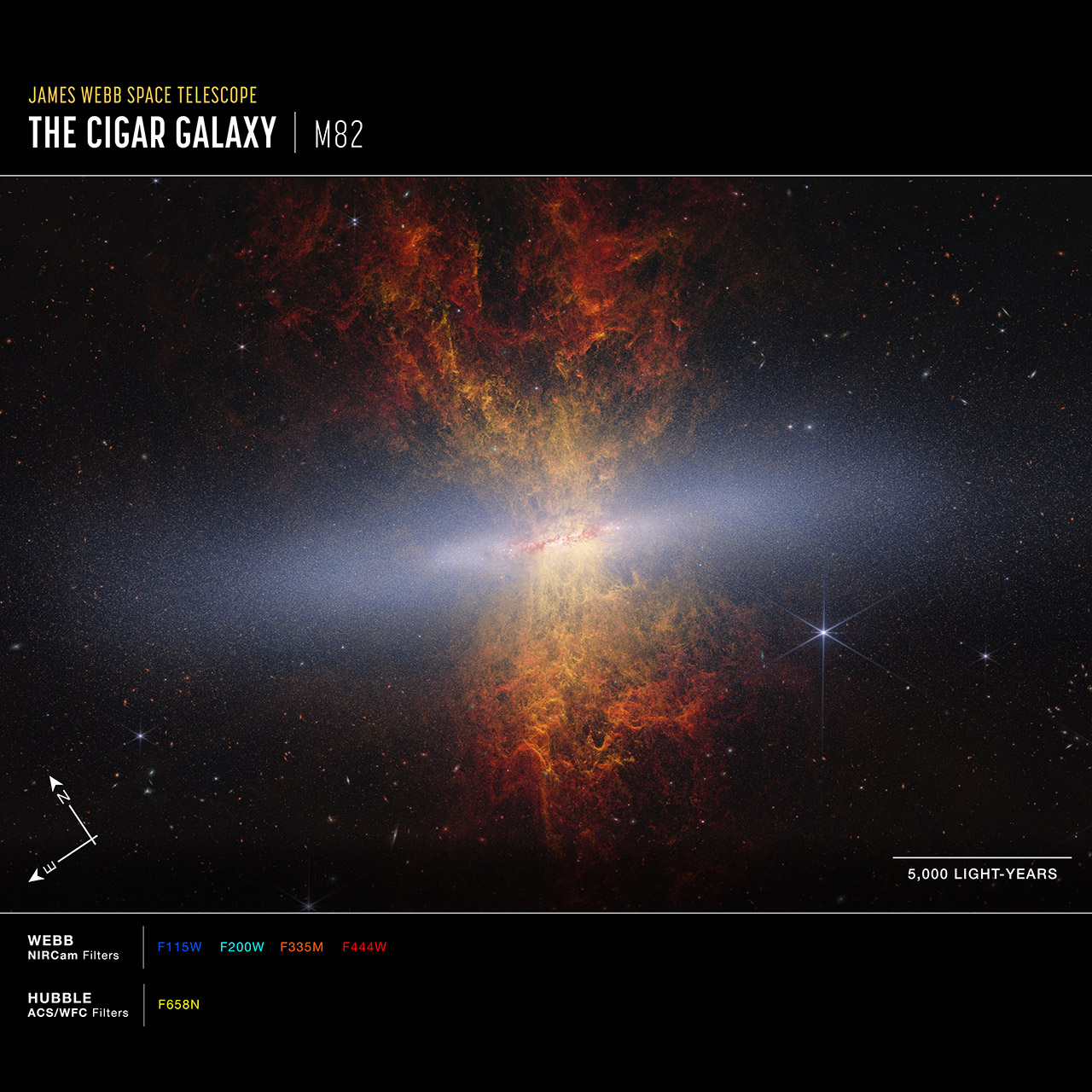
Researchers see the Cigar Galaxy as a valuable ‘lab’ nearby for studying how star formation accelerates inside galaxies and how the accompanying energy and outflows affect the entire structure. The fact that we can see the distorted disk and layered outflows up close sheds light on what happens when galaxies merge, and how this might reshape the entire system in a dramatic, short-lived phase. All of this data adds significantly to our larger models of how galaxies develop and evolve over time, and it is also useful for attempting to understand what life was like in the early universe, when star formation was even more dramatic than it is today.
Webb’s Extended Gaze Reveals 16 Million Stars Scattered Across the Cigar Galaxy
#Webbs #Extended #Gaze #Reveals #Million #Stars #Scattered #Cigar #Galaxy