Lost Mayan city with sinister 1,000-year-old carvings discovered deep in jungle
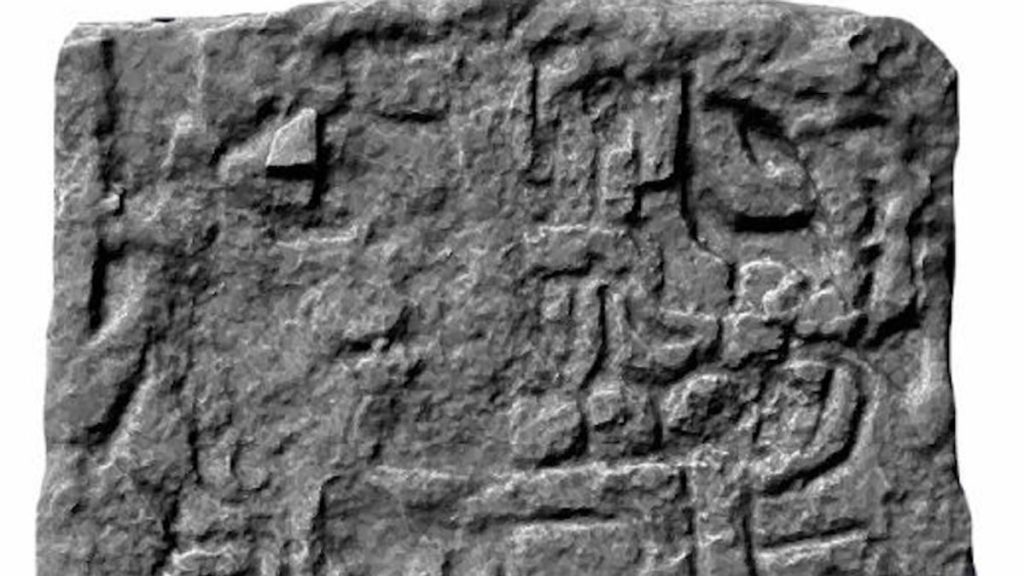
The hidden Mayan city is said to still have stone carved with ancient symbols from a thousand years ago and was uncovered by archaeologists at the Calakmul Biosphere Reserve

The special findings were uncovered beneath the jungle
History boffs have uncovered an ancient city buried beneath a Mexican jungle. The hidden Mayan city is said to still have stone carved with mysterious symbols from a thousand years ago.
It was uncovered by archaeologists at the Calakmul Biosphere Reserve. Dr Ivan Šprajc, one of the people who made the amazing find, who has put three decades of work into the area and revealed that the location is home to artefacts that were discovered by using new technology.
The airborne laser scanning, known as LiDAR, allowed researchers to find the city that they believe was bustling with life back in the Late Classic period between AD 600 and 900. Researchers hacked away at 5km of terrain to give them a clearer view with the laser and found a a 15-hectare settlement beneath the forest canopy.
The trip, which was authorised by Mexico’s National Institute of Anthropology and History, was able to unearth an entire area filled with everything you’d need to live as a Mayan.
“It’s a unique, unprecedented finding,” INAH archaeologist Lino Espinoza Garcia told Agence France-Presse.
“There were plazas, palatial and religious structures, terraces and wetlands with hydraulic channels, as well as a 13-foot pyramidal temple that is so well preserved that the writings on the stone can sill be seen.
“This is the first time I have recorded a temple that is more or less well-preserved, and a stela still bearing glyphs.”
Archaeologists also identified a monument engraved with the scene of a decapitation, dubbed Stela 1, which is part of 14 stelae and altars, that can be seen with scenes or messages donning the surface.
According to the group, it’s carved with the date 849 C.E. which is when it is believed all of the stelae were carved.
Dr Ivan Šprajc continued: “Compared to other places where we did surface surveys, access here was much more difficult; however, in the last three years, this is the first one we’ve found intact, with no signs of looting. It was a discovery, a great surprise for us.
“That’s why we chose the name Minanbé, which comes from Yucatec Maya (mina’an , ‘there is no’, and be , ‘path’). Thus, we follow the tradition in Mayan archaeology of naming some sites according to some characteristic of the place or in allusion to the circumstances of the discovery.”