Micro-Submarines That Swim, Chase, and Recharge Themselves Deliver a Hands-Off Aquarium Experience
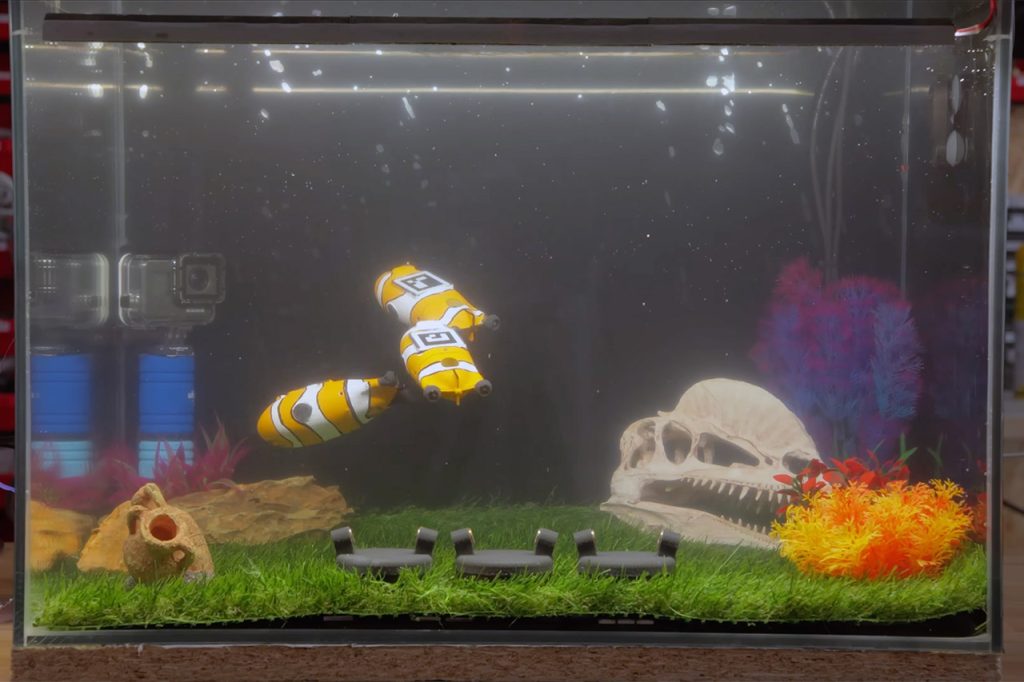
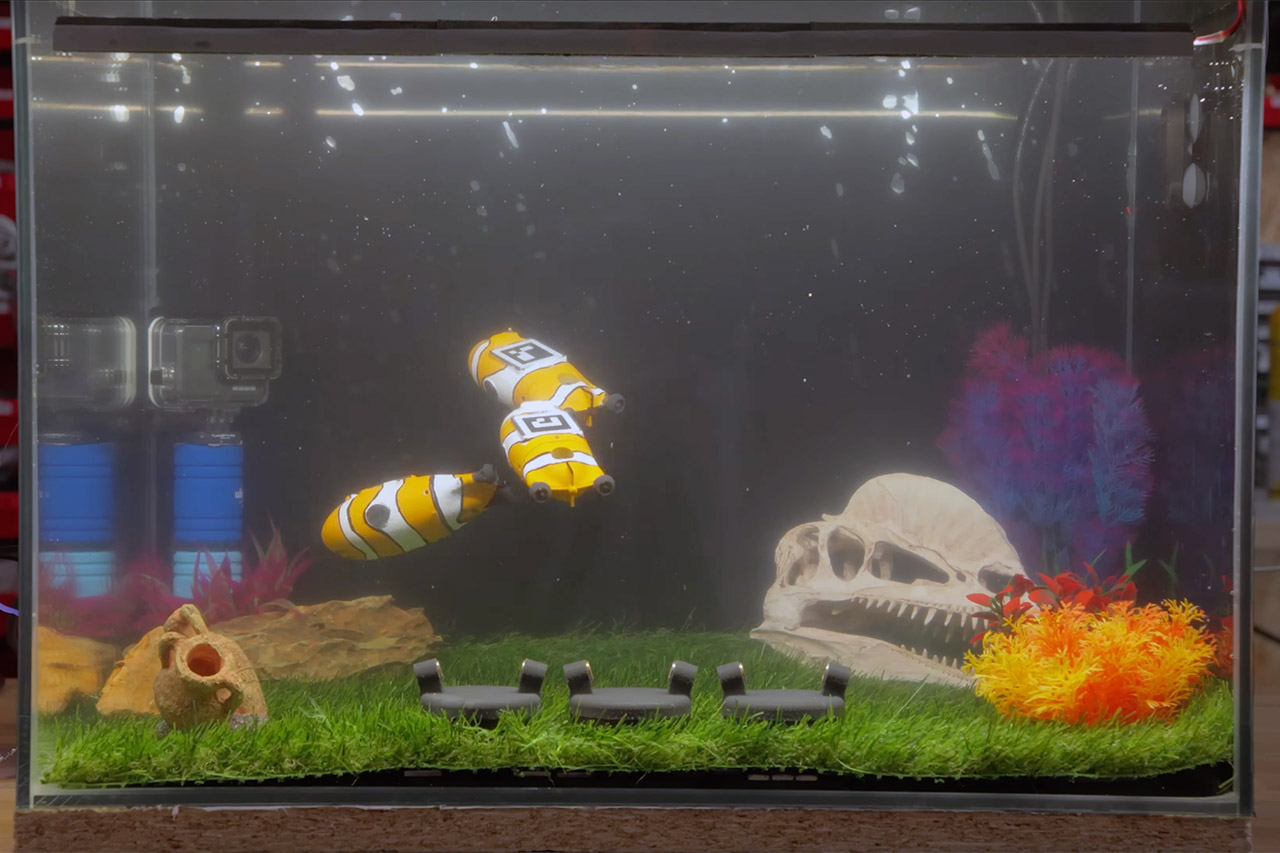
Peter’s dad floated the idea five years earlier. An aquarium sounded nice, yet the feeding schedule and water changes did not. The comment lingered until Peter teamed up with Filip on the CPSdrone project to build something better. Small submarine-like machines now patrol a glass tank in place of live fish. Each one carries its own motors, battery, and controller inside a sealed body. They move on command or follow simple rules that keep them cruising without constant human input.
Four tiny brushed motors provide each of these micro-submarines with complete underwater freedom. Two are in charge of forward push and turning, while the remaining two handle depth adjustments. The propellers are located in the back, sides, or bottom of the submarine, depending on its orientation. Lead weights regulate the buoyancy to keep it from sinking or floating away on its own. The most challenging issue is that all of the heavy lifting occurs outside of the water. A Raspberry Pi sits on a shelf above the tank, observing everything through a camera. Each sub has many bright ArUco markings on top of it, allowing the program to always know where it is and where it is pointing. The team devised a mechanism for transferring commands from the Raspberry Pi to the Arduino Pro Mini within each sub, even when submerged.
Sale

Xtra Muse, Vlogging Camera with 1” CMOS & 4K/120fps Videos, Pocket Camera with 3-Axis Gimbal Stabilizer…
- Cinematic-Style Footage – Experience the power of Xtra Muse’s 1-inch CMOS sensor, capable of recording breathtaking 4K resolution videos at 120fps…
- Ultra-Steady Shooting – No more shaky videos! Xtra Muse’s advanced 3-axis gimbal camera stabilizer ensures exceptional smoothness. Enjoy smooth…
- Effortless Framing – Enjoy Xtra Muse’s expansive 2-inch touch screen, and switch between horizontal and vertical shooting effortlessly.
The combination produces smooth, lifelike paths. The crew had to experiment with a PID controller to get the subs to move in the appropriate direction without abrupt pauses and starts. One variation merely moves the subs to random spots, allowing them to wander freely among the plants and decorations. Another allows one sub to be the chaser while the others try to evade it in a game of underwater tag. The low-maintenance docking is a useful feature. A station on the tank’s bottom has inductive charging coils similar to those used in wireless phone docks. Electromagnets then help to pull the sub into position without the need for corrosive metal contact points. Once it’s properly installed, electricity travels through the water to charge the small battery. If the submarine’s battery is running low, the overhead camera may direct it to the dock.
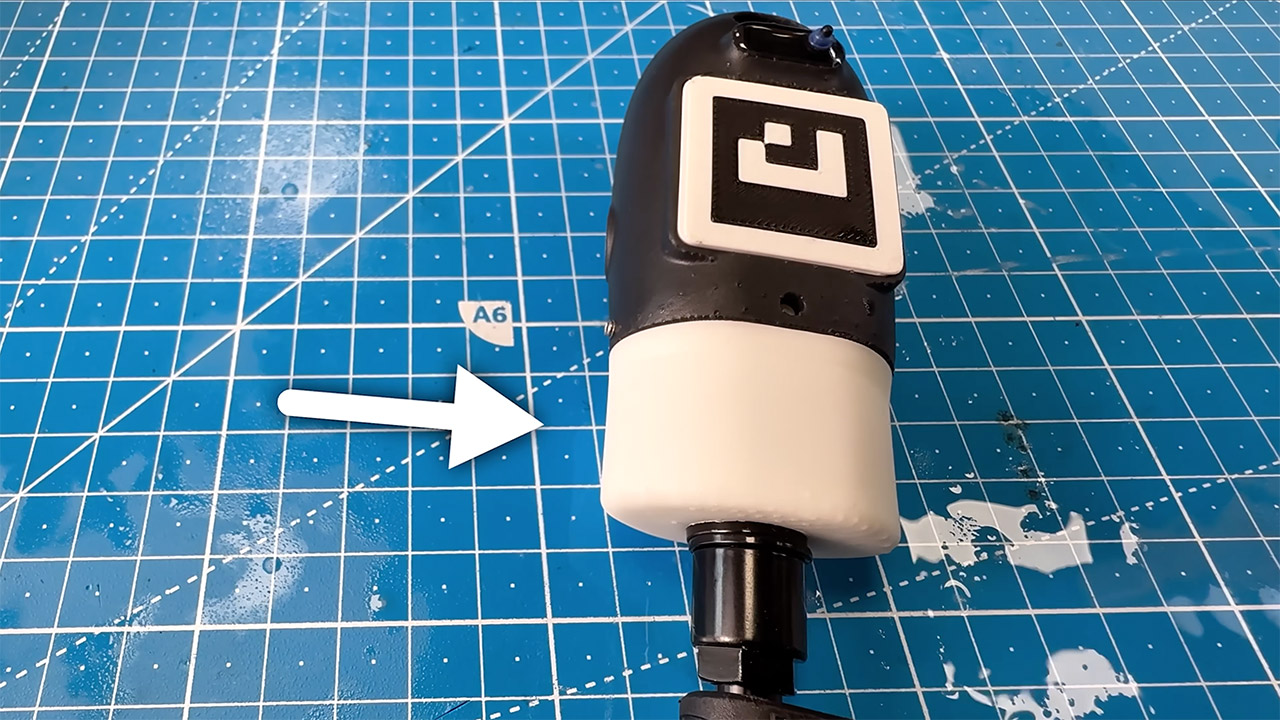
The most difficult part of the development process was waterproofing. The hulls were made with a two-piece process on a Formlabs Form 4 resin printer, which generates exceedingly flat surfaces that seal exceptionally well. An O-ring separates the two sections, and the wire exit ports are sealed with UV-cured epoxy. Even though early prototypes continued to leak during pressure testing in a clear tube, a couple more sealing passes alleviated the most of the issues, and only a few of the motors ended up with stray epoxy caught in them; today they all spin at slightly different rates.
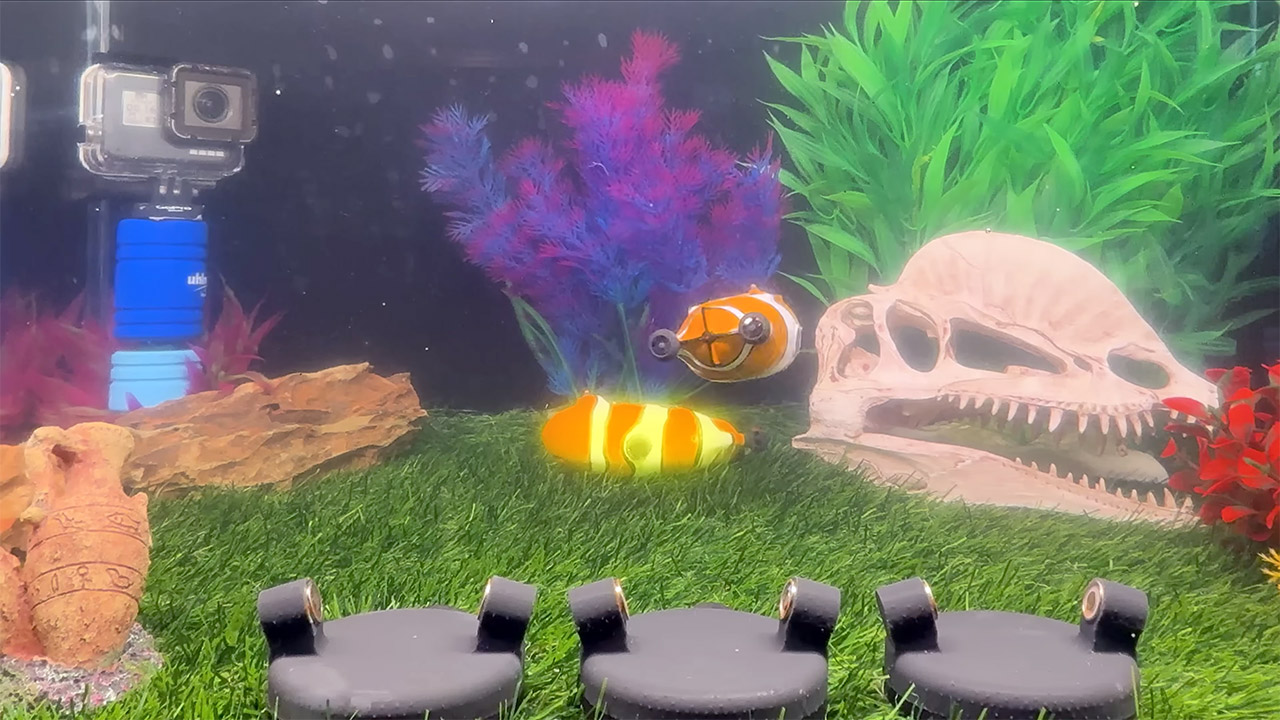
At the moment, three finished units are cruising about the tank. To maintain peace and quiet, they replaced the regular gravel with artificial grass on the bottom. Each sub has a vivid paint job that resembles real fish patterns. There’s a skull and some colorful flora on the side, and the small docking pads sit silently at one end.
[Source]
Micro-Submarines That Swim, Chase, and Recharge Themselves Deliver a Hands-Off Aquarium Experience
#MicroSubmarines #Swim #Chase #Recharge #Deliver #HandsOff #Aquarium #Experience