Family so inbred they gave to blue-skinned children after decades of incest
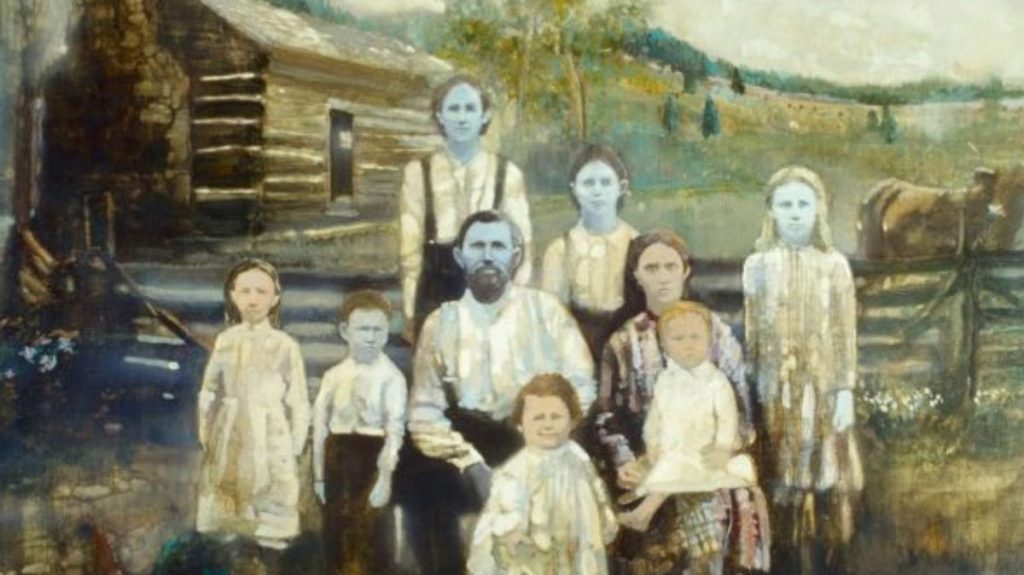
Living in an isolated community, the Kentucky Fugates kept an ultra rare blood disorder in the family through years of inbreeding- leaving them with blue skin

A rare blood disorder that turned the ‘Blue People of Kentucky’ blue(Image: HistoryExtra)
One family’s decades-long run of grim incest left parents horrified by birthing children with blue skin. A rural Kentucky family known as the Fugates lived in a very rural, remote area where inbreeding became rife due to the lack of outsiders.
The community began with a man named Martin Fugate, who emigrated to the US from France around 1820. He set up shop in Troublesome Creek, Kentucky.
Martin is believed to have been born with blue skin, and his parents were so horrified they abandoned him in an orphanage.
While doctors at the time couldn’t identify the condition, a blood specialist in the 1960s determined Martin suffered from methemoglobinemia – a rare condition that produces an abnormally high amount of methemoglobin, a form of hemoglobin. The outcome is very dark, blue-colored blood that shows through the skin.
In Kentucky, Martin met and married a woman named Elizabeth Smith who, bizarrely, carried the recessive gene for the same, exceptionally rare condition. They had seven children and four of these were blue, according History Extra.
Among Martin and Elizabeth’s children, Zacharia married his own aunt, while another son married a close cousin. One woman, Luna Fugate, was famously described as being “blue all over” with lips as “dark as a bruise”.
The tiny hamlet had no roads connecting it to the outside world and only four other families living there – the Combs, the Richies, the Smiths, and the Stacys. This isolation led to generations of inbreeding, meaning the rare disease produced generations of ‘blue’ people.
Luna married John Stacy in the late 19th century, and the couple had 13 children together. Remarkably, the children were healthy apart from their distinctive blue complexion – despite the potential risks of methemoglobinemia, including developmental disorders and seizures.
It wasn’t until the 1960s that hematologist Madison Cawein finally cracked the mystery of the Fugates’ unusual skin colour. The University of Kentucky physician encountered two blue-skinned patients at a local clinic and, after ruling out heart and lung disease, concluded they were suffering from methemoglobinemia – a condition that is typically inherited but can also be triggered by certain medications or chemical exposure.
Dr. Cawein attempted to inject some family members with a blue dye called methylene, suspecting they lacked a vital enzyme. Although this temporarily eliminated their blue appearance for several days, their skin ultimately reverted to its original hue.
He then recommended the family take daily tablets to manage their unusual complexion. The condition came to widespread public attention in 1975 when Benjamin Stacy was born with skin as “blue as Lake Louise”, as reported by ABC News.
He was rushed to the University of Kentucky Medical Center just hours after his birth for a blood transfusion – until the baby’s grandmother suggested he looked like the Fugates of Troublesome Creek. It was subsequently revealed his great-grandmother was Luna Fugate – described as the “bluest” woman ever seen.
A surviving member of the Fugate family told the DailyMail the condition is still prevalent in their family to this day. Hazel Fugate said her husband, 69-year-old Gary, a descendant of Martin’s, suffers from methemoglobinemia.
While not as pronounced as in his ancestors, Hazel noted that in low light, “the colour of his skin is a blue purple” and has become increasingly noticeable as he gets older.
The couple revealed their son was born with the same condition but reportedly outgrew it by the age of five. Similarly, their daughter also appeared to be affected for only a few months.